Bosnia and Herzegovina: the business of photovoltaics

Bosnia and Herzegovina has huge photovoltaic power potential. However, in the absence of a clear regulatory framework, there is a risk that big investors will build solar power plants, putting profit before the environment and sustainability
Bosnia-Erzegovina-il-business-del-fotovoltaico

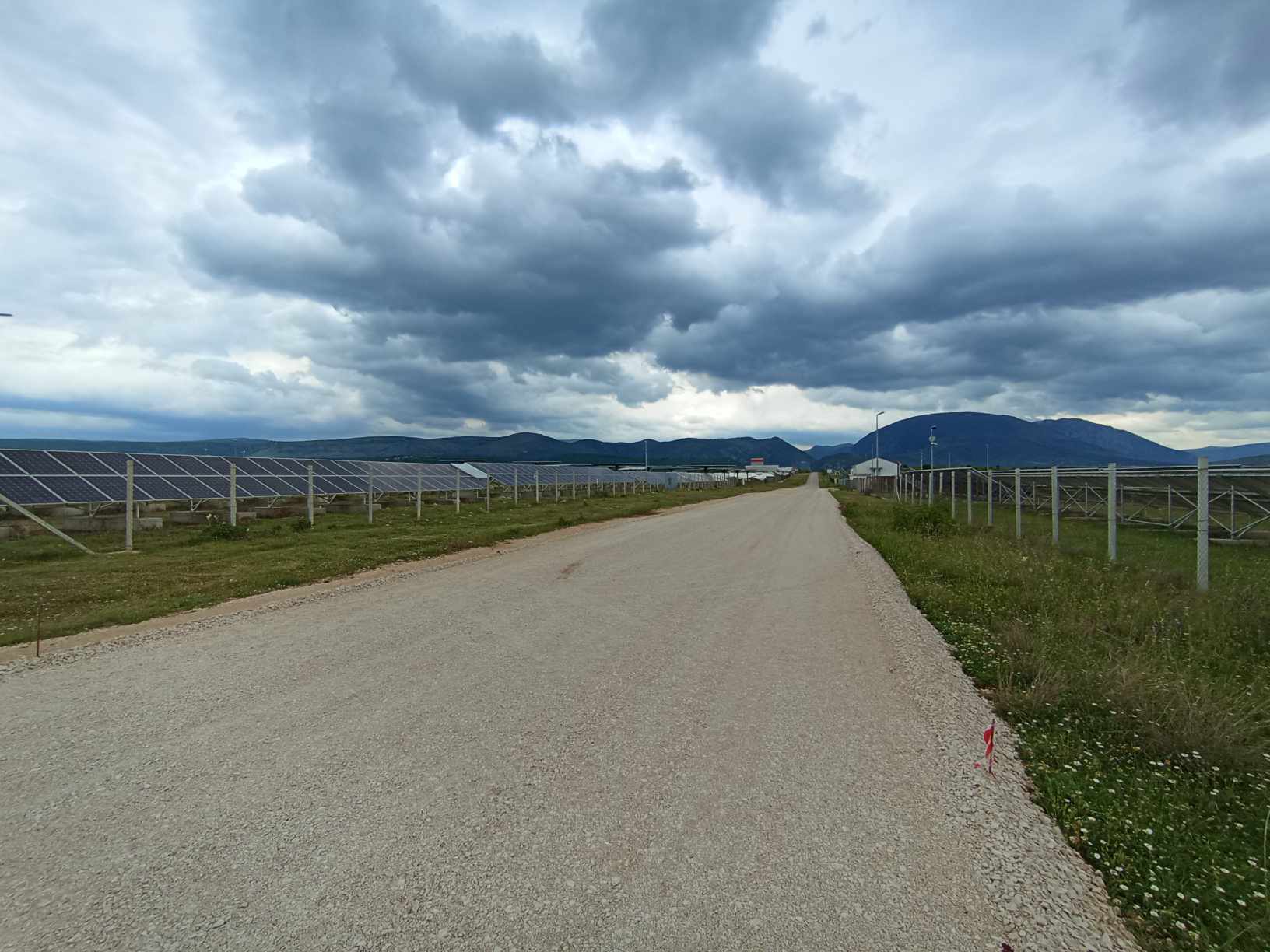
Solar park in Stolac, BiH - Foto S. Mlađenović Stević  

Thanks to its climate, Bosnia and Herzegovina has enormous solar energy potential. Solar radiation levels – with about two thousand hours of sunshine per year – are higher than those of many European countries, exceeding those recorded, for example, in Germany, Sweden and Poland by approximately 30%.

Specifically, the southern areas of Bosnia and Herzegovina are attracting a growing number of large-scale investments in photovoltaics, strongly supported by local politicians. The ruling elite enthusiastically explains their decision to focus on photovoltaics, citing potential economic benefits for local communities and new jobs. At the same time, the political leadership boasts of its alleged dedication to achieving one of Europe’s indisputable goals: a comprehensive green transition.

Thus, over the last five or six years, Herzegovina, with approximately 2,400 hours of sunshine per year and a solar radiation amount of 1,500 kWh/m², has become an El Dorado for photovoltaic entrepreneurs.

Thanks to the opening of new, large-scale photovoltaic power plants in southern Herzegovina (Zvizdan-Ljubuški, Bileća and Hodovo-Stolac), solar energy production increased almost fifteenfold in 2024 compared to the previous year.

Given these premises, it is paradoxical that in Bosnia and Herzegovina the largest share of electricity is still produced by coal-fired power plants, while solar and wind power make up only 2-3% of the national energy mix.

According to experts, insufficient use of solar energy is due to the high initial costs of installing photovoltaic systems and to the lack of adequate legislation on renewable energy. Currently, only half of environmental norms in Bosnia and Herzegovina are aligned with EU legislation.

Ironically, in recent years it has been precisely inadequate legislation that has encouraged the development of the renewable energy sector, particularly solar.

While citizens and energy cooperatives in Bosnia and Herzegovina are unable to effectively participate in the energy transition – and civic participation should be at the heart of any green transition – investors are taking advantage of the situation to launch new businesses in the solar industry, that is proving to be very profitable, especially in Herzegovina.

Local and cantonal authorities facilitate big investors through land use change procedures, permit issuance and urban planning amendments. This makes photovoltaic investments highly profitable, and even some politicians appear to profit from them.

All crazy about photovoltaics

Five new solar power plants are expected to be operational in Herzegovina by the end of 2025, with a total capacity of approximately 100 MW: one in Stolac, one in Međugorje, one in Livno and two in Mostar.

The Independent Operator of Electricity Transmission Systems in Bosnia and Herzegovina (NOSBiH ) predicts a similar trend in 2026. If this scenario were to materialize, NOSBiH warns, there would be a risk of “congestion in the transmission network, and the management of the transmission system would become more complex from a regulatory point of view”.

Most solar parks are located in the Herzegovina-Neretva Canton, where grid capacity is insufficient to meet the new demand. Therefore, investors are often forced to build new substations to connect to the grid operated by the local electricity company.

However, the authorities of Herzegovina, like investors, do not seem at all concerned about possible grid congestion. At least not yet. However, there are other, far more serious issues at stake.

An informal group of citizens from the Mostar area, where the photovoltaic plants are located, has been denouncing for years the numerous irregularities in the local administration’s operations that end up benefiting large investors.

Responding to popular pressure, the Prosecutor’s Office of Bosnia and Herzegovina initiated legal action at the Mostar court in late January to invalidate concession agreements signed between the government of the Herzegovina-Neretva Canton and companies intending to build photovoltaic power plants on state-owned land in the villages of Miljkovići and Međine, in the Mostar area.

The citizens of Mostar report a series of irregularities in the work of local and cantonal authorities, from questionable land use rezoning practices in the fertile areas of Herzegovina, to opaque procedures for granting use of state-owned forests and pastures.

A similar scenario is unfolding in the nearby city of Stolac. The informal group “Stolački otpor” [The Stolac Resistance] has denounced the alleged illegal actions of local and cantonal authorities. The uprising was sparked by preparatory work for the construction of a large solar park in the area of Komanje brdo, on a hill about a hundred meters from the nearest houses.

This area is known for its extraordinary biodiversity and its cultural and historical heritage, but also for frequent floods and landslides. The areas at risk have not been adequately rehabilitated after the tragic consequences of the 2022 landslide, which claimed one life.

It is an open secret that solar parks in Herzegovina are being built by people close to officials of the ruling Croatian Democratic Union of BiH (HDZ BiH) and by investors with questionable reputations, such as the controversial businessman and sports personality Zdravko Mamić, to date fugitive.

In 2018, the Croatian judiciary sentenced Mamić to six and a half years in prison for fraud against Dinamo Zagreb. After the sentence, Mamić fled to his native Herzegovina, and Bosnia and Herzegovina still refuses to extradite him.

Among the businessmen involved in the photovoltaic industry, Tihomir Brajković, one of the richest entrepreneurs in the region and owner of the Tibra-Pacifik company, stands out. In 2019, Brajković was convicted of tax evasion in residential construction projects in Sarajevo, before focusing on the construction of hydroelectric and photovoltaic power plants.

In Herzegovina, the construction of solar power plants is often financed by foreign capital, which, sooner or later, albeit through tortuous means, becomes part of the ownership structure of the new solar parks. These investors have sufficient resources to cover the high initial costs and patiently await a return on their investment, earning millions of Euros from their photovoltaic projects.

We can only guess at the benefits that local politicians derive from facilitating large-scale investments in photovoltaics.
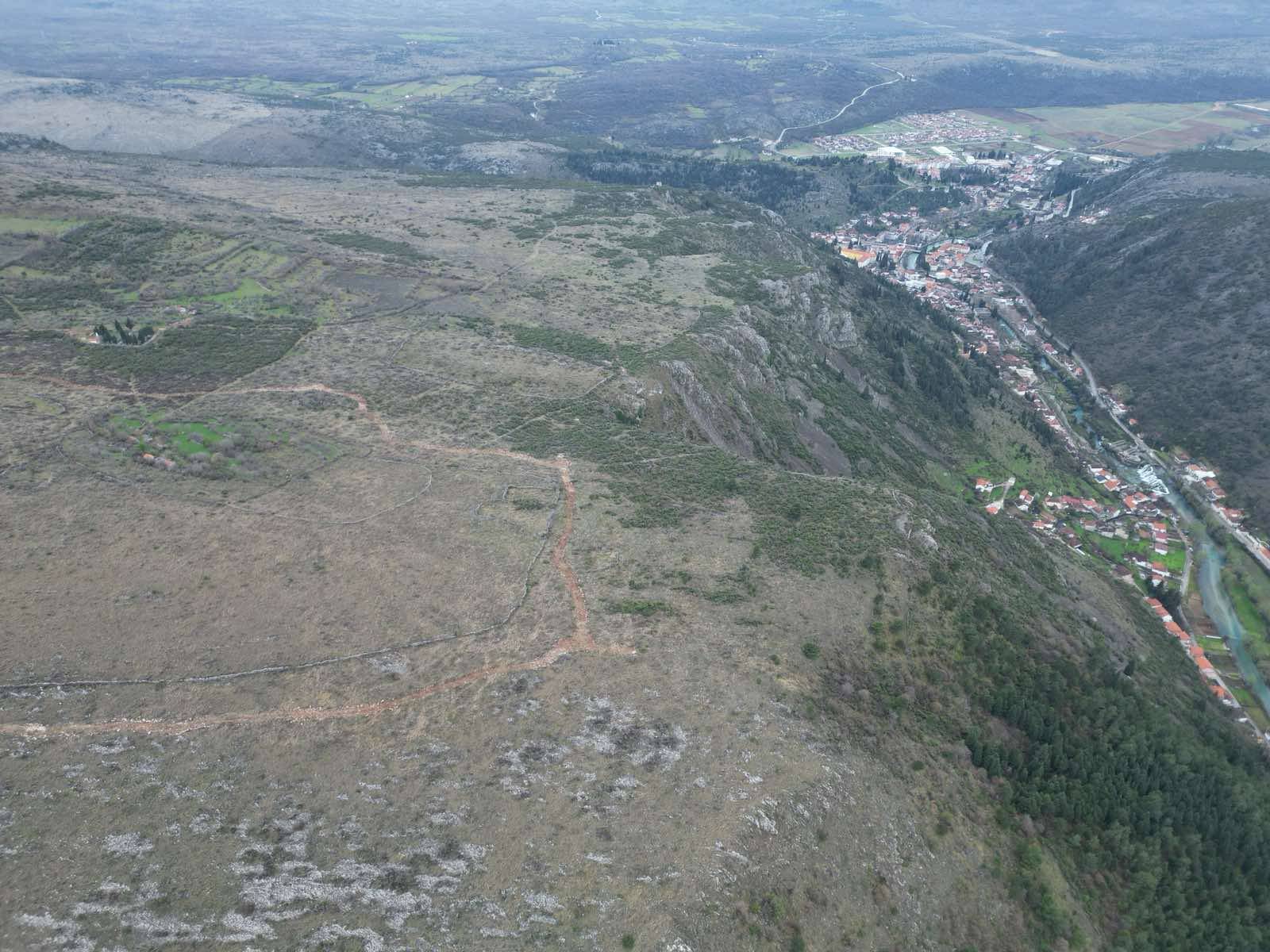
Komanje brdo, BiH (foto „Stolački otpor“)

Komanje brdo, BiH (foto „Stolački otpor“)

Photovoltaic giants at the service of local development?

According to the draft of the new Master Plan, the city of Stolac has earmarked a total of 1,200 hectares of its land for the development of photovoltaic projects. Some land has already been leased or sold. The planned plants, once operational, are expected to generate approximately 600 MW, nearly as much as the Krško nuclear power plant in Slovenia.

The large-scale Komanje Brdo plant, which is planned to be built on 609 hectares in the southern part of Stolac, will exceed the capacity of the Hodovo plant, which currently holds the record for solar energy use in Stolac.

“These sites [Hodovo and Komanje Brdo], with a total area of 1,078 hectares, are being used strategically to enable further expansion of solar capacity, thus contributing to the energy self-sufficiency of this area”, emphasize the authors of the new Master Plan.

Public consultations concluded in January this year, but the proposed new plan, in its final version, has not yet been put on the agenda of the Stolac city council.

The Stolac Resistance

The implementation of the idea of transforming Stolac into a haven for photovoltaic investors began during the Covid-19 pandemic, with the launch of opaque interventions without involving the local population, who at the time was focused on far more pressing matters: how to survive the pandemic.

In 2021, without any public consultation, several amendments were made to the Stolac Master Plan for the period 2013–2023, providing for the possibility of granting land concessions for the construction of photovoltaic systems in various locations within the municipality. However, these amendments were never harmonized with the higher-level spatial planning documentation, which does not provide for new photovoltaic systems or commercial areas in the city of Stolac.

This did not prevent the government of the Herzegovina-Neretva Canton from granting concessions on several plots of land for a period of thirty years for the construction of solar parks in Stolac, nor did it discourage the local administration from providing unconditional support to new partners in local development, including the HZ HB Electricity Company, which is already building a 150 MW photovoltaic plant in Hodovo.

In January 2025, the process of adopting the new master plan of the city of Stolac for 2024–2034 also began. This time, the local population responded promptly, making suggestions and launching a petition against the project to build a 125 MW photovoltaic plant in Komanje Brdo.

Given previous negative experiences, an informal group of citizens of Stolac fears that building this massive solar park in the immediate vicinity of residential areas could jeopardize the safety of the population. Residents express doubts about the validity of the feasibility study, which failed to take into account the terrain, which is susceptible to flooding, landslides and earthquakes.

The local population also raises the issue of the legality of procedures for changing land use and granting state-owned property to third parties. Another problematic aspect, residents complain, concerns the lack of public involvement in the decision-making process regarding projects – like the Stolac photovoltaic plant – that pose a potential threat not only to the safety of the population, but also to the survival of native plant species and the historical and cultural heritage.

Locals also oppose the idea of transforming the area stretching from Gorica to Radimlja, known for its prehistoric archaeological sites and stećci, into an industrial zone that could be used for the construction of photovoltaic plants.

“We responded promptly, filing objections to the Master Plan and launching a petition against the construction of a solar power plant in Komanje Brdo, thus obtaining stakeholder status in the decision-making process. However, the competent ministry never responded to our objections, and after the public consultation concluded on 21 January, the Master Plan was never mentioned again”, explains Ernest Đonko, member of the informal group “Stolački otpor”.

Despite pressure and intimidation on social media, the activists from Stolac, in collaboration with other non-governmental organizations in Bosnia and Herzegovina, have launched a legal battle against the individuals who allowed the construction of the solar park in Komanje Brdo to begin. According to the documentation collected by the activists, the concession and environmental permit were illegally issued to Aurora Solar .

The Prosecutor’s Office of Bosnia and Herzegovina also intervened, requesting clarification from the authorities of Stolac in February regarding the granting of public land and the permanent change of use of Komanje Brdo. To date, the local administration has not responded.

Attempts to involve inspectorates and authorities at all levels have also proven futile: the institutions continue to ignore every request to intervene, or respond with the classic excuse, claiming that the issue falls outside their jurisdiction.

At one point, some Stolac city councilors intervened, warning of potential irregularities in the interventions carried out up to then, including the issuing of permits without authorization from central authorities, the improper use of state-owned property, gaps in the master plans and attempts to undermine the competent institutions.

The Stolac power plants

Despite everything, in mid-May, in the presence of Stjepan Bošković, mayor of Stolac, construction work was inaugurated on a photovoltaic power plant, worth a total of 100 million Euros, with an estimated annual energy production of 200 million kWh over a thirty-year period.

“We only learned about the scope of the solar projects during that public consultation [on the draft of the new master plan of Stolac, in January 2025]”, explains Arman Ajanić, a local activist. “When we started investigating further, we discovered surprising data. We realized it was a legal scandal. For example, almost all environmental impact assessments for photovoltaic plants in Herzegovina are identical, they were copied, only changing the land names and codes”.

Ajanić expresses doubts about the validity of the documentation, which should provide the legal basis for investment profitability and the sustainability of the projects as a whole.

In an attempt to learn more about a project that is planned for the city center, local activists have revealed curious data by analysing land registers, laws and the flow of money invested in solar parks in Herzegovina.

It has emerged that most of the large photovoltaic power plants in Herzegovina were built on state-owned land. According to the Law on the Temporary Prohibition of Disposal of State Property, local governments cannot independently dispose of state property. Despite this ban, some state-owned land has been granted concessions, and some has even been sold.

The city of Stolac has decided to sell two plots of land in the villages of Crnići and Trijebanj to the HZ HB electric utility. According to the official state property inventory held by the Office of the High Representative, these plots belong to the state of Bosnia and Herzegovina. Before the sale, the lands were illegally registered as property of the local administration.

At the same time, cantonal authorities have changed the land use of many attractive land plots, allowing construction in forested and agricultural areas. It is therefore reasonable to suspect that the changes to the spatial plans of Stolac and Mostar are related to an attempt to accommodate investor interests.

The dangerous stratagems

The creativity of those betting on the unbridled exploitation of solar energy in Herzegovina continues to amaze. Recently, we have also witnessed the phenomenon of so-called “salami slicing”, the division of land into smaller lots to avoid the requirement of obtaining the necessary permits from higher-level authorities.

According to current legislation, building a photovoltaic plant with a power output of less than 1 MW does not require any energy permit or environmental impact assessment.

This situation significantly benefits investors, but increases the potential risk of negative environmental impacts from photovoltaic projects. This is confirmed by the case of an investor who has launched thirty small 900 kW photovoltaic plant projects in the town of Jasenjani, near Mostar.

These practices cannot be sanctioned, as they are not prohibited by the laws of Bosnia and Herzegovina. However, action is needed on other controversial issues, including opaque procedures for land use changes and concessions of state-owned land, as well was for malpractice in land-use planning.

It is now up to the State Prosecutor’s Office to act to fulfill its primary task, that of the legal protection of the state property of Bosnia and Herzegovina.

Despite the Foreign Investors Council’s indicators of the positive impact of investments in BiH due to increased investment in the energy sector, the country risks facing serious legal and economic consequences.

If it were discovered that the solar power plants built in Herzegovina were illegal, or that contracts were signed with investors for illegally acquired land, the Herzegovina-Neretva Canton could become the target of lawsuits for failed investments. This would certainly not be unprecedented. Bosnia and Herzegovina is already involved in several international arbitrations that could cost its citizens billions of Euros.

The most recent example is a ruling in favor of the Slovenian company Viadukt, according to which Bosnia and Herzegovina is required to pay compensation of approximately 52.8 million Euros for a project that has never even seen the laying of the first stone.

Meanwhile, in Herzegovina, there is a certain nervousness among investors, some of whom seem ready to withdraw due to the complicated procedures and impossibility of guaranteeing all the necessary conditions for the realization of their solar projects.


This publication has been produced within the Collaborative and Investigative Journalism Initiative (CIJI ), a project co-funded by the European Commission. The contents of this publication are the sole responsibility of Osservatorio Balcani Caucaso Transeuropa and do not reflect the views of the European Union. Go to the project page

Tag: CIJI
Bosnia and Herzegovina: the business of photovoltaics

Bosnia and Herzegovina has huge photovoltaic power potential. However, in the absence of a clear regulatory framework, there is a risk that big investors will build solar power plants, putting profit before the environment and sustainability

Bosnia-Erzegovina-il-business-del-fotovoltaico

Solar park in Stolac, BiH - Foto S. Mlađenović Stević  

Thanks to its climate, Bosnia and Herzegovina has enormous solar energy potential. Solar radiation levels – with about two thousand hours of sunshine per year – are higher than those of many European countries, exceeding those recorded, for example, in Germany, Sweden and Poland by approximately 30%.

Specifically, the southern areas of Bosnia and Herzegovina are attracting a growing number of large-scale investments in photovoltaics, strongly supported by local politicians. The ruling elite enthusiastically explains their decision to focus on photovoltaics, citing potential economic benefits for local communities and new jobs. At the same time, the political leadership boasts of its alleged dedication to achieving one of Europe’s indisputable goals: a comprehensive green transition.

Thus, over the last five or six years, Herzegovina, with approximately 2,400 hours of sunshine per year and a solar radiation amount of 1,500 kWh/m², has become an El Dorado for photovoltaic entrepreneurs.

Thanks to the opening of new, large-scale photovoltaic power plants in southern Herzegovina (Zvizdan-Ljubuški, Bileća and Hodovo-Stolac), solar energy production increased almost fifteenfold in 2024 compared to the previous year.

Given these premises, it is paradoxical that in Bosnia and Herzegovina the largest share of electricity is still produced by coal-fired power plants, while solar and wind power make up only 2-3% of the national energy mix.

According to experts, insufficient use of solar energy is due to the high initial costs of installing photovoltaic systems and to the lack of adequate legislation on renewable energy. Currently, only half of environmental norms in Bosnia and Herzegovina are aligned with EU legislation.

Ironically, in recent years it has been precisely inadequate legislation that has encouraged the development of the renewable energy sector, particularly solar.

While citizens and energy cooperatives in Bosnia and Herzegovina are unable to effectively participate in the energy transition – and civic participation should be at the heart of any green transition – investors are taking advantage of the situation to launch new businesses in the solar industry, that is proving to be very profitable, especially in Herzegovina.

Local and cantonal authorities facilitate big investors through land use change procedures, permit issuance and urban planning amendments. This makes photovoltaic investments highly profitable, and even some politicians appear to profit from them.

All crazy about photovoltaics

Five new solar power plants are expected to be operational in Herzegovina by the end of 2025, with a total capacity of approximately 100 MW: one in Stolac, one in Međugorje, one in Livno and two in Mostar.

The Independent Operator of Electricity Transmission Systems in Bosnia and Herzegovina (NOSBiH ) predicts a similar trend in 2026. If this scenario were to materialize, NOSBiH warns, there would be a risk of “congestion in the transmission network, and the management of the transmission system would become more complex from a regulatory point of view”.

Most solar parks are located in the Herzegovina-Neretva Canton, where grid capacity is insufficient to meet the new demand. Therefore, investors are often forced to build new substations to connect to the grid operated by the local electricity company.

However, the authorities of Herzegovina, like investors, do not seem at all concerned about possible grid congestion. At least not yet. However, there are other, far more serious issues at stake.

An informal group of citizens from the Mostar area, where the photovoltaic plants are located, has been denouncing for years the numerous irregularities in the local administration’s operations that end up benefiting large investors.

Responding to popular pressure, the Prosecutor’s Office of Bosnia and Herzegovina initiated legal action at the Mostar court in late January to invalidate concession agreements signed between the government of the Herzegovina-Neretva Canton and companies intending to build photovoltaic power plants on state-owned land in the villages of Miljkovići and Međine, in the Mostar area.

The citizens of Mostar report a series of irregularities in the work of local and cantonal authorities, from questionable land use rezoning practices in the fertile areas of Herzegovina, to opaque procedures for granting use of state-owned forests and pastures.

A similar scenario is unfolding in the nearby city of Stolac. The informal group “Stolački otpor” [The Stolac Resistance] has denounced the alleged illegal actions of local and cantonal authorities. The uprising was sparked by preparatory work for the construction of a large solar park in the area of Komanje brdo, on a hill about a hundred meters from the nearest houses.

This area is known for its extraordinary biodiversity and its cultural and historical heritage, but also for frequent floods and landslides. The areas at risk have not been adequately rehabilitated after the tragic consequences of the 2022 landslide, which claimed one life.

It is an open secret that solar parks in Herzegovina are being built by people close to officials of the ruling Croatian Democratic Union of BiH (HDZ BiH) and by investors with questionable reputations, such as the controversial businessman and sports personality Zdravko Mamić, to date fugitive.

In 2018, the Croatian judiciary sentenced Mamić to six and a half years in prison for fraud against Dinamo Zagreb. After the sentence, Mamić fled to his native Herzegovina, and Bosnia and Herzegovina still refuses to extradite him.

Among the businessmen involved in the photovoltaic industry, Tihomir Brajković, one of the richest entrepreneurs in the region and owner of the Tibra-Pacifik company, stands out. In 2019, Brajković was convicted of tax evasion in residential construction projects in Sarajevo, before focusing on the construction of hydroelectric and photovoltaic power plants.

In Herzegovina, the construction of solar power plants is often financed by foreign capital, which, sooner or later, albeit through tortuous means, becomes part of the ownership structure of the new solar parks. These investors have sufficient resources to cover the high initial costs and patiently await a return on their investment, earning millions of Euros from their photovoltaic projects.

We can only guess at the benefits that local politicians derive from facilitating large-scale investments in photovoltaics.

Komanje brdo, BiH (foto „Stolački otpor“)

Komanje brdo, BiH (foto „Stolački otpor“)

Photovoltaic giants at the service of local development?

According to the draft of the new Master Plan, the city of Stolac has earmarked a total of 1,200 hectares of its land for the development of photovoltaic projects. Some land has already been leased or sold. The planned plants, once operational, are expected to generate approximately 600 MW, nearly as much as the Krško nuclear power plant in Slovenia.

The large-scale Komanje Brdo plant, which is planned to be built on 609 hectares in the southern part of Stolac, will exceed the capacity of the Hodovo plant, which currently holds the record for solar energy use in Stolac.

“These sites [Hodovo and Komanje Brdo], with a total area of 1,078 hectares, are being used strategically to enable further expansion of solar capacity, thus contributing to the energy self-sufficiency of this area”, emphasize the authors of the new Master Plan.

Public consultations concluded in January this year, but the proposed new plan, in its final version, has not yet been put on the agenda of the Stolac city council.

The Stolac Resistance

The implementation of the idea of transforming Stolac into a haven for photovoltaic investors began during the Covid-19 pandemic, with the launch of opaque interventions without involving the local population, who at the time was focused on far more pressing matters: how to survive the pandemic.

In 2021, without any public consultation, several amendments were made to the Stolac Master Plan for the period 2013–2023, providing for the possibility of granting land concessions for the construction of photovoltaic systems in various locations within the municipality. However, these amendments were never harmonized with the higher-level spatial planning documentation, which does not provide for new photovoltaic systems or commercial areas in the city of Stolac.

This did not prevent the government of the Herzegovina-Neretva Canton from granting concessions on several plots of land for a period of thirty years for the construction of solar parks in Stolac, nor did it discourage the local administration from providing unconditional support to new partners in local development, including the HZ HB Electricity Company, which is already building a 150 MW photovoltaic plant in Hodovo.

In January 2025, the process of adopting the new master plan of the city of Stolac for 2024–2034 also began. This time, the local population responded promptly, making suggestions and launching a petition against the project to build a 125 MW photovoltaic plant in Komanje Brdo.

Given previous negative experiences, an informal group of citizens of Stolac fears that building this massive solar park in the immediate vicinity of residential areas could jeopardize the safety of the population. Residents express doubts about the validity of the feasibility study, which failed to take into account the terrain, which is susceptible to flooding, landslides and earthquakes.

The local population also raises the issue of the legality of procedures for changing land use and granting state-owned property to third parties. Another problematic aspect, residents complain, concerns the lack of public involvement in the decision-making process regarding projects – like the Stolac photovoltaic plant – that pose a potential threat not only to the safety of the population, but also to the survival of native plant species and the historical and cultural heritage.

Locals also oppose the idea of transforming the area stretching from Gorica to Radimlja, known for its prehistoric archaeological sites and stećci, into an industrial zone that could be used for the construction of photovoltaic plants.

“We responded promptly, filing objections to the Master Plan and launching a petition against the construction of a solar power plant in Komanje Brdo, thus obtaining stakeholder status in the decision-making process. However, the competent ministry never responded to our objections, and after the public consultation concluded on 21 January, the Master Plan was never mentioned again”, explains Ernest Đonko, member of the informal group “Stolački otpor”.

Despite pressure and intimidation on social media, the activists from Stolac, in collaboration with other non-governmental organizations in Bosnia and Herzegovina, have launched a legal battle against the individuals who allowed the construction of the solar park in Komanje Brdo to begin. According to the documentation collected by the activists, the concession and environmental permit were illegally issued to Aurora Solar .

The Prosecutor’s Office of Bosnia and Herzegovina also intervened, requesting clarification from the authorities of Stolac in February regarding the granting of public land and the permanent change of use of Komanje Brdo. To date, the local administration has not responded.

Attempts to involve inspectorates and authorities at all levels have also proven futile: the institutions continue to ignore every request to intervene, or respond with the classic excuse, claiming that the issue falls outside their jurisdiction.

At one point, some Stolac city councilors intervened, warning of potential irregularities in the interventions carried out up to then, including the issuing of permits without authorization from central authorities, the improper use of state-owned property, gaps in the master plans and attempts to undermine the competent institutions.

The Stolac power plants

Despite everything, in mid-May, in the presence of Stjepan Bošković, mayor of Stolac, construction work was inaugurated on a photovoltaic power plant, worth a total of 100 million Euros, with an estimated annual energy production of 200 million kWh over a thirty-year period.

“We only learned about the scope of the solar projects during that public consultation [on the draft of the new master plan of Stolac, in January 2025]”, explains Arman Ajanić, a local activist. “When we started investigating further, we discovered surprising data. We realized it was a legal scandal. For example, almost all environmental impact assessments for photovoltaic plants in Herzegovina are identical, they were copied, only changing the land names and codes”.

Ajanić expresses doubts about the validity of the documentation, which should provide the legal basis for investment profitability and the sustainability of the projects as a whole.

In an attempt to learn more about a project that is planned for the city center, local activists have revealed curious data by analysing land registers, laws and the flow of money invested in solar parks in Herzegovina.

It has emerged that most of the large photovoltaic power plants in Herzegovina were built on state-owned land. According to the Law on the Temporary Prohibition of Disposal of State Property, local governments cannot independently dispose of state property. Despite this ban, some state-owned land has been granted concessions, and some has even been sold.

The city of Stolac has decided to sell two plots of land in the villages of Crnići and Trijebanj to the HZ HB electric utility. According to the official state property inventory held by the Office of the High Representative, these plots belong to the state of Bosnia and Herzegovina. Before the sale, the lands were illegally registered as property of the local administration.

At the same time, cantonal authorities have changed the land use of many attractive land plots, allowing construction in forested and agricultural areas. It is therefore reasonable to suspect that the changes to the spatial plans of Stolac and Mostar are related to an attempt to accommodate investor interests.

The dangerous stratagems

The creativity of those betting on the unbridled exploitation of solar energy in Herzegovina continues to amaze. Recently, we have also witnessed the phenomenon of so-called “salami slicing”, the division of land into smaller lots to avoid the requirement of obtaining the necessary permits from higher-level authorities.

According to current legislation, building a photovoltaic plant with a power output of less than 1 MW does not require any energy permit or environmental impact assessment.

This situation significantly benefits investors, but increases the potential risk of negative environmental impacts from photovoltaic projects. This is confirmed by the case of an investor who has launched thirty small 900 kW photovoltaic plant projects in the town of Jasenjani, near Mostar.

These practices cannot be sanctioned, as they are not prohibited by the laws of Bosnia and Herzegovina. However, action is needed on other controversial issues, including opaque procedures for land use changes and concessions of state-owned land, as well was for malpractice in land-use planning.

It is now up to the State Prosecutor’s Office to act to fulfill its primary task, that of the legal protection of the state property of Bosnia and Herzegovina.

Despite the Foreign Investors Council’s indicators of the positive impact of investments in BiH due to increased investment in the energy sector, the country risks facing serious legal and economic consequences.

If it were discovered that the solar power plants built in Herzegovina were illegal, or that contracts were signed with investors for illegally acquired land, the Herzegovina-Neretva Canton could become the target of lawsuits for failed investments. This would certainly not be unprecedented. Bosnia and Herzegovina is already involved in several international arbitrations that could cost its citizens billions of Euros.

The most recent example is a ruling in favor of the Slovenian company Viadukt, according to which Bosnia and Herzegovina is required to pay compensation of approximately 52.8 million Euros for a project that has never even seen the laying of the first stone.

Meanwhile, in Herzegovina, there is a certain nervousness among investors, some of whom seem ready to withdraw due to the complicated procedures and impossibility of guaranteeing all the necessary conditions for the realization of their solar projects.


This publication has been produced within the Collaborative and Investigative Journalism Initiative (CIJI ), a project co-funded by the European Commission. The contents of this publication are the sole responsibility of Osservatorio Balcani Caucaso Transeuropa and do not reflect the views of the European Union. Go to the project page

Tag: CIJI

Comment and share

OBCT's Newsletter

To your inbox every two weeks