BiH: Environmental movements beyond division
In Bosnia and Herzegovina environmental activism is proving to be a transversal phenomenon, capable of uniting diverse social groups and overcoming ethnic and religious divisions fueled by political elites. The third episode of our reportage
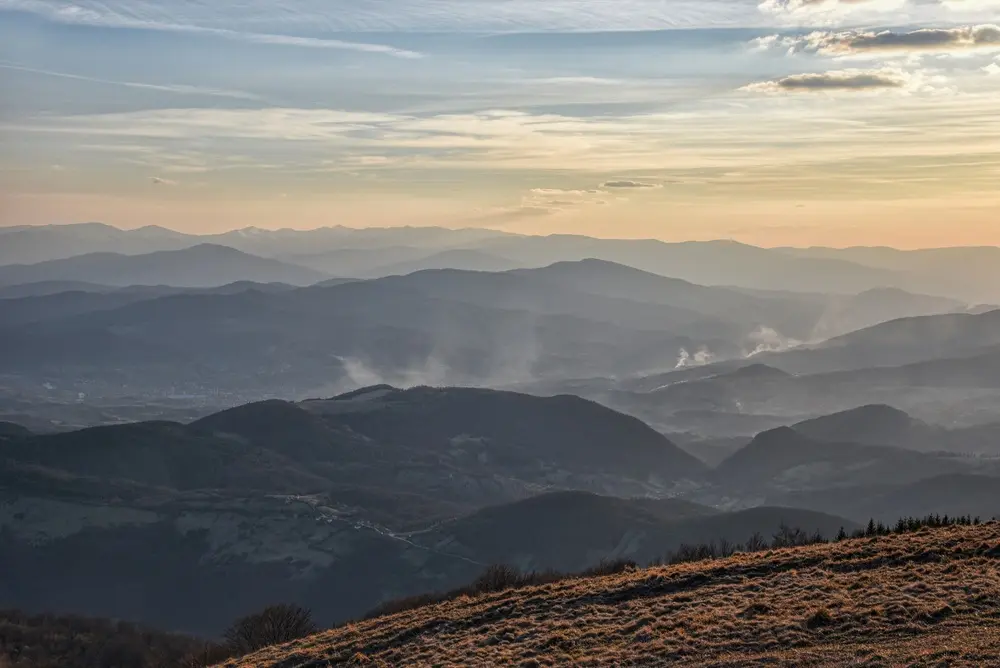
Kakanj, Bosnia Erzegovina © betibup33/Shutterstock
Kakanj, Bosnia Erzegovina © betibup33/Shutterstock
In 2021, activists in Serbia organized rallies and road blockages in many parts of the country. The actions took place in protest of the international mining company Rio Tinto’s planned exploration for lithium in the Jadar River valley, near the Drina River and just across the border from Bijeljina. Solidarity demonstrations were organized on the Bosnian side, in Bijeljina and Banja Luka. In early 2022, environmentally conscious people on both sides of the Drina celebrated when the Serbian government suspended the plan to exploit lithium deposits.
The Bijeljina-based environmentalist organization Eko Put had closely followed the protests.
Snežana Jagodić-Vujić, leader of Eko Put, describes the development of regional opposition to lithium mining.
“We wanted to send the message that if the pollution spreads in Serbia, it would affect us, too. Runoff from tailings resulting from mining at Jadar will go into the Drina, and then to the Danube and all the way to the Black Sea”.
For a time, the threat seemed to be warded off. However, Snežana told me, “In September 2023, it was leaked to the public that there was a exploration underway for lithium around Lopare, the main town in the nearby Majevica hills. We were all taken aback. We are sandwiched between two dangerous projects, because Bijeljina is located between Majevica and Jadar”.
“In the two entities of Bosnia there are a total of eight municipalities and cities, including Bijeljina, that are on or near Majevica”, explains Snežana. “We started to create a network and to raise the whole of Majevica to open struggle. We also connected with people from Ozren, who were fighting another mining project. We have shown that, regardless of whether you are a Serb, Croat, Muslim, it does not matter. We have created a network against hate. Why should I, a Serb, hate someone just because they have a Muslim name? We all share the same air, we share the same water, and we live on the same land”.
“We united activists and communities in the network, and that bothered our politicians in Banja Luka and Sarajevo”, points out the activist. “It bothered them because they live off of ethnic hatred. In reality, they are simple-minded, semi-literate, criminal trash. They have been abusing people for 30 years, separating us for all this time with continuous media manipulation”.
“Lithium is important, because the change in our awareness began with it. It was the drop that overflowed the glass of bitterness and all the misfortune that has happened to us in the last 30 years”.
Snežana comments that “the youth have risen in Serbia”, and she hopes that the youth in BiH will rise as well.
“I think that there is more hope now among younger people here. However, the conditions in Bosnia are quite different than in Serbia. People are still divided here”.
What unites people
It is true that the forcible separation of the three main ethnicities during the war made it easier for demagogic leaders to nurture ethnic mistrust, all with the goal of preserving their power and privilege. Ordinary people throughout Bosnia and Herzegovina know that their leaders are corrupt, but joining together effectively across ethnic and entity boundaries to make changes has been extremely difficult.
Snežana identifies the environmental movement as the potential turning point. “Now, we environmentalists are the ones who can pull people forward – especially the women leaders”.
When rivers poisoned with cadmium and other heavy metals run downstream from Rupice mine to Kakanj, that compromises the drinking water of that town’s 40,000-strong population. This is the case whether the residents of Kakanj are Serb, Bosniak or Croat. This situation is replicated throughout Bosnia and Herzegovina, because rivers do not respect artificially created ethnic boundaries.
The all-inclusive destructive effects of mining thus serve as a unifying force among communities that have otherwise been in conflict. As the prominent Kakanj-based activist Hajrija Čobo told me, “when Bosnians see that they have a mutual enemy, then they unite; they do not look at who is who. They can see that ‘they have the same problem I have’”.
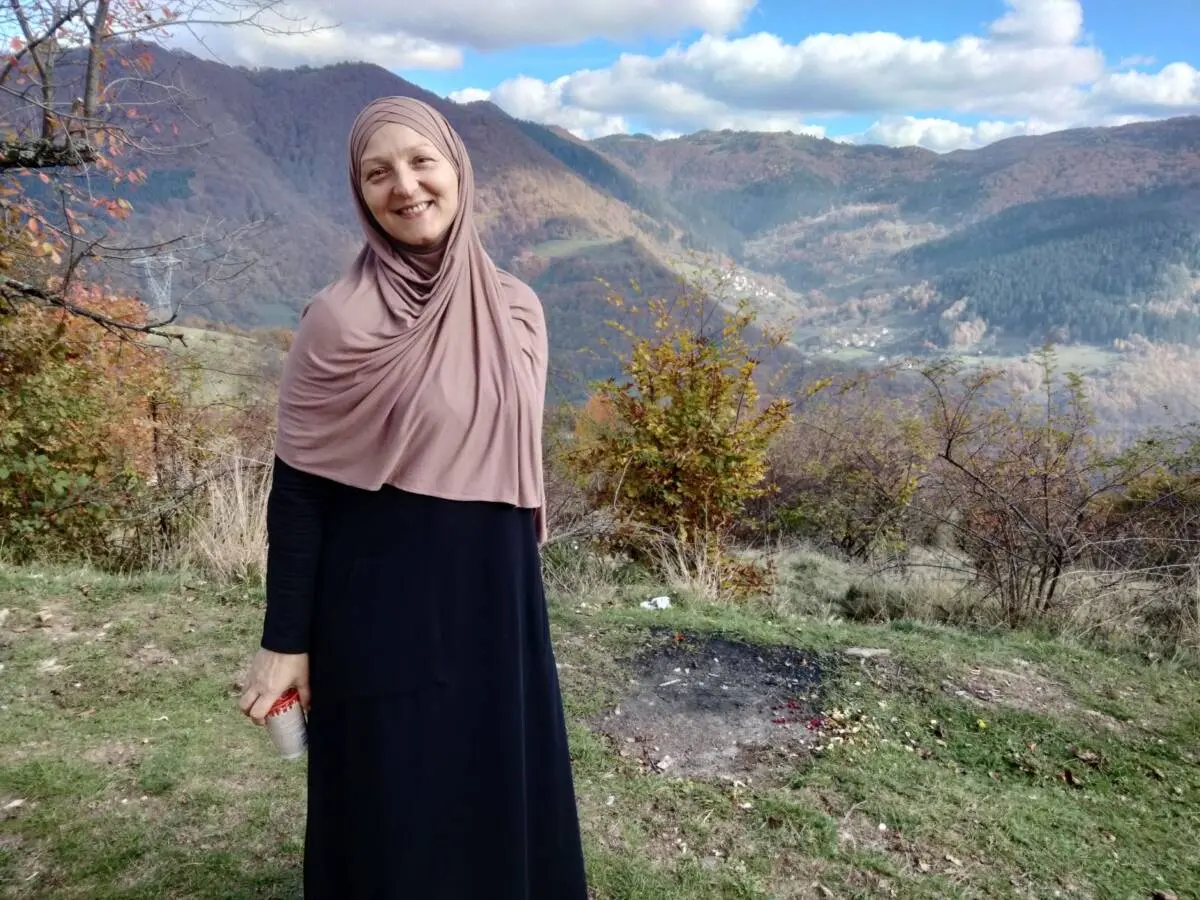
Hajrija Čobo, activist from Kakanj – Foto P. Lippman
The activist campaigns are composed of ordinary people, many of whom have lived through the terrors of the 1990s war. They thus carry with them the resulting trauma and, often, suspicion of those who were on the other side of the front line.
I attended a meeting at the Ozren community of Sočkovac, the center of the organization Ozren Springs (Ozrenski Studenac). There I met a middle-aged Serb who had lost a leg during the war, and others who had fought on the Serb side. But this man, along with his fellow activists of all ages, was putting aside that history – at least for the time being – to work with other Bosnians of all ethnicities.
While the entire spectrum of political feeling from anti-nationalism to ethnic mistrust still resides under the surface, today, a new threat had replaced the old one. With few exceptions, people’s attention, regardless of their background, is focused on protecting their land from a foreign invader. This feeling exists on all sides.
It was two leading activists from the Federation – a Croat and a Bosniak – who drove me up into the Ozren hills to attend the meeting. Today, the Croat Davor Šupuković of the Maglaj-based Citizens’ Association of Fojničani, the Ozren Serb leader Zoran Poljašević and Besim Gurda, a Bosniak from Zavidovići, work closely together to fight environmental destruction on Ozren and throughout central Bosnia.
Working towards common goals
I asked Davor Šupuković how environmental activists around Bosnia and Herzegovina work to mobilize campaigns against the dangers of mining.
“It is different in different places. We especially employ social media to post warnings about environmental threats”, says Davor. “There are NGOs, businessmen, priests and farmers, all working against the politicians who just want to secure foreign investments. Also, there are imams who are involved. Some of them have declared that it is required in Islam to protect nature”.
The river activist Robert Oroz fills out the description of tactics employed by activists. “We have three resources: the media, lawyers and our bodies”. That is, in addition to using all manner of public communication, activists pursue legal avenues, as exemplified by the legal assistance group, Aarhus. This indispensible organization, among other achievements, successfully promoted the end to mini-hydroelectric dams in the Federation. And where legal means have not been sufficient, communities have at times organized to block the construction of environmentally destrucive mini-dams, such as the year-long blocking action at Gotuša in the Željeznica River valley in 2012.
The reason for the fight
I have asked many grassroots activists what goals they envision. Azra Berbić of the ACT – Foundation for Social Change summed it up. “The fight for our environment is a red line. For the people of the Balkans, the preservation of natural wealth is the most important thing. It gives us strength and unity, because it is not only a fight for the rivers, air and land, but also a fight against nationalism. The struggle to protect the environment works to protect dignity, social justice, class justice and against neocolonialism. Not everyone knows what neocolonialism means, but they feel it”.
Svjetlana Nedimović brings in a far-seeing political element. “Finally, there is an opening for an anti-capitalist narrative. People are agreeing that we have a common enemy, and that is force and capital”.
With regard to the investors who vandalize Bosnian land without concern for the health of the environment, Snežana Jagodć Vujić says that “their logic is only in profit”.
“So, what we need is a change in the social system, to get to where people will come first and they will not be treated as a commodity”.
The environmentalists in Bosnia and Herzegovina call for their prized lands to be turned into nature reserves, rather than poisonous landfills. They advocate for the branding of honey, strawberries, and rakija on Majevica, and of herbal teas and organic fruits on Ozren. They call for the development of tourism in those places and all the way to the pristine waters of Jajce and Jezero, as an alternative to seeing earth movers plow through ancient monuments on behalf of profit for the Swiss- and British-based corporations.
For these things to take place, an environmental movement that can sustain widespread campaigns is needed. But Tihomir Dakić, director of the vital Banja Luka-based Center for the Environment, thinks that there are too few environmentalists in BiH.
“The proactive citizens of Bosnia and Herzegovina would fill one bus, and look at how many levels of government we have, how many ministries, how many cantons, how many of those who will sign up for geological exploration”, comments Dakić.
But, we recall the words of the anthropologist Margaret Mead: “Never doubt that a small group of thoughtful, committed citizens can change the world. Indeed, it is the only thing that ever has”.
In this vein, Davor Šupuković predicts that, where there is an imminent threat to the environment in a local setting, “people will not stand for it, they will amass in numbers. That was incomprehensible before, but now, thanks to ongoing local and regional organizing in many locations, there is resistance. You only need ten to fifty people, in a coordinated effort, to stop the destruction”.
“We have the possibility to live in a mine shaft, or to organize”, concludes Šupuković.