Armenia and Azerbaijan edge closer to peace
For the first time in thirty years, a grain shipment from Kazakhstan crossed Azerbaijani territory to reach Armenia. Rail links between the two countries have finally been unblocked
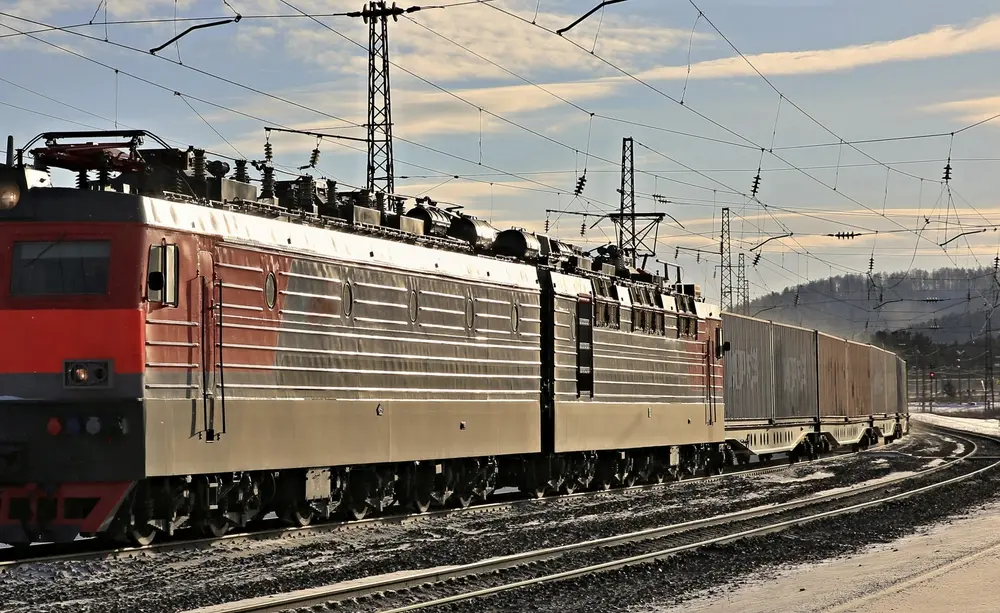
Train, Kazakhstan © alleks19760526/Shutterstock
Train, Kazakhstan © alleks19760526/Shutterstock
At the weekend, in what could be considered a groundbreaking development, 1,000 tons of wheat from Kazakhstan arrived in Armenia via an unexpected route.
The wheat was transported via Azerbaijani territory by rail for the first time in over three decades. This had previously been prohibited because of the war of the early 1990s. Due to the country being landlocked and with its borders with Azerbaijan and Turkey closed, Armenia’s only trade routes had hitherto been through Iran and Georgia. The Soviet-era railway that had once carried freight between Armenia and Russia still remains closed as it passes through Georgia’s breakaway region of Abkhazia.
The surprise announcement made by Azerbaijan’s President, Ilham Aliyev, in Kazakhstan on 22 October came out of nowhere. “Peace between Azerbaijan and Armenia is no longer just on paper but also in practice,” he declared. Many analysts credit the 8 August meeting between Aliyev and Armenian Prime Minister Nikol Pashinyan in the company of U.S. President Donald Trump for the development.
Unblocking trade and transport in the South Caucasus featured highly. It was also there that the Armenian and Azerbaijani foreign ministers initialled a 17-point agreement to normalise relations. Though some analysts do not rule out that it was a development agreed by Armenia, Azerbaijan, and Russia, it was expected that the first goods to be transported would be wheat from Kazakhstan.
Coincidentally, this is not the first time that wheat has taken on a symbolic role in terms of cooperation between Armenia and conflicting neighbours. During a particularly bad winter in 1992, Turkey agreed to allow temporary transit of wheat.
The Kazakh wheat, passing through Azerbaijan to Armenia, also raised the prospect that Yerevan could lessen its dependency on Moscow. Last year, Armenia imported 316,000 tons of wheat from Russia and Moscow has previously used it to dampen any enthusiasm to move closer to the West. The head of the Armenian Security Council, Armen Grigoryan, even publicly pondered whether it was time to switch to imported rice instead.
On November 6, however, the first arrival of wheat by train came not from Kazakhstan but Russia. When the Kazakh wheat did arrive, it anyway came via Moscow, Baku, and Tbilisi, highlighting how Armenia remains reliant on Russia which still controls the rail network through the South Caucasus Railways.
Not everyone was content, however. According to media reports, the opposition claims the Kazakh wheat was inferior to the Russian consignment. Meanwhile, a minority of Armenians bought into conspiracy theories and expressed concern that both consignments could have been poisoned by Azerbaijan as they passed through its territory. In response, Armenian Minister of Economy Gevorg Papoyan quipped that, if necessary, he would eat the wheat first.
Despite the naysayers, the unblocking of rail connections through Azerbaijan was a historic development. Pashinyan thanked both Azerbaijan and Russia. He offered to allow Turkish trade through Armenia to Azerbaijan, though this is unlikely to happen until the Armenia-Azerbaijan conflict is formally ended. This remains dependent on changing the Armenian constitution, something that is expected to occur only after parliamentary elections set for 7 June next year. For now, the Armenia-Turkey land border remains fully closed until the 17-point agreement, finalised in March and initialled in August, is signed. In general, however, Armenia and Azerbaijan are considered closer to peace than at any time before over the past three decades.
There have been other positive developments. In September, the co-director of Baku’s Topchubashov Centre, a think tank, visited Yerevan to participate in the NATO Parliamentary Assembly’s Rose Roth seminar. At the end of October, five other Azerbaijanis flew directly to Yerevan from Baku in a charter Azerbaijani Airlines flight, the first since 2011. They met with their counterparts from Armenian civil society to launch an officially endorsed Track II format in order to prepare the populations for peace.
It is expected that the Armenian participants will fly to Baku to continue discussion in the nearest future, including on the resumption of media exchanges between the sides, something that has not happened since 2019, and the facilitation of people to people contact between communities either side of the Armenia-Azerbaijan border.
Earlier this month, two Azerbaijani analysts flew to Yerevan to attend a forum held by the Armenian government’s Orbeli Centre. Dozens of Armenian and Azerbaijanis, mainly students and young professional, also met in thematic groups in Tbilisi to discuss ways forward for their countries in late October.
The last two months have arguably marked a shift from political statements to tangible positive developments on the ground. Though hurdles still remain, not least constitutional changes in Armenia, the sides now appear more pragmatic than at any time before.
Even so, for any real breakthrough to succeed, it will need to be sustainable and occur in other areas too. The challenge is to ensure that they do not remain isolated and simply symbolic gestures. Instead, they must become the basis for a durable peace defined by connectivity, trust, and mutual benefit.
Tag: Pace