Albania joins the US in designating Iran a “state sponsor of terrorism”
Having hosted opponents of the Tehran regime in recent years and suffered cyber-attacks which Tirana blames on Iran, Albania has aligned itself with the US and declared Iran a “state sponsor of terrorism”. A move that reaffirms its strategic closeness to the United States
shutterstock_2524898335
© Fly Of Swallow Studio/Shutterstock
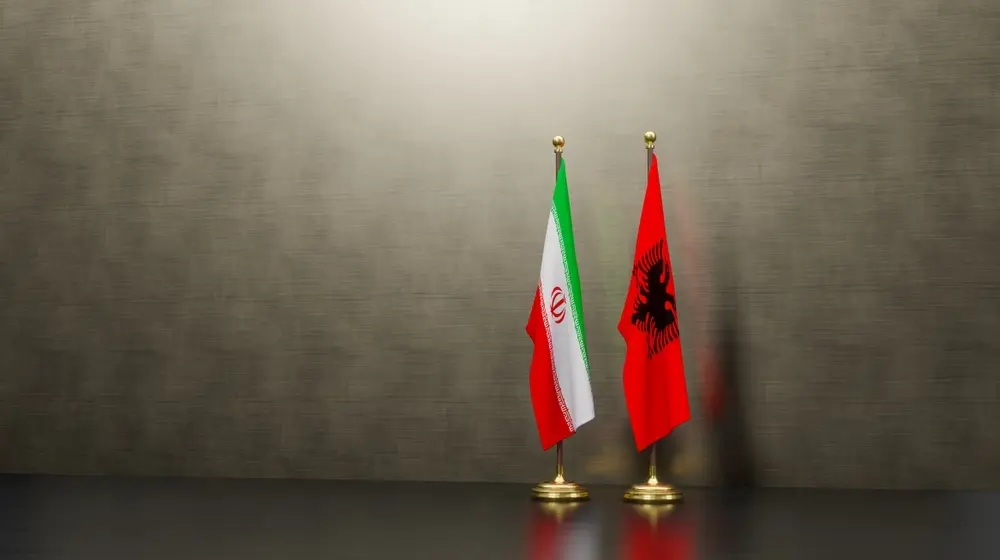
Albania’s parliament adopted a resolution declaring Iran a “state sponsor of terrorism,” making it only the second country in the world after the United States of America to take such a step.
The resolution was approved during the plenary session of 17 March with 79 votes in favor from the ruling majority and one abstention by Redi Muçi of the Together Movement party, while the opposition led by the Democratic Party boycotted the session.
“The Assembly of Albania declares the Islamic Republic of Iran a ‘state sponsor of terrorism’ and a state that uses terrorist means to pursue its foreign policy objectives,” states the adopted document.
Socialist Party parliamentary group leader Taulant Balla said during the plenary session that the resolution is primarily aimed at addressing cyberattacks. “Through this resolution, we seek to clearly condemn any form of state support for terrorism, the use of proxy groups for destabilisation, and the deployment of hybrid tools, including cyberattacks against the institutions of sovereign states,” Balla said.
The Democratic Party issued a separate statement, having boycotted the parliamentary session. Notably, its statement made no reference to Hezbollah, the Lebanon-based armed group, which the resolution also calls on the government to designate as a terrorist organisation, alongside the Islamic Revolutionary Guard Corps.
“The Democratic Party of Albania declares the Revolutionary Guard of Tehran’s dictatorial regime a terrorist organisation. It considers the obscurantist state of the Ayatollahs to be the main sponsor of terrorism in the world and a major threat to peace and stability in the Middle East and globally,” said party leader Sali Berisha.
Meanwhile, Redi Muçi, the only MP to abstain, criticised what he described as double standards on the part of the government. “There is no greater hypocrisy than presenting this resolution while your prime minister went and effectively knelt before Netanyahu, a man facing arrest warrants for crimes against humanity and war crimes and who has used Israel to carry out the killing of tens of thousands of Palestinian civilians,” Muçi said.
Through the resolution, Albania also expresses solidarity with Gulf Arab States and Turkey while condemning the cyberattacks attributed to Iran against Albanian institutions, which, according to the document, date back to 2022.
The government is further urged to designate the Islamic Revolutionary Guard Corps as a terrorist organisation, as well as Hezbollah, as part of Iran’s broader network, in line with actions taken by the United States of America and several other Western countries.
The adoption of the resolution follows a series of cyberattacks, including the one targeting the Albanian parliament’s website early this month by the Iran-linked “Homeland Justice” hacker group.
Albania–Iran tensions
For authorities in Tirana, the confrontation with Iran is no longer seen as a distant geopolitical issue but as a concrete threat to national security.
Since 2022, Albania has accused Iran of carrying out a series of cyberattacks targeting state digital infrastructure, disrupting public services and exposing vulnerabilities in government systems.
In September 2022, following repeated cyber incidents, Albania severed its diplomatic relations with Iran. Albanian authorities, supported by international partners, linked the attacks to Iranian state-backed actors.
NATO responded at the time by condemning the attack and warning that such actions aim to destabilize and undermine the security of member states.
Following the decision, Iranian diplomats were expelled from Albania, while Prime Minister Edi Rama described the incident as “state aggression.”
This marked the first time a country cut diplomatic ties over a cyberattack and one of the first instances in which a NATO member publicly blamed Iran for such an operation.
The most recent attack on the parliament and the activity of the self-proclaimed group “Homeland Justice” suggest that the confrontation in cyberspace remains ongoing, albeit in more fragmented forms.
The role of MEK and tensions with Tehran
A key element in relations between the two countries remains the presence in Albania of the Iranian opposition group, the People’s Mojahedin Organization of Iran, known also as Mojahedin-e Khalq (MEK).
The group describes itself as an opposition movement in exile against Iran’s ruling system. Initially formed as an anti-shah organisation during the 1979 revolution, it later clashed with the Islamic regime and was involved in violent activities in the past.
Since 2013, thousands of its members have been resettled in Albania as part of a process supported by the United States of America and international organisations.
In the final year of his term, Prime Minister Sali Berisha reached an agreement in 2013 with then US Secretary of State Hillary Clinton to receive around 270 MEK members from Iraq, who were granted political asylum in Albania. The arrangement marked the first phase of a broader relocation effort supported by the United States of America.
The process was later expanded under Prime Minister Edi Rama, who agreed to host around 3,000 additional Iranian opposition members. Following their arrival, the “Ashraf” camp was established in the Manza area, on the outskirts of Tirana, to accommodate them. At the time, the decision was framed as a humanitarian act rather than a political one and was publicly welcomed by senior US officials, including the president.
For Tehran, MEK is considered a hostile organisation. Albanian authorities have previously stated that they have foiled attempts to target its members on Albanian soil.
However, the direct link between MEK’s presence and cyberattacks against Albania remains unclear. Security institutions have avoided framing this as a straightforward cause-and-effect relationship, instead placing it within a broader geopolitical context.
Public debate and expert opinion remain divided. Some view MEK’s presence as increasing Albania’s exposure to risk, while others argue that the threat would exist regardless, given the country’s alignment with Western allies.
A decision reflecting alignment with the US
Designating Iran a “state sponsor of terrorism” may appear as a significant move, but in essence it reflects a long-standing feature of Albania’s foreign policy: its close alignment with the United States of America.
This orientation has been evident before. In public statements, Prime Minister Edi Rama has stressed that for Albania, the confrontation with Iran is not “abstract geopolitics” but a matter of national security, referring to the cyberattacks of recent years.
In this sense, the resolution does not represent a new or independent approach toward Iran, but rather reinforces an already established line. Albania is not seeking to reshape international dynamics, but to position itself clearly within a defined geopolitical camp.
At the regional level, the decision is unlikely to significantly alter existing balances. Western Balkan countries do not play a direct role in the confrontation with Iran, and most maintain a relatively low profile on such issues.
However, Albania stands out as one of the most exposed countries to these tensions—not because of its power, but because of the role it has assumed as host to the Iranian opposition and as one of the most vocal supporters of US policy in the region.
This does not increase Albania’s influence in the conflict, but it does make it more visible—and potentially more vulnerable, particularly in the cyber domain.
In this context, a broader question emerges about the coherence of Albania’s foreign policy. Its consistent alignment with the USA has often extended to supporting its allies, including Israel, even at times when their actions have drawn international criticism over the impact on civilians, including in Palestine.
Against this backdrop, condemning Iran as a “state sponsor of terrorism” raises questions not only about security but also about the standards Albania applies in evaluating international actors. Ultimately, the question remains: is Albania positioning itself on the right side of history, or simply aligning itself with the most powerful actors?
Tag: Iran