
Albania | Architecture, Architettura, Cities, Città, Tirana | Rights
Tirana, demolitions in the name of urban development in the 5 Maji neighbourhood
25/02/2026, Federico Caruso, Francesca Barca
The neighbourhood of 5 Maji, north of Tirana, is at the centre of a controversial and opaque urban renewal plan. Several houses have already been demolished to make way for new buildings, leaving residents in a precarious situation. Reportage
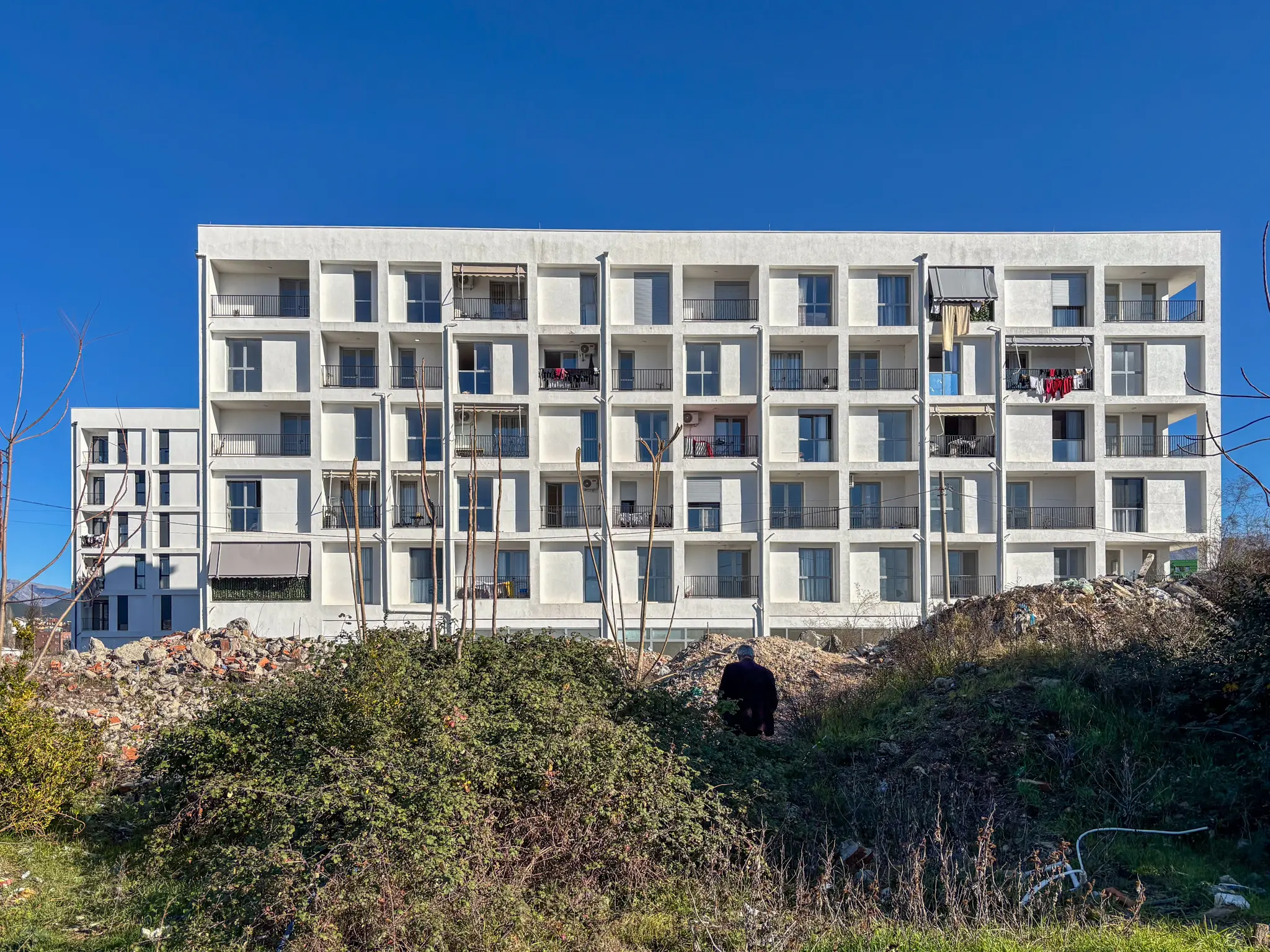
Tirana Riverside
Gjin Nikolli walks among the ruins of his former home, in front of the new Tirana Riverside complex. | Photo Francesca Barca
The 5 Maji (5 May) neighbourhood is located less than an hour’s walk from Tirana city centre. It is set to play a large role in the future of the Albanian capital, since it is the subject of a major urban renewal and rebranding project, Tirana Riverside, designed by Italian “starchitect” Stefano Boeri, who was also entrusted with the “Tirana 2030 urban planning project.” The plan involves the construction of 3,500 flats and the demolition of 400 existing houses in the area.
As described by journalism and communication lecturer and activist Ervin Goci and architecture and urban planning lecturer Suzanne Harris-Brandts in Urban Geography, Tirana Riverside is “over-zealously marketed as the first neighborhood in Europe to respond simultaneously to climate change and pandemics – all while being a 15-minute, polycentric, zero-emission, smart, eco-district for 12,000 people.”
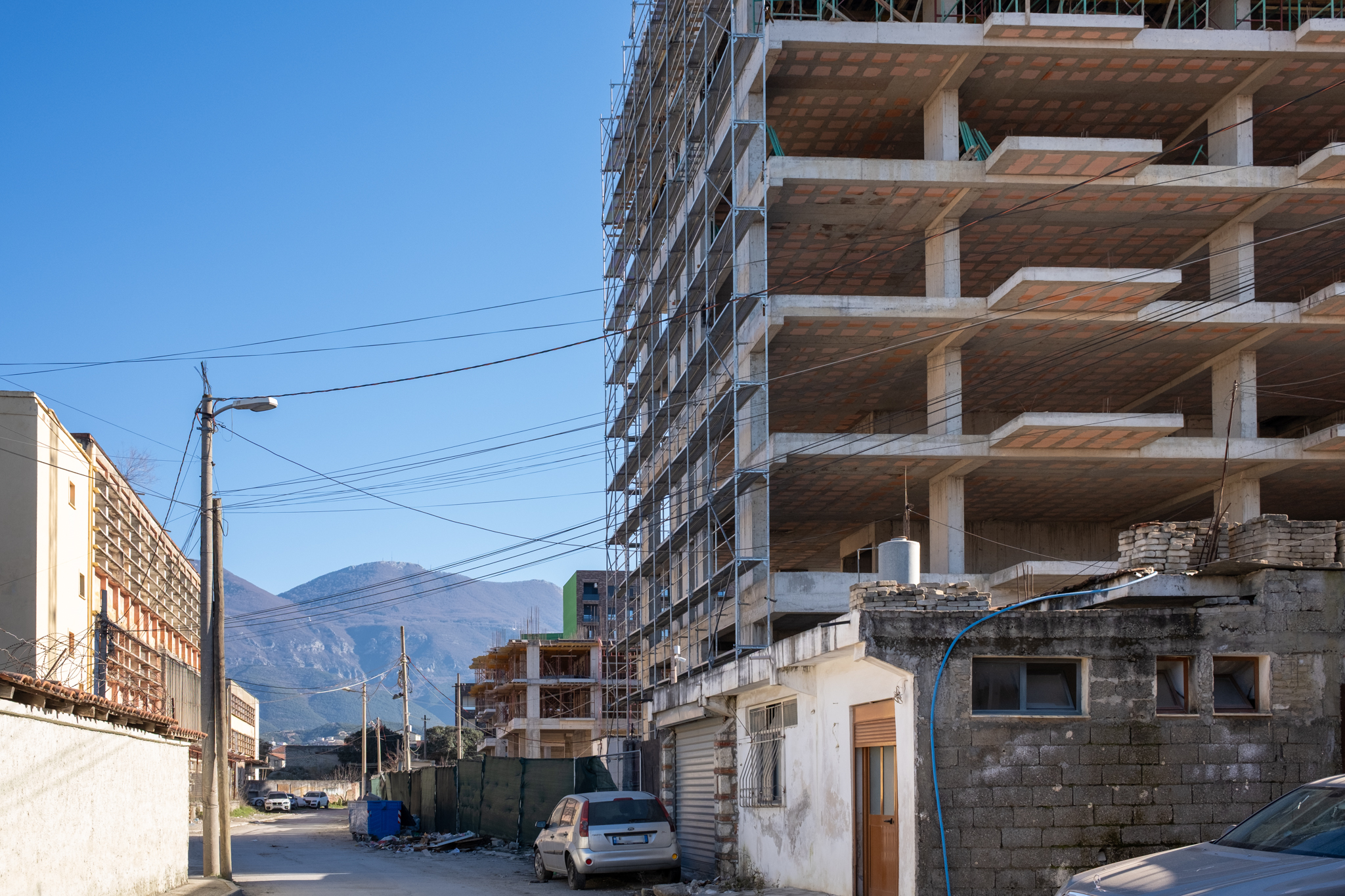
Tirana, quartiere 5 Maji – Foto: Federico Caruso
In the north of the Albanian capital, we visit a neighbourhood that – aesthetically speaking – has little in common with the urban centre. | Photo: Federico Caruso
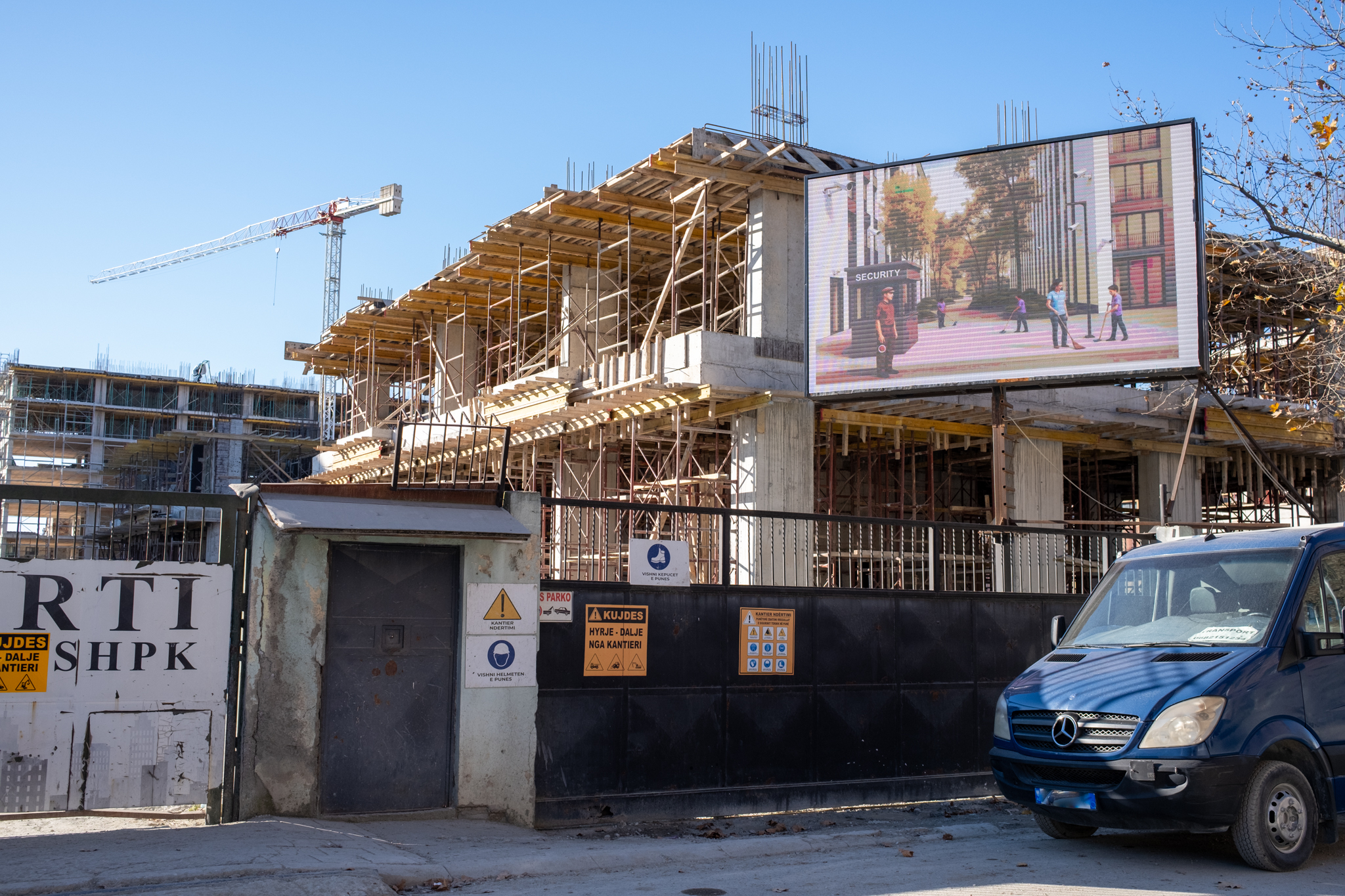
Tirana, quartiere 5 Maji – Foto: Federico Caruso
Exploring the street that gives the neighbourhood its name, Rruga 5 Maji, you see building sites and new constructions, often with several floors, whose final appearance can be guessed at from the numerous architectural renderings. | Photo Federico Caruso
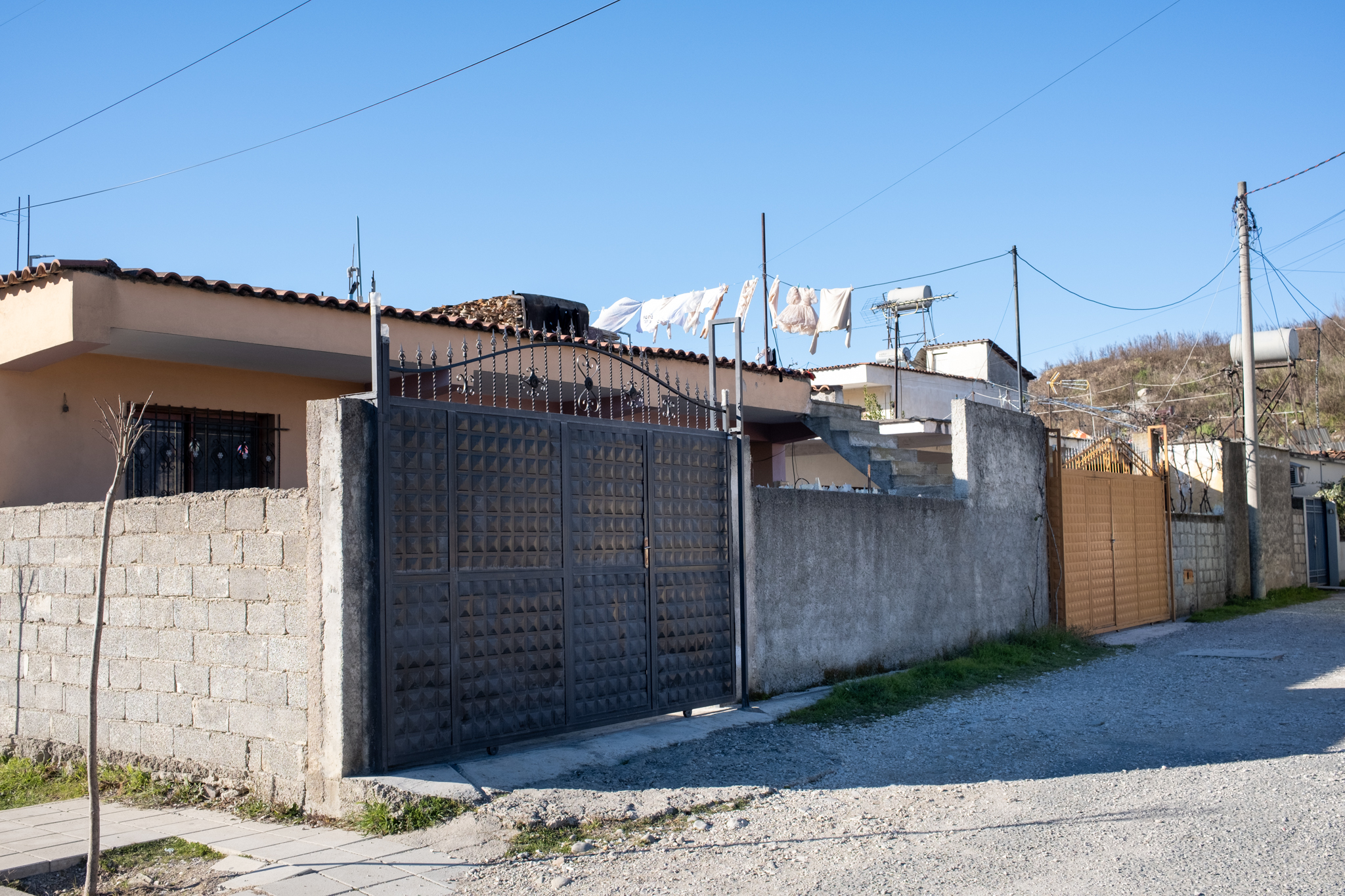
Tirana, quartiere 5 Maji – Foto: Federico Caruso
The internal roads are not always paved, and the space between the buildings is wider: a landscape of low houses, many with small gardens, all different from each other. | Photo: Federico Caruso
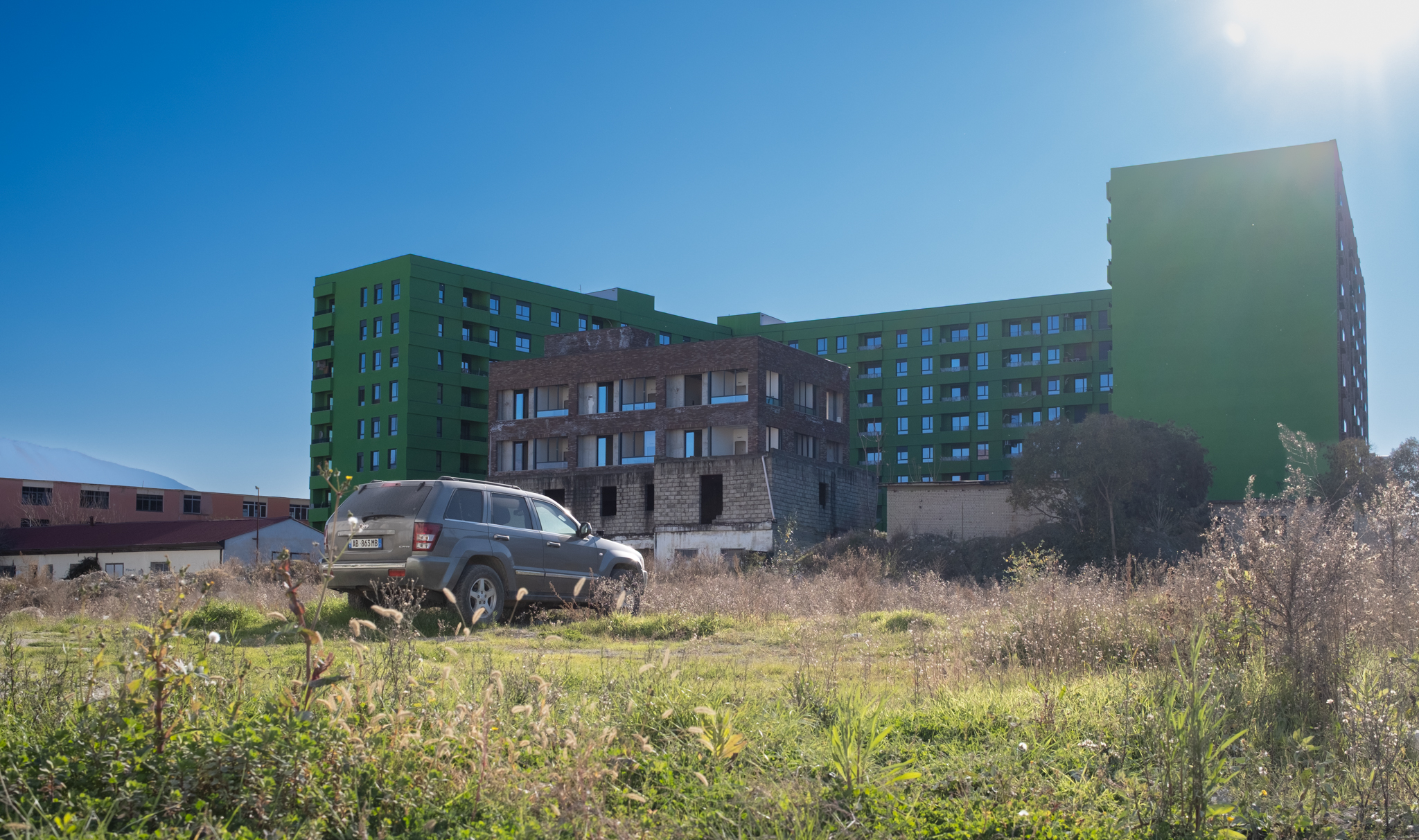
Tirana, quartiere 5 Maji – Foto: Federico Caruso
The existing houses are surrounded by new buildings| Photo: Federico Caruso
On 26 November 2019, an earthquake struck northwestern Albania and caused over 50 deaths and around 3,000 injuries, as well as damage to buildings throughout the country. This area was also designated to accommodate families affected by the earthquake.
However, the urban development project was in planning well before the earthquake, and follows a series of institutional decisions whose documents have not been made available to the public. “The earthquake’s disaster response allowed the government to implement exceptional state legislation, bypassing regular procedures for project approvals and public consultation,” write Goci and Harris-Brandts.
Demolitions in 5 Maji began in October 2021, reports journalist Elira Kadriu in the independent newspaper Citizens. According to the Albanian authorities, some residents have agreed to be relocated. However, journalists on the ground have found no evidence of this agreement
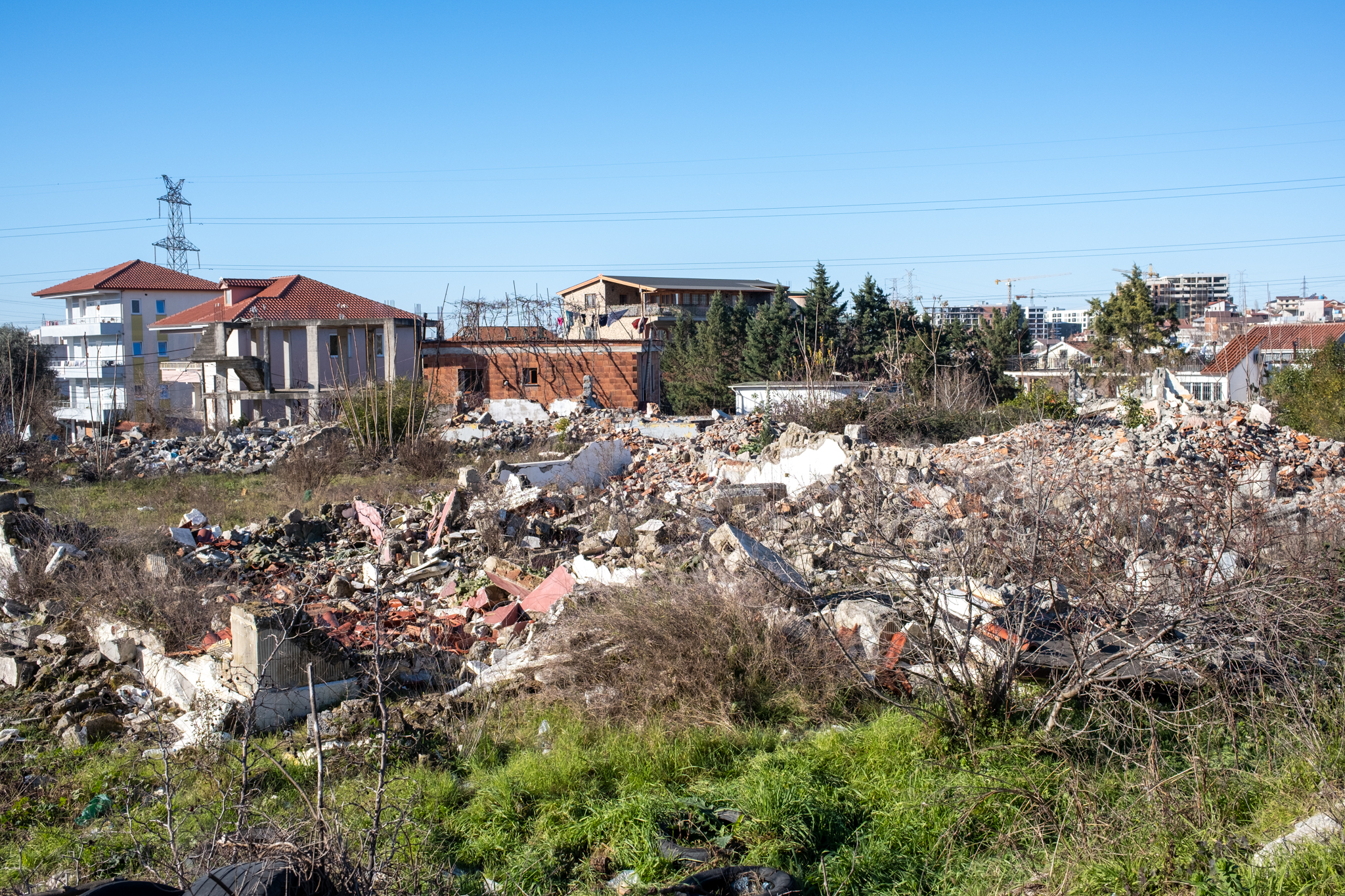
Tirana, quartiere 5 Maji – Foto: Federico Caruso
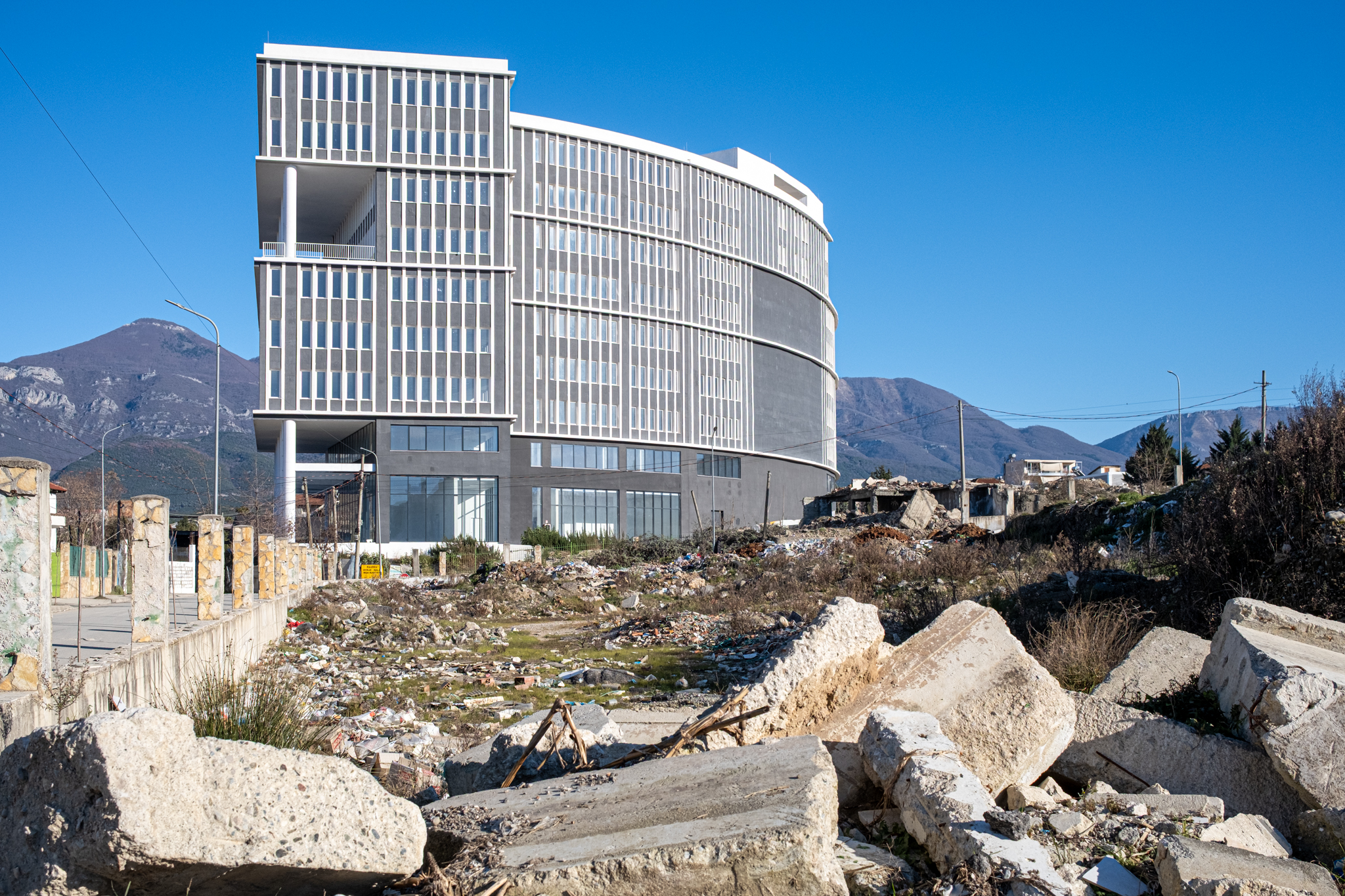
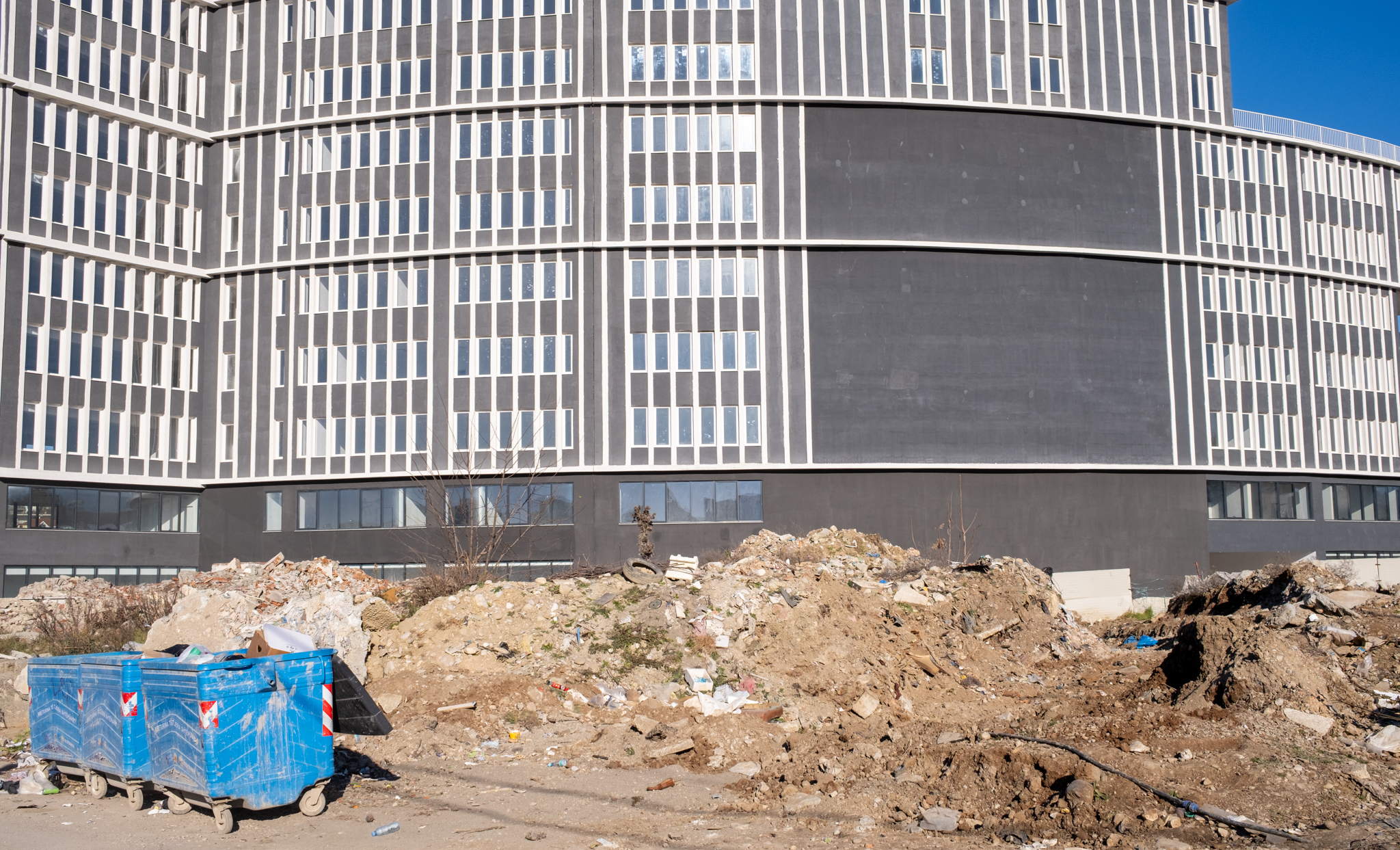
Today, part of the project is complete: the new complex stands amid the ruins of the old neighbourhood. The debris from the 2022 demolitions has never been removed. | Photo: Federico Caruso
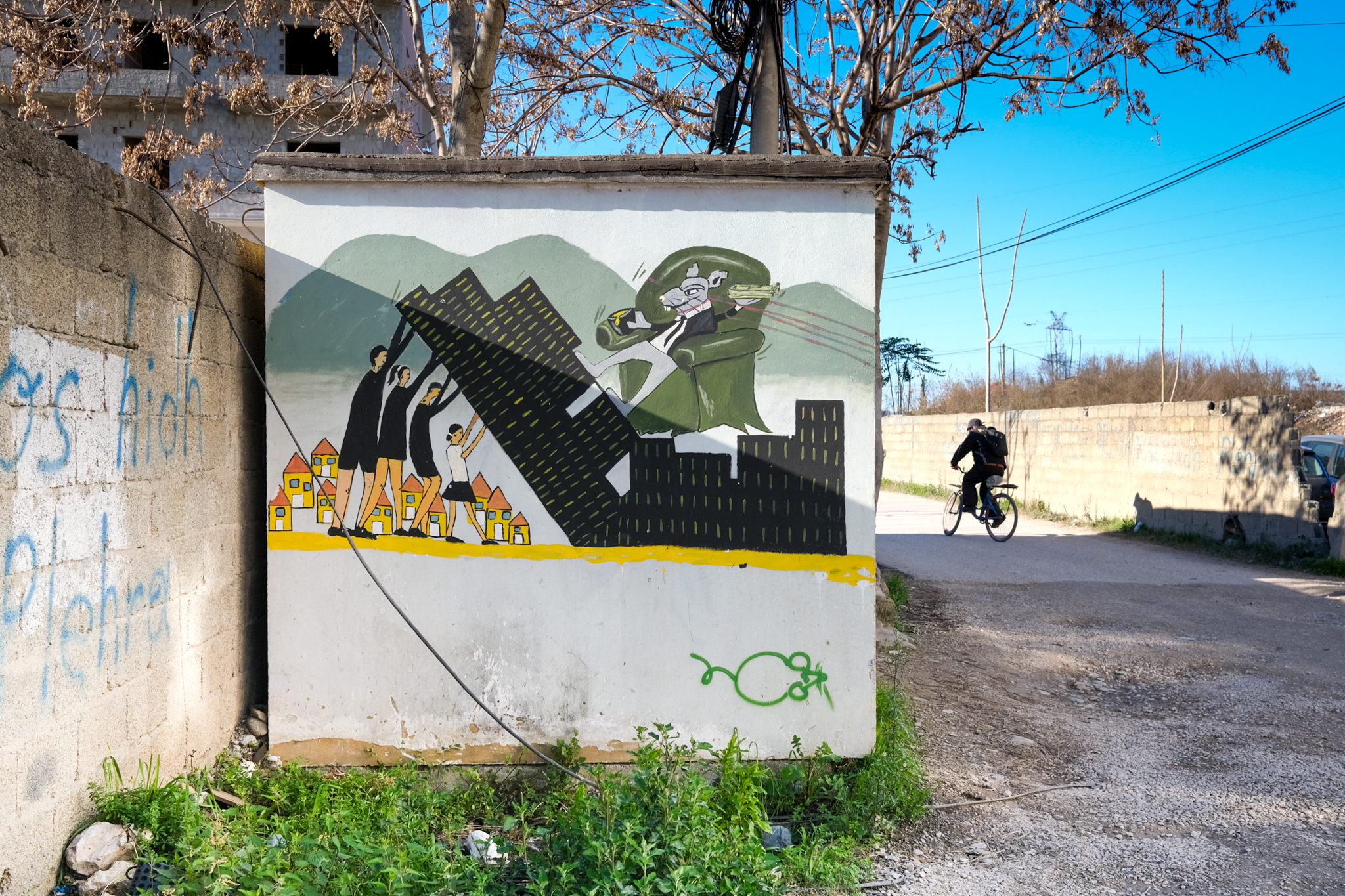
Tirana, quartiere 5 Maji – Foto: Federico Caruso
Some citizens have organised themselves and demonstrated publicly. Police responded to spontaneous resistance against the evictions with tear gas and arrests of some residents, who were released after a few hours. | Photo: Federico Caruso
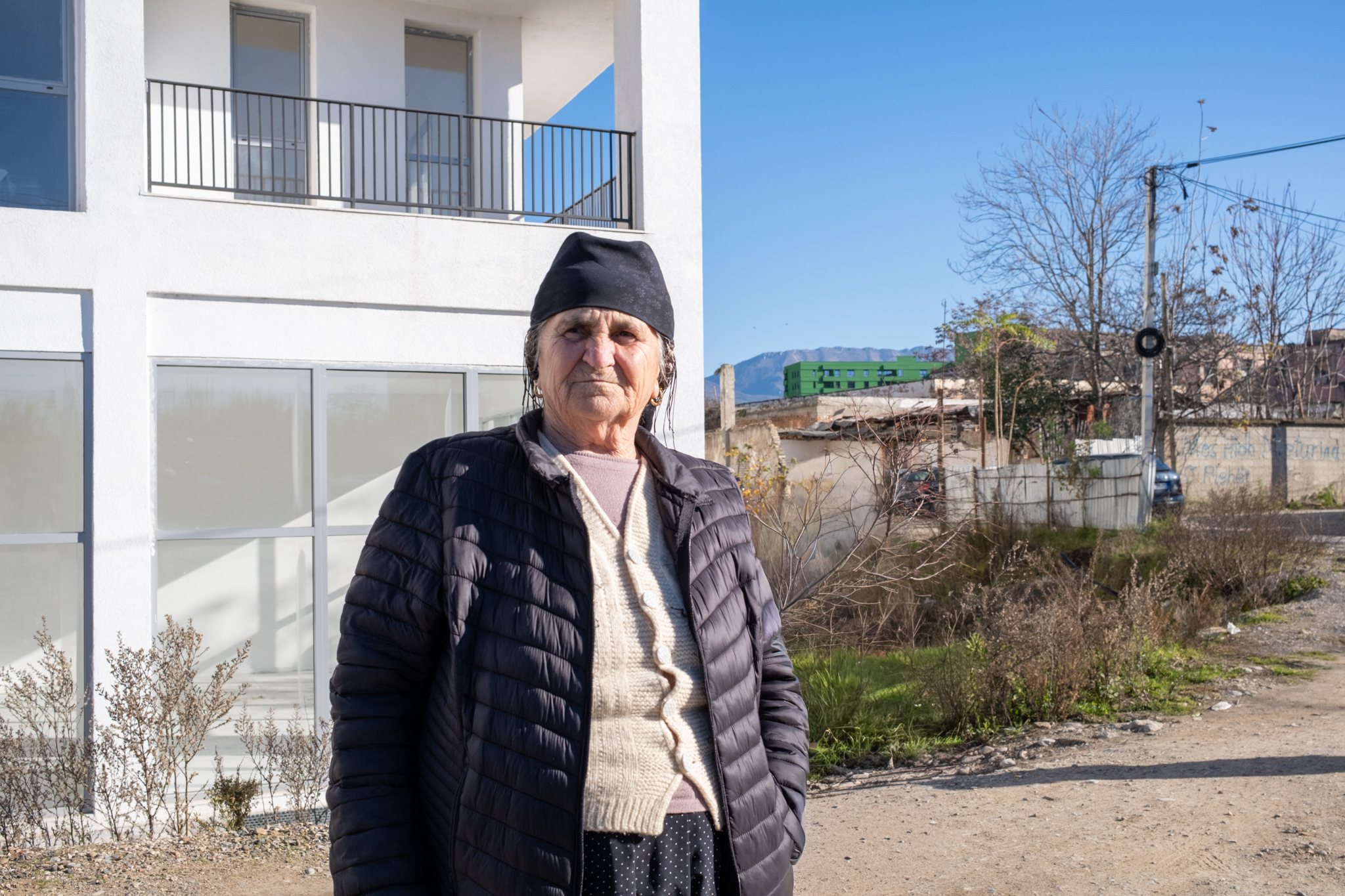
Tirana, quartiere 5 Maji – Foto: Federico Caruso
Mother Liza (Liza Marku) has become the symbol of the resistance of 5 Maji, to the point of being received by Prime Minister Edi Rama. Her house was destroyed and she now lives in the new housing complex. | Photo: Federico Caruso
Like other areas on the outskirts and in the hinterland of Tirana (including Kamza), 5 Maji is the product of internal migration following the end of the socialist regime in the early 1990s.
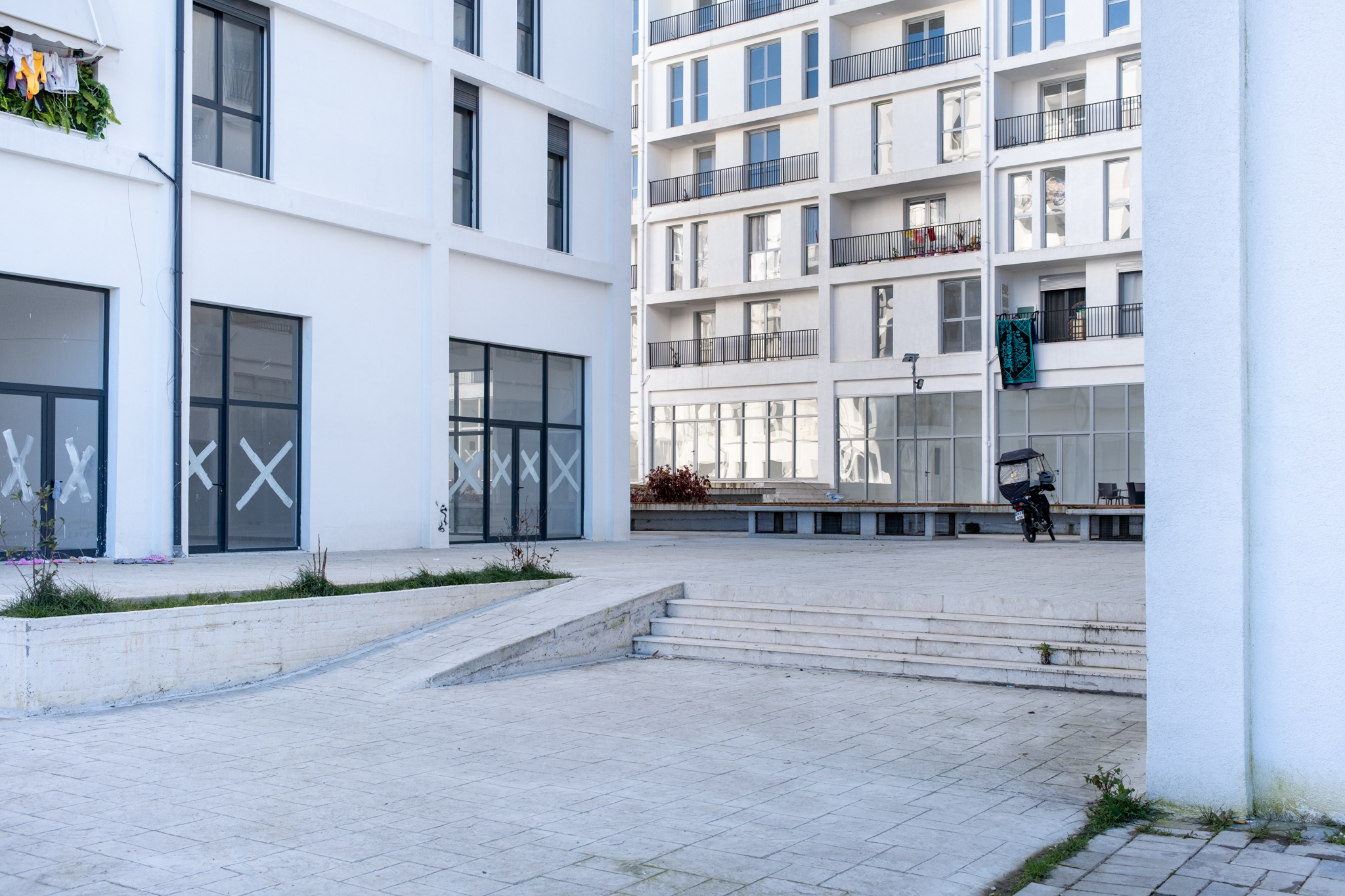
Tirana, quartiere 5 Maji – Foto: Federico Caruso
Photo: Federico Caruso
Tirana, quartiere 5 Maji – Foto: Federico Caruso
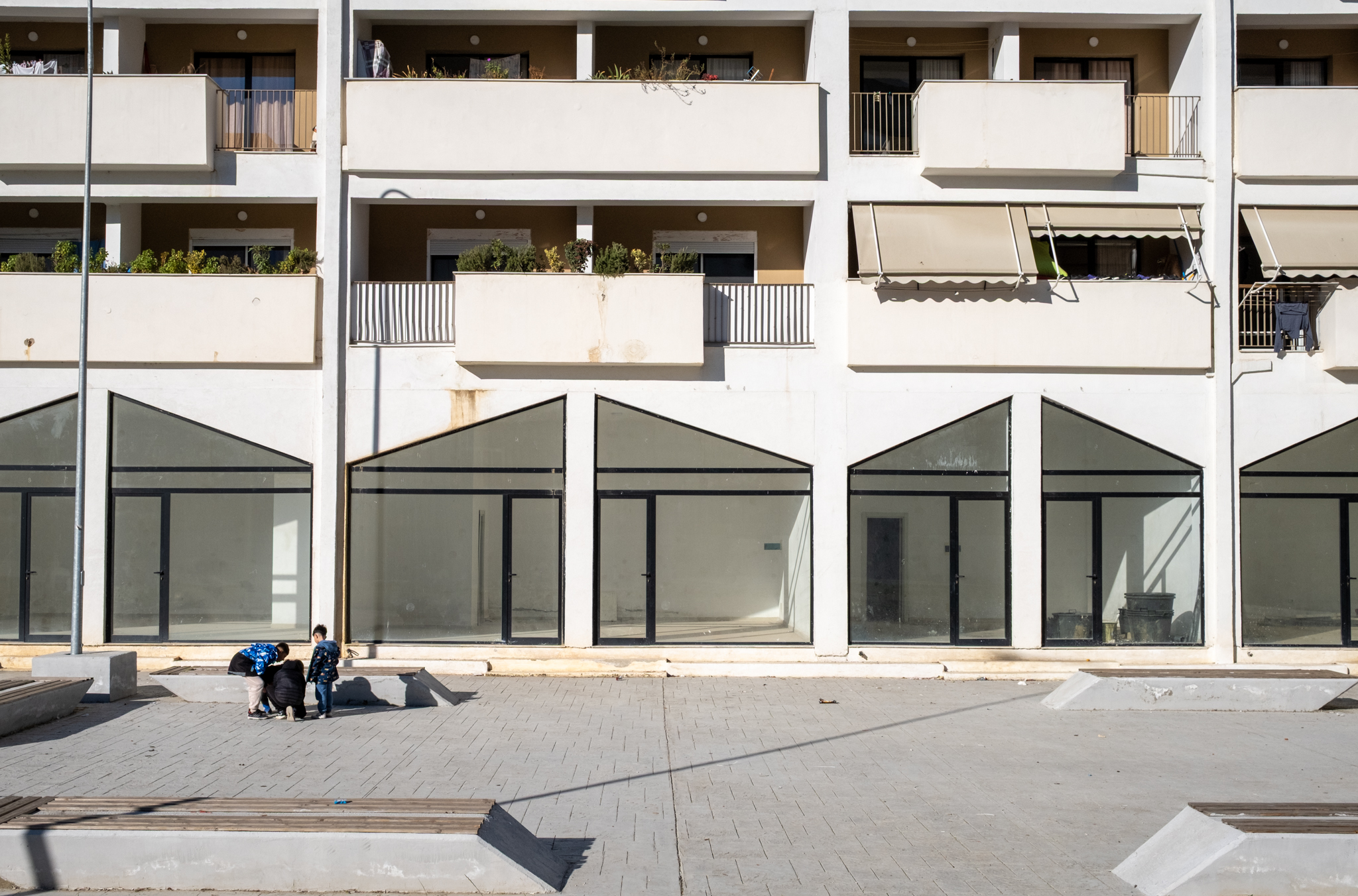
The ground floor of the new buildings, intended for commercial activities, is still largely empty. | Photo: Federico Caruso
Tirana, quartiere 5 Maji – Foto: Federico Caruso
Photo: Federico Caruso
Tirana, quartiere 5 Maji – Foto: Federico Caruso
Tirana Riverside also includes the construction of a circular multi-purpose building, the first part of which has been completed. | Photo: Federico Caruso
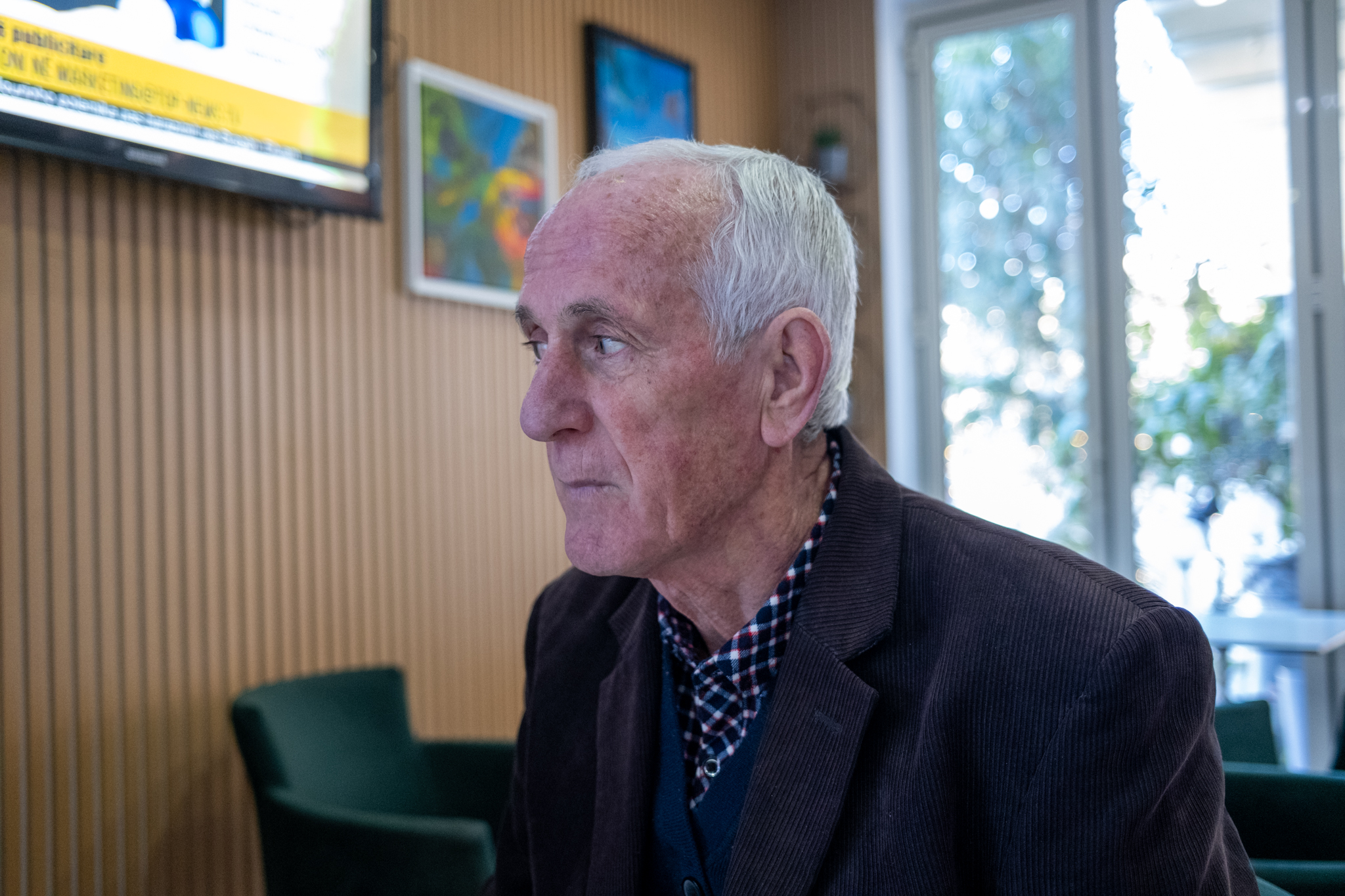
Gjin Nikolli – Foto: Federico Caruso
Gjin Nikolli | Photo: Federico Caruso
Among these internal migrants is Gjin Nikolli, who has lived in 5 Maj since 1991 and is originally from Rubik, in the north of the country. His case is exemplary of the neighbourhood’s history: after the end of the regime, he left northern Albania to settle near one of the country’s major urban centres, in his case Tirana. During that phase of legal and social limbo between the end of the socialist regime and the formation of liberal democratic institutions (and the transition from collectivisation to private property), Gjin Nikolli built his house with the money he earned working as a plumber, welder, and electrician in Greece.
Like many Albanians, he then embarked on a long and costly process with the public administration to regularise the house he had built. Begun in 2006, his application concluded in 2021 with the amnesty of the house – but not the land on which it stood – in exchange for the payment of €29,000 to the state.
The stability was short-lived: on 22 February 2022, the bulldozers arrived, accompanied by the police. The two apartments in which Nikolli’s family now lives were allocated for three years after the demolition. In the meantime, the family has to find a home and pay part of the rent out of their own pocket.
Today, they live in two units in one of the new apartment blocks. As the total area of the two units is slightly larger than that of the demolished house, they have to pay the difference. They were never asked if they agreed to move house or be relocated elsewhere.
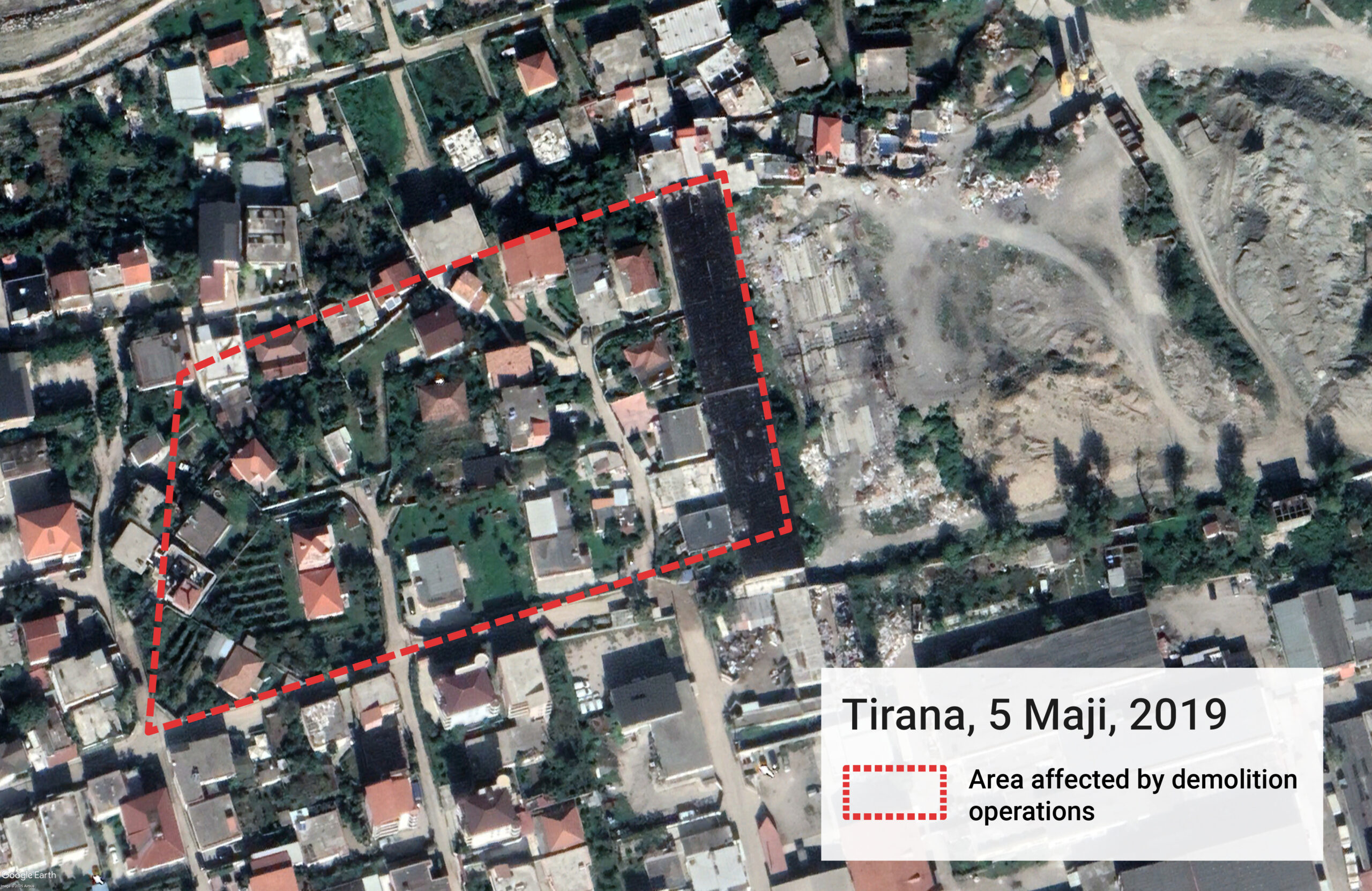
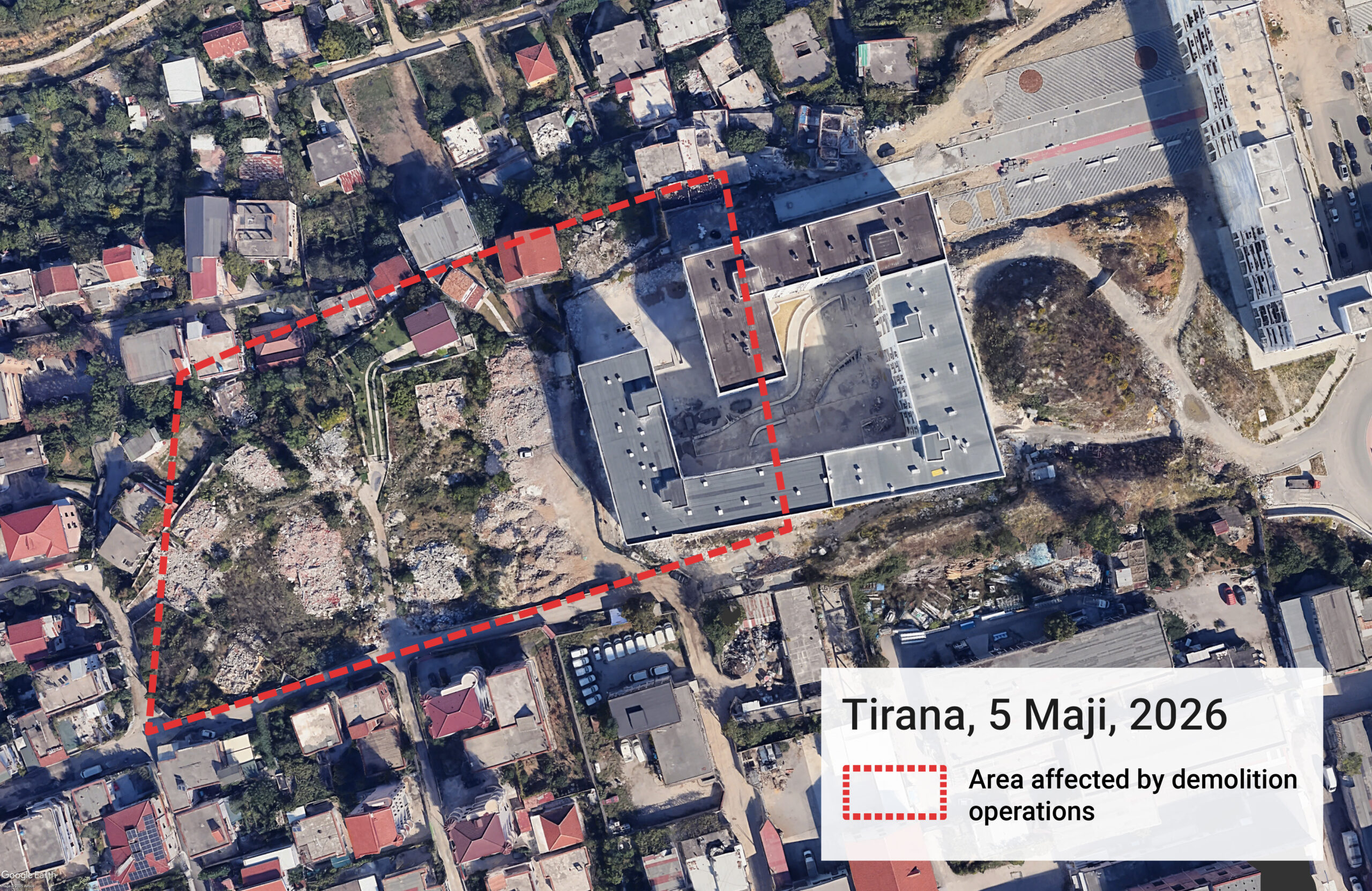
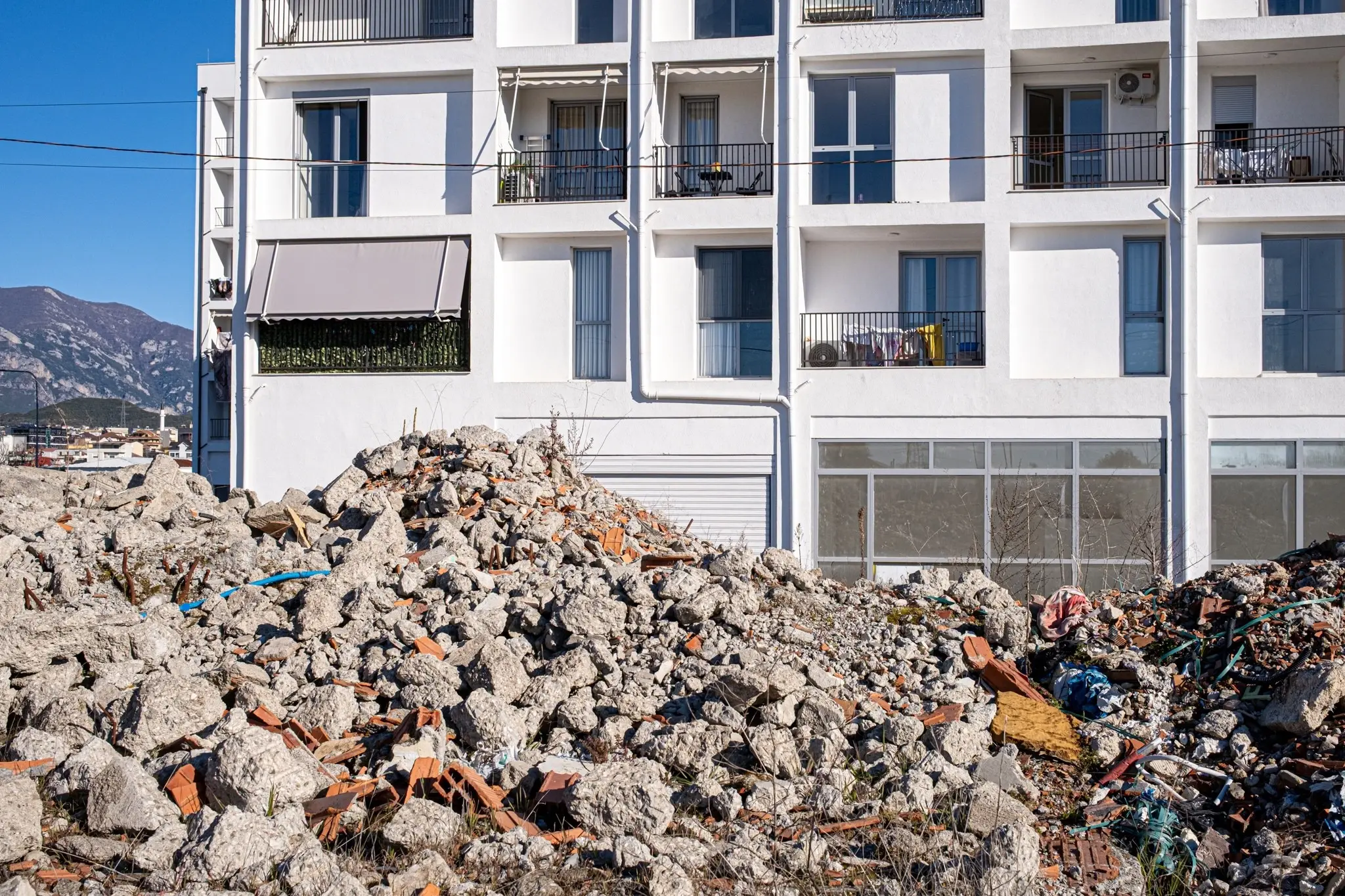
Foto demolizioni
There was no urgency to evict the Nikolli family. “Four years have passed (since the demolition) and the rubble is still there. We could have stayed in our home during those four years,” says Gjin Nikolli. | Photo: Federico Caruso
The eviction was unnecessarily brutal. There was an agreement to leave the house on the day planned for demolition at 10am. The police arrived at 5a.m. and forced everyone out. “My mother was 92 at the time, my daughter had two small children.”
Nikolli and his family now have the keys to their new flats, but no title deeds. The utilities are registered to the municipality. This situation is common to all those who reluctantly agreed to be relocated. “You feel like a person who wasn’t registered at birth. You have to wonder if you even exist,” says Nikolli.
Gjin Nikolli is one of about 400 people who protested for six months following the demolitions.
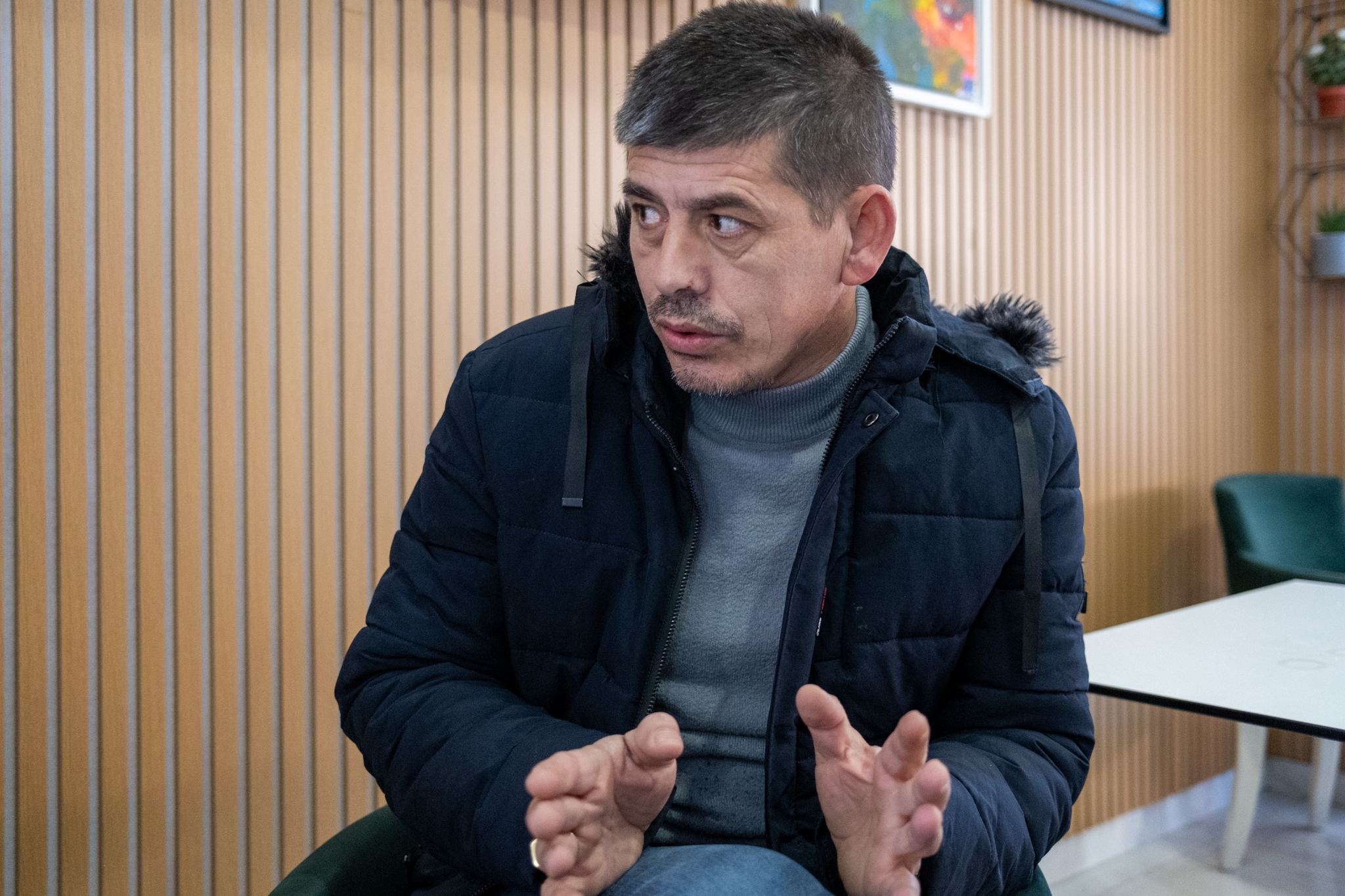
Ndue Marku – Foto: Federico Caruso
Ndue Marku | Photo: Federico Caruso
Ndue Marku participated in the protests during the 2022 demolitions, even though his house was not destroyed. “No one feels safe,” he tells us in perfect Italian, “because what happened to the others can happen to anyone.” Marku arrived in 5 Maji when he was 14 years old. The house in which he lives with his family, including his 82-year-old mother, was built in 1996. Marku emigrated to Greece and then to Italy, but returned to Albania in 2010.
“Difficulties in life are normal,” Marku continues. “But we never expected the state to come and knock down your house.”
Marku is concerned about his own fate and that of the community, especially the fact that no one has title deeds, combined with the fact that the utilities are in the name of the municipality: “Maybe the municipal council will decide that it is municipal property,” and, as a result, “will be able to evict those who are there now and reassign it.”
As he shows us his house, which stands a few steps from the ruins of Nikolli’s former home, Marku talks of the precarity of the population. “We live with the uncertainty that tomorrow, at five in the morning, they will come and tear down our house. Then we can take legal action, of course, but we are not the kind of people who can afford to go through long and expensive trials.” Marku says he is prepared to take his case as far as the European Court of Human Rights.
This article is part of a series of reportages from Albania:
 This article was produced in the framework of PULSE, a European initiative coordinated by OBCT which promotes cross-border journalistic collaborations, and is part of a series on “peripheral” areas of European cities in collaboration with Il Sole 24 Ore, Voxeurop, and El Confidencial. We would like to thank Elira Kadriu of Citizens for her support in producing this report.