EU enlargement, are the funds in the next budget up to the challenge?
The €43 billion proposed under the external action pillar “will most likely not be enough,” especially for the Western Balkans. We discussed this with Peter Tabak, former chief regional economist at the European Bank for Reconstruction and Development
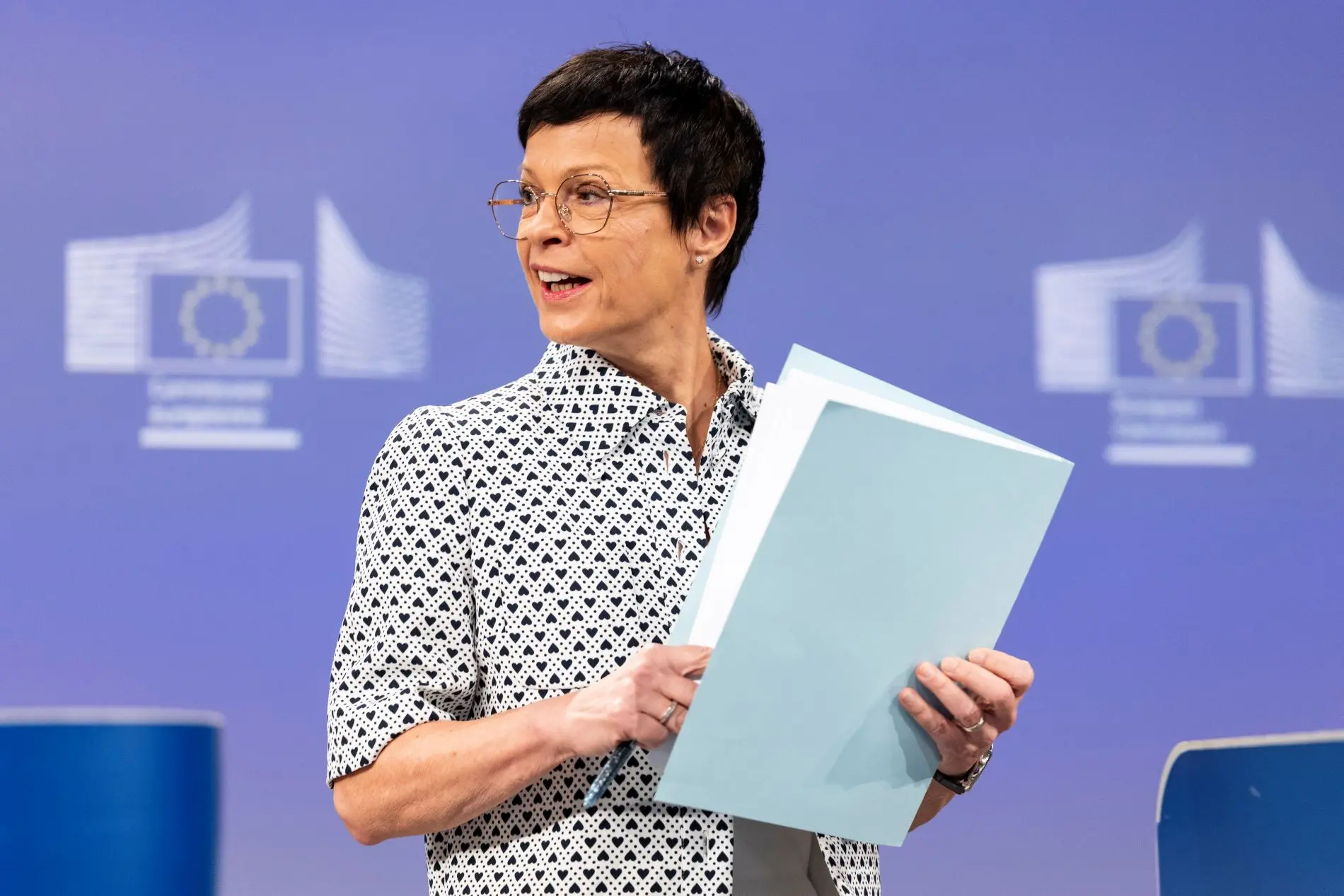
Marta Kos, Commissario europeo per l’allargamento e la politica di vicinato
Marta Kos, European Commissioner for Enlargement and Neighbourhood Policy © European Union
As the next European Union budget — the Multiannual Financial Framework (MFF) — approaches negotiations between the co-legislators of the Parliament and the Council, initial analyses of the Commission’s proposal and the ability of future financial resources to meet the challenges ahead are beginning to emerge.
This also applies to EU enlargement, which the Brussels institutions have defined as a “strategic priority.” But words may not necessarily be followed by action.
“There is a lot of uncertainty about the overall budget,” explains Peter Tabak, former regional chief economist for the Western Balkans at the European Bank for Reconstruction and Development (EBRD), outlining initial estimates of what the new Global Europe instrument could provide following the absorption of the current Instrument for Pre-Accession Assistance (IPA III) into a single financial envelope.
What emerges is that the €43.2 billion proposed within the single fund dedicated to external action “will most likely not be sufficient” to meet the enlargement priority in the EU’s 2028-2034 budget.
Estimates for the next EU budget
The Hungarian economist’s estimate is not only based on the allocation rules of the Western Balkans Growth Plan, but also, above all, the first economic reasoning to emerge regarding the possible division of funds among the candidate countries, which provides an initial point of reference for understanding the progress of the negotiations.
Of the €43.2 billion allocated to the “Europe: Enlargement and Eastern Neighborhood” pillar, approximately €3.2 billion is expected to be allocated to non-candidate European countries and to administrative costs.
The remaining €40 billion should be distributed among the countries involved in the enlargement process — the six Western Balkan countries, Ukraine, Moldova, Georgia, and Turkey — “based on population and GDP per capita,” just as with the current methodology used for reform-related financing plans.
According to preliminary assumptions, the Western Balkans should receive approximately €11.7 billion, a nominal increase of nearly 50% compared to the €7.8 billion estimated under IPA III.
However, “with an expected increase in consumer prices in the EU of 34% between 2018 and 2028, this equates to an increase of less than 12% in real terms,” or even lower, “around 5%, compared to the average increase in domestic prices in the region of 42% over the same period,” Tabak specifies.
As for Ukraine — despite the €100 billion reserve funded beyond the 2028-2034 budget ceilings — it could still receive funding from the External Action Instrument. Around €8.8 billion for “general preparation and the adaptation of legislation and institutions,” the economist predicts.
If, however, Ukraine were excluded from the €43.2 billion Global Europe allocation — or if candidates like Georgia and Turkey were essentially excluded due to democratic backsliding — “the allocation for the Western Balkans could increase significantly.”
Challenges for the future
“Pressures on the next EU budget will increase significantly,” warns Tabak, referring to the ongoing war in Ukraine and the implications for the candidate country’s future reconstruction. “The final impact, however, will largely depend on the structure of the allocation.”
Once the final allocations for each candidate country are agreed upon, a key question will remain: if new members join the Union during the next 2028-2034 budget cycle, what will happen with the pre-accession funds allocated to them? Will these resources be redistributed among the remaining candidates or redirected to other Union priorities?
An additional challenge outlined by the Hungarian economist concerns the way the funds are currently being used.
Much of the current pre-accession support — such as half of the Growth Plan funds — flows through the Western Balkans Investment Framework, which primarily finances large-scale infrastructure projects, many of them in the transport sector.
However, “the biggest gaps now concern human capital, the green economy, the rule of law, and corruption,” leaving open the question of whether future pre-accession funding will focus more on these priorities.
Although the political will to increase the financial envelope for the Global Europe Instrument during the upcoming negotiations between Parliament and the Council does not appear to be particularly strong, Tabak argues that “changes in the allocation structure of pre-accession funds could really make a difference.”
Found an error in this article? Please contact our editorial team at redazione@balcanicaucaso.org.
This article has been written within the project “InteGraLe - Western Balkans vi-à-vis the Trio: single market, cohesion and regional policy for gradual integration into the EU ”. This project is realized with the support of the Unit for Analysis, Policy Planning, Statistics and Historical Documentation - Directorate General for Public and Cultural Diplomacy of the Italian Ministry of Foreign Affairs and International Cooperation, in accordance with Article 23 ‒ bis of the Decree of the President of the Italian Republic 18/1967. The views expressed in this report are solely those of the authors and do not necessarily reflect the views of the Ministry of Foreign Affairs and International Cooperation.
Featured articles
 Montenegro Pride 2026
 Political deadlock