Ukraine, a long winter of frost, bombs, and tensions
The cold weather emergency is leaving Kiev and the rest of the country in darkness and freezing temperatures, while disagreements are emerging between President Volodymyr Zelensky and the capital’s mayor, Vitaly Klychko. Meanwhile, Europe is struggling to find a unified response to a crisis that is worsening by the day
shutterstock_538213054
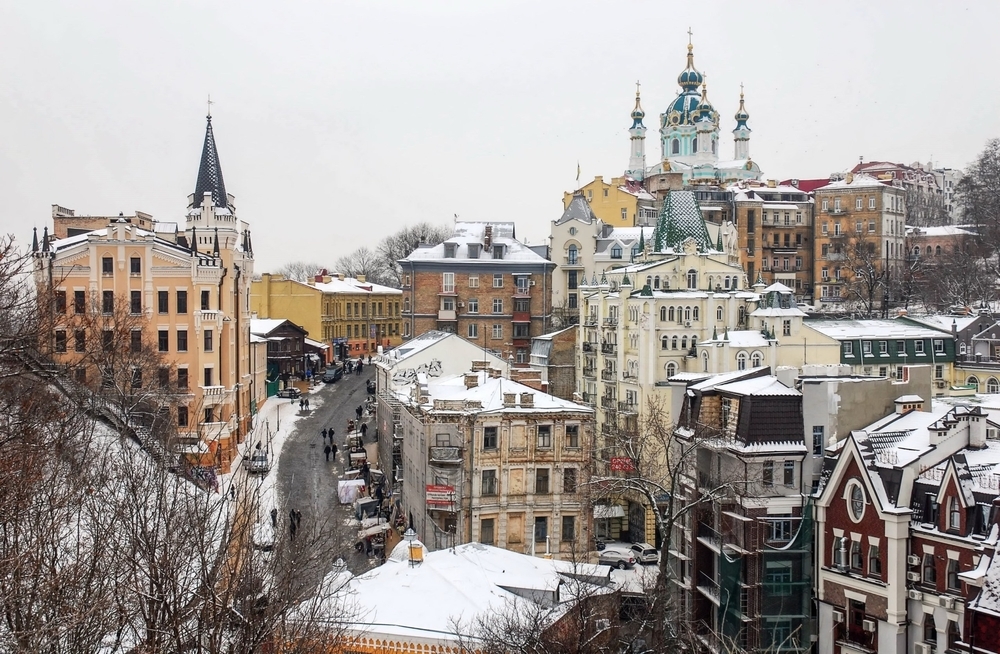
Kiev in winter - © Vitalii Kazannyk/Shutterstock
Temperatures dropping below -20°C with no sign of rising, and relentless Russian attacks on energy infrastructure: Ukraine is facing its fourth winter of war in increasingly dire conditions.
Another year without peace ends, and another begins, one of freezing temperatures and blackouts, marked by renewed internal political tensions and European support that, while present, has failed to translate into a coordinated and effective strategy to counter the Kremlin.
The humanitarian catastrophe: millions of people on the brink
The latest massive Russian attack dates back to just a few days ago. Once again, the civilian and energy infrastructure of major cities, including Kharkiv, Zaporizhia, and the capital were hit, exacerbating an already critical situation.
The combination of bombing and a cold snap has transformed the winter into a weapon of war, the worst since the beginning of the large-scale Russian invasion. Many homes have been left without heat, while the electricity grid continues to operate at reduced capacity.
Maxim Tymchenko, CEO of DTEK, the country’s largest private energy supplier, described the situation as “close to a humanitarian catastrophe,” further raising doubts about Russia’s genuine willingness to engage in a peace process.
The numbers speak for themselves: according to Mayor Vitaly Klychko, Kiev currently has about half the electricity it needs to function: 850 megawatts of the 1,700 required to guarantee essential services to its 3.6 million residents. Around 600,000 people have already fled the capital, while the United Nations found 2025 the deadliest year for civilians since the beginning of the full-scale invasion.
Everyday resilience: how to survive the darkness and cold
Faced with an emergency that turns out to be a weapon of mass destruction, Ukrainian citizens have demonstrated an extraordinary capacity for adaptation. Tutorials and “survival tricks” are proliferating on social media: bricks heated on gas stoves to create makeshift heaters, tents in bedrooms to conserve heat, hot water bottles to weather the coldest nights.
Throughout the city, the hum of diesel generators accompanies daily life. Bars and shops remain open thanks to these devices, while residential buildings often remain dark, illuminated only by battery-powered LED lights or small portable generators.
The more than 10,000 “Invincibility Points” and the subway have become essential shelters, offering warmth, internet connection, and often psychological support. Solidarity, here, is key.
Zelensky vs. Klychko: tensions rise as the city freezes
Completing the picture are internal political tensions, which dramatically escalated on January 14, when President Volodymyr Zelensky declared a state of emergency in the energy sector, publicly criticizing Kiev’s municipal authorities for their poor preparation for the crisis.
“In the capital, far too little has been done. In recent days, I have seen insufficient efforts: this must be urgently corrected,” the president declared, comparing the situation in the capital to that of other cities, such as Kharkiv, which was heavily bombed but apparently better organized.
The mayor’s response was immediate. Unusually harsh, Klychko rejected the accusations, calling them “politicized” and emphasizing the relentless work of municipal services, operating around the clock under extreme conditions.
According to several analysts, both central and local authorities are responsible for the crisis. Viktorija Vojcic’ka of the We Build Ukraine think tank observed that the central government should have taken responsibility for preparing the country for the worst, given the war situation, while local administrations have shown clear limitations.
This political fracture, which erupted at a time of maximum vulnerability for the population, raises questions about Ukraine’s governance capacity at a crucial stage of the conflict, providing the aggressor with the opportunity to exploit these weaknesses and misunderstandings.
Lack of strategic vision
On the other hand, the external response, the European one, appears fragmented and inadequate given the scale of the crisis. Some countries have acted independently: Lithuania has sent components for an entire thermal power plant capable of supplying energy for a million people, Poland has provided hundreds of generators, while several associations – including Italian ones – have mobilized to send equipment and funds.
Furthermore, at the end of January, the European Commission announced an additional 50 million Euros for Naftogaz, the Ukrainian state energy company, bringing the EU’s full support for the winter of 2025-2026 at €977 million.
However, these interventions appear more like belated responses than part of a coordinated and preventive strategy. There has been no strong and unanimous declaration from the European Council, nor a joint action plan that put Ukraine’s energy security at the center of the European political agenda.
NATO Secretary General Mark Rutte’s visit to Kiev on February 3 — coinciding with Russia’s launching yet another combined attack of 70 missiles and over 400 drones on the country — had strong symbolic value, but no concrete implications.
Rutte visited one of the power plants in the Kiev region hit by Russian missiles the previous night, when temperatures reached -25°C, and reiterated that “Ukraine is and will remain essential to our security.” But such words, however supportive, are not enough to keep Ukrainian families warm.
The weakness of the European response also fits into a complex diplomatic context. Trump’s request to Putin to avoid attacks on Kiev to facilitate negotiations was not respected, while the recent trilateral talks between the United States, Russia, and Ukraine in Abu Dhabi failed to yield significant progress.
The asymmetry is apparent: while Russia uses energy as a strategic weapon — and winter as an ally — the West appears incapable of offering effective deterrence and timely support.
A test of endurance, but with what future?
A survey by the Kiev International Institute of Sociology reveals that 65% of respondents are “ready to endure war for as long as necessary.” But even endurance has limits, especially when cold becomes a weapon and institutions appear divided.
Europe faces a choice: become a credible geopolitical player or continue to react in a fragmented manner. The issue isn’t just about sending aid, but about building a strategy to prevent Russia from using winter as a tool of pressure.
Meanwhile, in the dark streets of Kiev, under the constant hum of diesel generators, citizens continue to huddle together in blankets, share hot tea, and tell stories of how to withstand the cold.
Their resilience is admirable, but it deserves more than just words of solidarity: it deserves a response worthy of the challenge they are facing, day after day, night after night, because energy, too, is a human right.
Found an error in this article? Please contact our editorial team at redazione@balcanicaucaso.org.
Featured articles
 Political deadlock
 Economy and Dialogue