Western Balkans: truck drivers protest EU measures
Western Balkan truck drivers have blocked freight terminals at Schengen border crossings in protest against new EU restrictions, highlighting structural problems in the sector

Tir – Shutterstock Norries3699
© Shutterstock/Norries3699
Dissatisfied with the rule limiting the maximum stay in the Schengen area to ninety days over a six-month period, truck drivers from Bosnia and Herzegovina, Montenegro, Serbia, and North Macedonia blocked freight traffic at border crossings with EU countries on Monday, January 26, at noon. The protest, the drivers announced, will continue until they receive solid assurances from European Commission representatives that talks to find a solution will begin. The professional drivers are demanding an exemption from the rules that apply to tourists.
Discontent and long-standing problems in the transport sector in the Western Balkans have prompted drivers to completely block more than twenty border crossings and customs terminals bordering EU countries. At noon on Monday, freight traffic was blocked, while passenger traffic continued normally. Protest organizers announced the participation of tens of thousands of trucks at all border crossings with the EU.
They will continue blocking the terminals until their demands are met. According to truck drivers in Bosnia and Herzegovina, the blockades could last for a week. Bosnian and Herzegovinian drivers are demanding permission to stay in EU member states for more than ninety days in a six-month period.
Today, due to restrictive EU regulations, truck drivers in BiH are facing numerous problems, including deportations, arrests, and detentions. Some have even been banned from entering the EU for periods ranging from two months to two years. Their professional activities are suffering, so much so that many are deciding to leave Bosnia and Herzegovina. As a result, the entire transport sector, a key segment of the BiH economy, is in crisis.
While appreciating the commitment of state institutions, truck drivers believe that not enough has been done so far. They are not asking for privileges, just to be able to work.
They also point out that the transport sector contributes over 94% of the supply chain in Bosnia and Herzegovina. As much as 73% of BiH’s exports are destined for the EU, including raw materials supplied directly to European factories. Potential losses are estimated at billions of euros for all countries affected by the blockades. If the protests were to continue, the consequences could also impact BiH’s citizens.
What solutions?
Edin Forto, Bosnia and Herzegovina’s Minister of Communications and Transport, supported the protests, announcing that he would travel to Brussels in early February to participate in talks to determine how to resolve the issue.
Previously, discussing possible solutions, Forto had mentioned a possible bilateral agreement between Bosnia and Herzegovina and Croatia, or between Serbia and Bulgaria, to overcome the problems caused by the restrictions imposed on drivers.
Elmedin Konaković, Bosnia and Herzegovina’s Foreign Minister, stated that he and his Western Balkan counterparts would send a joint letter to the EU, asking for understanding and assistance in resolving the drivers’ problems. The minister, however, expressed skepticism about the possibility of reaching bilateral agreements with other countries in the region.
When asked about the issue, Markus Lammert, spokesperson for the European Commission, stated that Brussels is paying the utmost attention to the situation of truck drivers. “We are already working on it, also in the context of the adoption of a new visa strategy, which should be presented by the end of the week. I reiterate, we remain in contact with our partners in the Western Balkans and continue to closely monitor the situation.”
As a country that imports large quantities of goods through Serbia and North Macedonia, Kosovo could also feel the consequences of the blockades.
Aleksandar Nikoloski, North Macedonia’s Minister of Transport, visited the Blace border crossing on Tuesday, January 27, to support the protests. Nikoloski proposed three possible solutions to the problem: postponing the implementation of the electronic system for truck drivers, increasing the number of days they can spend in the Schengen area, and treating them not as tourists, but as professionals, thus excluding them from the rules for short-term stays.
In Serbia, blockades have begun at twenty-one freight crossings, while in Montenegro, in addition to road terminals, the port of Bar has also been blocked.
Turkish truck drivers have also announced their support for their colleagues in the Western Balkans, specifying that if they find themselves in one of the countries affected by the blockades, they will join the protesting convoy of drivers.
Meanwhile, the Serbian Chamber of Commerce, along with similar organizations in other countries of the area, is working intensively to resolve the issue of professional drivers remaining in the Schengen area as quickly as possible.
A long-standing problem
Truck drivers from Bosnia and Herzegovina and Serbia have repeatedly announced coordinated activities, including roadblocks. For drivers, the current EU border management rules threaten the free movement of goods in Southeast Europe and risk seriously compromising regional and European supply chains.
As repeatedly emphasized, the rules on entry and residence in the European Union treat professional drivers from non-EU countries as tourists, not as essential workers, denying them the right to work after their permitted number of days in the EU have expired.
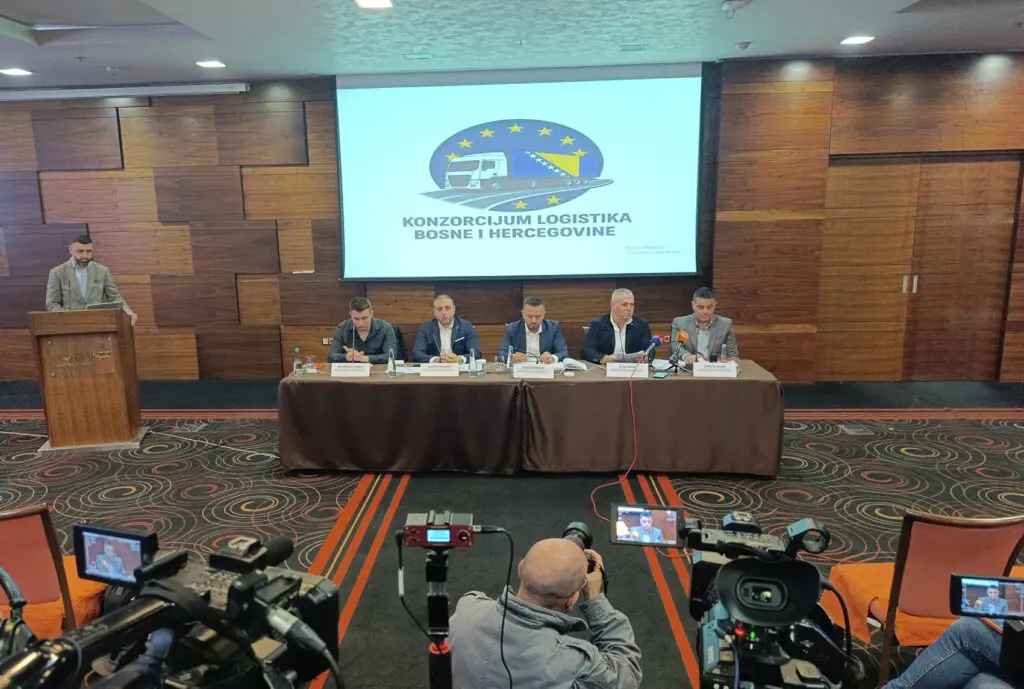
Press conference of the “Logistics of Bosnia and Herzegovina” consortium, Sarajevo – Photo by Arman Fazlić
The Logistics of Bosnia and Herzegovina consortium explains that over the past twelve months, road transport sector representatives have made enormous efforts to explain to the European Commission and the relevant institutions the consequences of the current norms for drivers.
For BiH truck drivers, as they have repeatedly denounced, the EU regulation jeopardises supply chains and severely damages the economies of Bosnia and Herzegovina and Serbia, slowing the flow of goods to regional and European markets.
The long-standing problems plaguing the transport sector in Bosnia and Herzegovina culminated last year, when local truck drivers, led by the Logistics of BiH consortium, organized a series of protests, blocking customs terminals, border crossings with the EU, and roads throughout Bosnia and Herzegovina.
Further complicating the situation is the gradual implementation of the new Entry/Exit System (EES), which began in October 2025.
Drivers are waiting up to 72 hours to enter and exit the EU, and the situation is likely to worsen starting April 10, when the full implementation of the Entry/Exit Sistem (EES) begins. The new system introduces a stricter method for counting days, according to which each crossing of the EU’s external borders will be counted as a day spent in the Union.
The Ministry of Communications and Transport of Bosnia and Herzegovina has attempted to address the drivers’ requests by initiating an institutional dialogue. The ministry claims to have largely fulfilled its obligations, fulfilling eleven of the sixteen requests from transport operators and committing to finding a solution to the remaining issues.
The ministry has organized regular meetings with transport operators and supports their right to protest. However, the ministry, as it has repeatedly stated, cannot resolve a fundamental issue such as residence in the EU on its own, as it is an issue that goes beyond the remit of BiH institutions and requires a regional approach.
In this context, Minister Edin Forto has repeatedly stated that the rule limiting the maximum stay in the Schengen area for short stays can only be changed after Bosnia and Herzegovina’s accession to the EU, or possibly through joint action by Western Balkan countries. Truckers have reacted harshly to the minister’s statements, accusing him of inaction.
Found an error in this article? Please contact our editorial team at redazione@balcanicaucaso.org.
This article has been written within the project “InteGraLe - Western Balkans vi-à-vis the Trio: single market, cohesion and regional policy for gradual integration into the EU ”. This project is realized with the support of the Unit for Analysis, Policy Planning, Statistics and Historical Documentation - Directorate General for Public and Cultural Diplomacy of the Italian Ministry of Foreign Affairs and International Cooperation, in accordance with Article 23 ‒ bis of the Decree of the President of the Italian Republic 18/1967. The views expressed in this report are solely those of the authors and do not necessarily reflect the views of the Ministry of Foreign Affairs and International Cooperation.
Featured articles
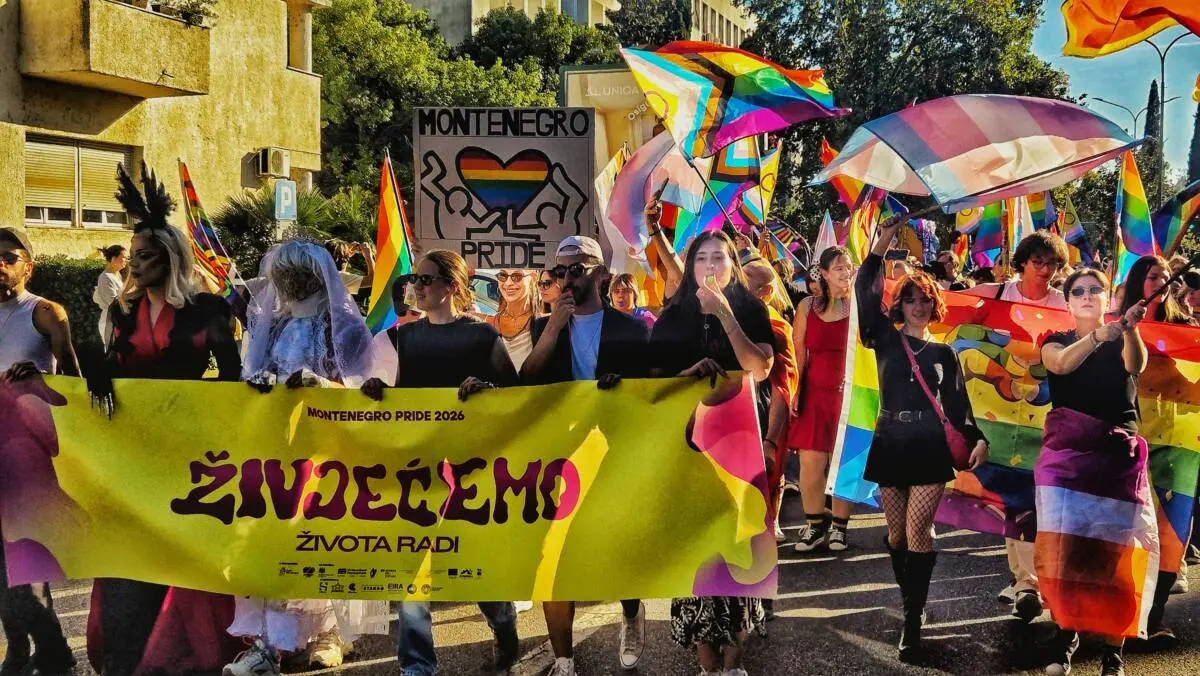 Montenegro Pride 2026
 Political deadlock