Armenia: among the new inhabitants of Yerevan

In Yerevan, many Indian migrants live crammed into apartments and work as delivery riders. Despite hardship, risks, and local mistrust, they find safety and better opportunities, hoping to build a stable life and feel part of the city
19/12/2025, Armine Avetisyan Yerevan
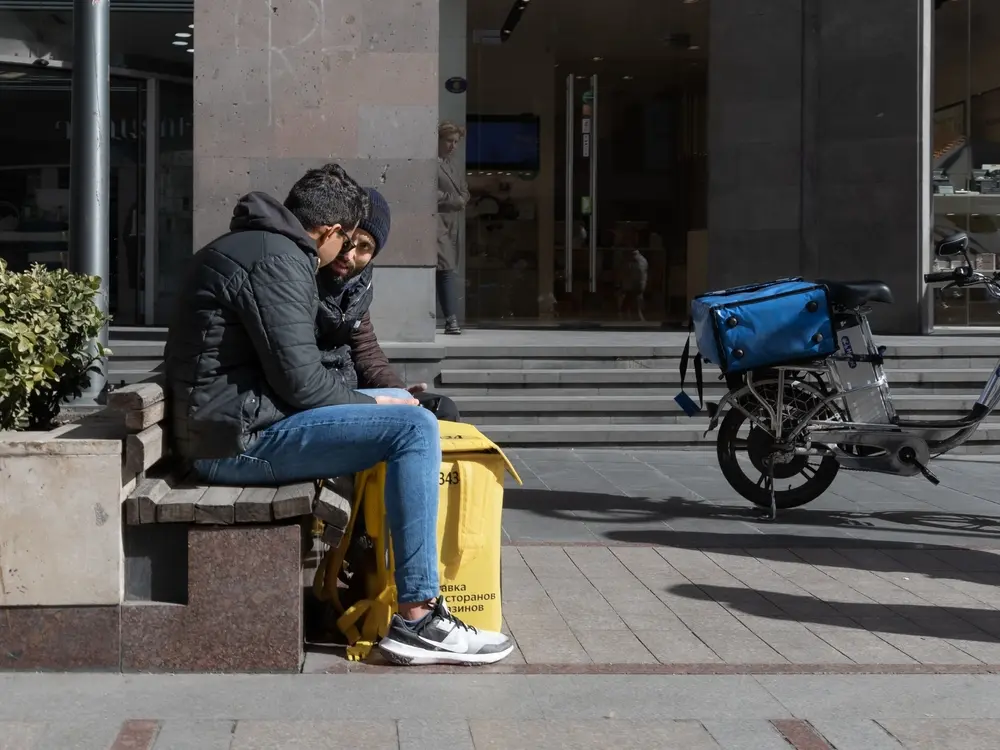
Two men of food delivery service in Yerevan, Armenia © Zuykov Photography/Shutterstock

Two men of food delivery service in Yerevan, Armenia © Zuykov Photography/Shutterstock

Two men of food delivery service in Yerevan, Armenia © Zuykov Photography/Shutterstock

In some districts of Yerevan, the day begins with the same scene: in front of an apartment building there are 20-30 identical mopeds, with helmets on the seats and food delivery bags hanging from the sides. The scooter owners live in the building and often dozens of them share a rented apartment. This is not a one-off case. It has become a widespread phenomenon.

I walk into a courtyard filled with rows of mopeds. It is early morning. It seems like some sort of special moped gathering, but the residents are actually Indian labor migrants.

“In the mornings the Indian boys come out one at the time. Someone opens the door, you think that is it – but no, then comes the second, the third, the tenth. They laugh, check their batteries, put on their helmets. The motorcycles are like a whole jungle”, says a womean living in a nearby building.

“But these people are peaceful and kind. We have never heard a single loud noise. You would never guess that so many people live in one apartment”.

Inside the rented apartments, the situation is even more crowded.

Often 12-18 people live in one small flat, sleeping in shifts: those who work in the morning go to bed first, those returning from the night shift go to sleep last.

But they never complain. They say that at least in Armenia they work.

“I feel like a Yerevantsi”

I meet Rajesh, 27, in the courtyard of a house buzzing with people. He smiles, but there are faint blue circles under his eyes.

“I worked until 2 a.m. last night”, he says, taking off his gloves cracked from the cold.

Rajesh has been living in Yerevan for two and a half years now. He first came at a friend’s invitation, expecting to work for a few months and return to India. But the city held him.

“When I first stepped outside the airport, I remember feeling that it was peaceful here. In India, sometimes you are afraid to work at night, but here no. Yerevan is small, but life here moves very fast”, says Rajesh warming his hands before gripping the moped’s handlebars again.

Rajesh’s day starts at 10 a.m. and ends at midnight.

“If I want more money, I work longer. I can make 300,000 drams a month (about 800 dollars). I earn more here than in Delhi. There they paid twice less”.

Rajesh recalls slipping and falling on the ice last winter, injuring his hand.

“It was late at night. A guy came over, picked up my bag and asked: ‘CanI help you?’. At that moment I realised that Yerevan is a good city. I have become very attached to it”, says Rajesh.
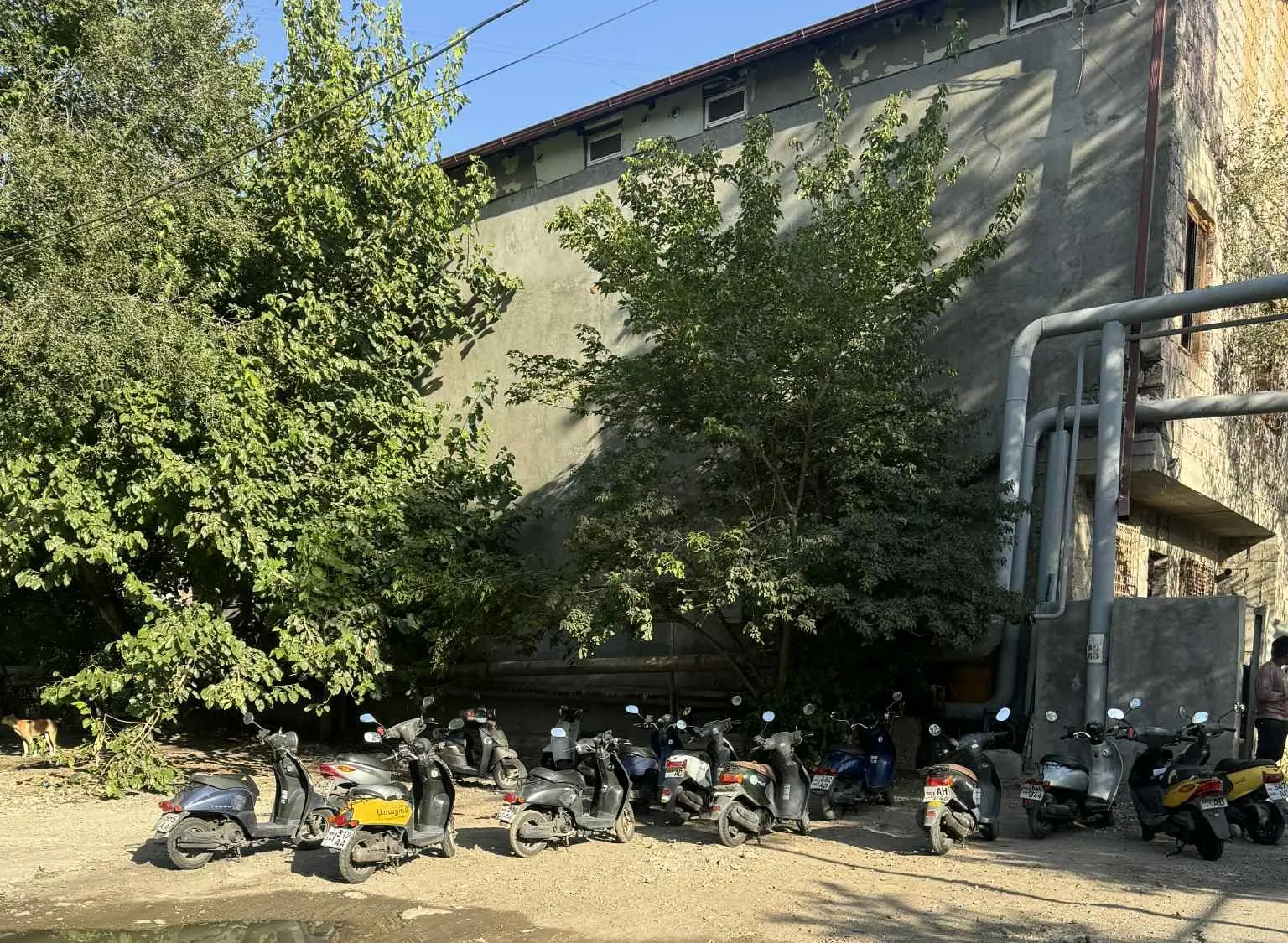
Delivery men's motorbikes parked out of the house in Yerevan, Armenia - Photo by A. Avetisyan

Delivery men’s motorbikes parked out of the house in Yerevan, Armenia – Photo by A. Avetisyan

“You might think I am flattering Armenia, but it really has become home for me. Here I do not face the fears that I had back in my country”.

But not everything is bright. Rajesh says that people are not always friendly.

“Sometimes people look at me and ask: ‘Why did you come here? Go back to your country, this is not your home’. Honestly, I cannot understand what harm I could possibly cause. But most people are very kind”.

“I feel like a Yerevantsi, even if I am not always accepted. I would like to stay here”.

Rajesh is in Yerevan legally. He has a work contract and a residence permit. He says not all his compatriots are as fortunate: many work without a contract and face problems later.

“For several years now Armenia has become a favorite destination for us. Working here is comfortable. At first people came looking for jobs, but now it is clear – we are ‘taking over’ the delivery sector. In Yerevan, we handle most of the deliveries. There are Russian couriers, of course Armenians too, but we dominate”, concludes Rajesh.

“Being a courier is noise, danger, but also freedom”

Mohit, 32, previously worked in Kuwait. Armenia became another chapter for him.

At first he worked in construction, but soon realised delivery work is far more stable.

“This is the only job where not knowing the language is not a problem. You open the map and go. But you have to be fast, very fast”.

He loves delivery work because it gives him freedom.

“I know some English, I do not speak well but I can make myself understood. Not all customers know English, so I often do not talk much. I work like a machine. Sometimes it feels like the city itself is talking to me.”

Mohit has been living in Armenia for three years. He says that has adapted well and is planning to bring his family here.

“I have saved enough money to rent a separate apartment. I want my wife and son to come. My boy is only four years old. Kids here start school at the age of six, so I want him to come now, to learn Armenian well and go to school”, explains Mohit.

“I see that it is safe here. But I do not want him to have the life of a courier. I had no other choice. I dream that he will learn the language and work in another field. Sometimes it feels like it is written on our foreheads that we are destined to be riders”.

“We were deceived, but I am rebuilding my life here”

Aditya’s story is different.

He came to Armenia through a Mumbai-based agency, paying a large sum for a promised job.

“When I arrived in Yerevan, they told me I had a debt. I did not understand. What debt? Then I found out it was a fake agency. They do this to many people”, says Aditya, then slowly adds: “Indians exploit Indians.”

At first he worked 14-16 hour shifts, then moved on to deliveries.

Here, as he points out, at least there are some rules.

“I can breathe. I am relatively satisfied. Taxi services, restaurants, delivery platforms… they usually treat us normally”, says Aditya, admitting that Yerevan does not feel like his city yet. But he does not give up.

“I am new here. But maybe with time the city will accept me. We did not come to Armenia to take anything from Armenians. We came to work alongside them. And perhaps one day we too will feel part of this city”.

Armenia: among the new inhabitants of Yerevan

In Yerevan, many Indian migrants live crammed into apartments and work as delivery riders. Despite hardship, risks, and local mistrust, they find safety and better opportunities, hoping to build a stable life and feel part of the city

19/12/2025, Armine Avetisyan Yerevan
Two men of food delivery service in Yerevan, Armenia © Zuykov Photography/Shutterstock

Two men of food delivery service in Yerevan, Armenia © Zuykov Photography/Shutterstock

Two men of food delivery service in Yerevan, Armenia © Zuykov Photography/Shutterstock

In some districts of Yerevan, the day begins with the same scene: in front of an apartment building there are 20-30 identical mopeds, with helmets on the seats and food delivery bags hanging from the sides. The scooter owners live in the building and often dozens of them share a rented apartment. This is not a one-off case. It has become a widespread phenomenon.

I walk into a courtyard filled with rows of mopeds. It is early morning. It seems like some sort of special moped gathering, but the residents are actually Indian labor migrants.

“In the mornings the Indian boys come out one at the time. Someone opens the door, you think that is it – but no, then comes the second, the third, the tenth. They laugh, check their batteries, put on their helmets. The motorcycles are like a whole jungle”, says a womean living in a nearby building.

“But these people are peaceful and kind. We have never heard a single loud noise. You would never guess that so many people live in one apartment”.

Inside the rented apartments, the situation is even more crowded.

Often 12-18 people live in one small flat, sleeping in shifts: those who work in the morning go to bed first, those returning from the night shift go to sleep last.

But they never complain. They say that at least in Armenia they work.

“I feel like a Yerevantsi”

I meet Rajesh, 27, in the courtyard of a house buzzing with people. He smiles, but there are faint blue circles under his eyes.

“I worked until 2 a.m. last night”, he says, taking off his gloves cracked from the cold.

Rajesh has been living in Yerevan for two and a half years now. He first came at a friend’s invitation, expecting to work for a few months and return to India. But the city held him.

“When I first stepped outside the airport, I remember feeling that it was peaceful here. In India, sometimes you are afraid to work at night, but here no. Yerevan is small, but life here moves very fast”, says Rajesh warming his hands before gripping the moped’s handlebars again.

Rajesh’s day starts at 10 a.m. and ends at midnight.

“If I want more money, I work longer. I can make 300,000 drams a month (about 800 dollars). I earn more here than in Delhi. There they paid twice less”.

Rajesh recalls slipping and falling on the ice last winter, injuring his hand.

“It was late at night. A guy came over, picked up my bag and asked: ‘CanI help you?’. At that moment I realised that Yerevan is a good city. I have become very attached to it”, says Rajesh.

Delivery men's motorbikes parked out of the house in Yerevan, Armenia - Photo by A. Avetisyan

Delivery men’s motorbikes parked out of the house in Yerevan, Armenia – Photo by A. Avetisyan

“You might think I am flattering Armenia, but it really has become home for me. Here I do not face the fears that I had back in my country”.

But not everything is bright. Rajesh says that people are not always friendly.

“Sometimes people look at me and ask: ‘Why did you come here? Go back to your country, this is not your home’. Honestly, I cannot understand what harm I could possibly cause. But most people are very kind”.

“I feel like a Yerevantsi, even if I am not always accepted. I would like to stay here”.

Rajesh is in Yerevan legally. He has a work contract and a residence permit. He says not all his compatriots are as fortunate: many work without a contract and face problems later.

“For several years now Armenia has become a favorite destination for us. Working here is comfortable. At first people came looking for jobs, but now it is clear – we are ‘taking over’ the delivery sector. In Yerevan, we handle most of the deliveries. There are Russian couriers, of course Armenians too, but we dominate”, concludes Rajesh.

“Being a courier is noise, danger, but also freedom”

Mohit, 32, previously worked in Kuwait. Armenia became another chapter for him.

At first he worked in construction, but soon realised delivery work is far more stable.

“This is the only job where not knowing the language is not a problem. You open the map and go. But you have to be fast, very fast”.

He loves delivery work because it gives him freedom.

“I know some English, I do not speak well but I can make myself understood. Not all customers know English, so I often do not talk much. I work like a machine. Sometimes it feels like the city itself is talking to me.”

Mohit has been living in Armenia for three years. He says that has adapted well and is planning to bring his family here.

“I have saved enough money to rent a separate apartment. I want my wife and son to come. My boy is only four years old. Kids here start school at the age of six, so I want him to come now, to learn Armenian well and go to school”, explains Mohit.

“I see that it is safe here. But I do not want him to have the life of a courier. I had no other choice. I dream that he will learn the language and work in another field. Sometimes it feels like it is written on our foreheads that we are destined to be riders”.

“We were deceived, but I am rebuilding my life here”

Aditya’s story is different.

He came to Armenia through a Mumbai-based agency, paying a large sum for a promised job.

“When I arrived in Yerevan, they told me I had a debt. I did not understand. What debt? Then I found out it was a fake agency. They do this to many people”, says Aditya, then slowly adds: “Indians exploit Indians.”

At first he worked 14-16 hour shifts, then moved on to deliveries.

Here, as he points out, at least there are some rules.

“I can breathe. I am relatively satisfied. Taxi services, restaurants, delivery platforms… they usually treat us normally”, says Aditya, admitting that Yerevan does not feel like his city yet. But he does not give up.

“I am new here. But maybe with time the city will accept me. We did not come to Armenia to take anything from Armenians. We came to work alongside them. And perhaps one day we too will feel part of this city”.

Comment and share

OBCT's Newsletter

To your inbox every two weeks