Between Novi Sad and Osijek, a Silicon Valley a stone’s throw from the Danube
A close collaboration connects the universities of these two cities between Serbia and Croatia, where engineers are trained to work in the growing local automotive industry. However, the development of artificial intelligence threatens to turn the tables
WhatsApp Image 2025-12-10 at 23.54.37
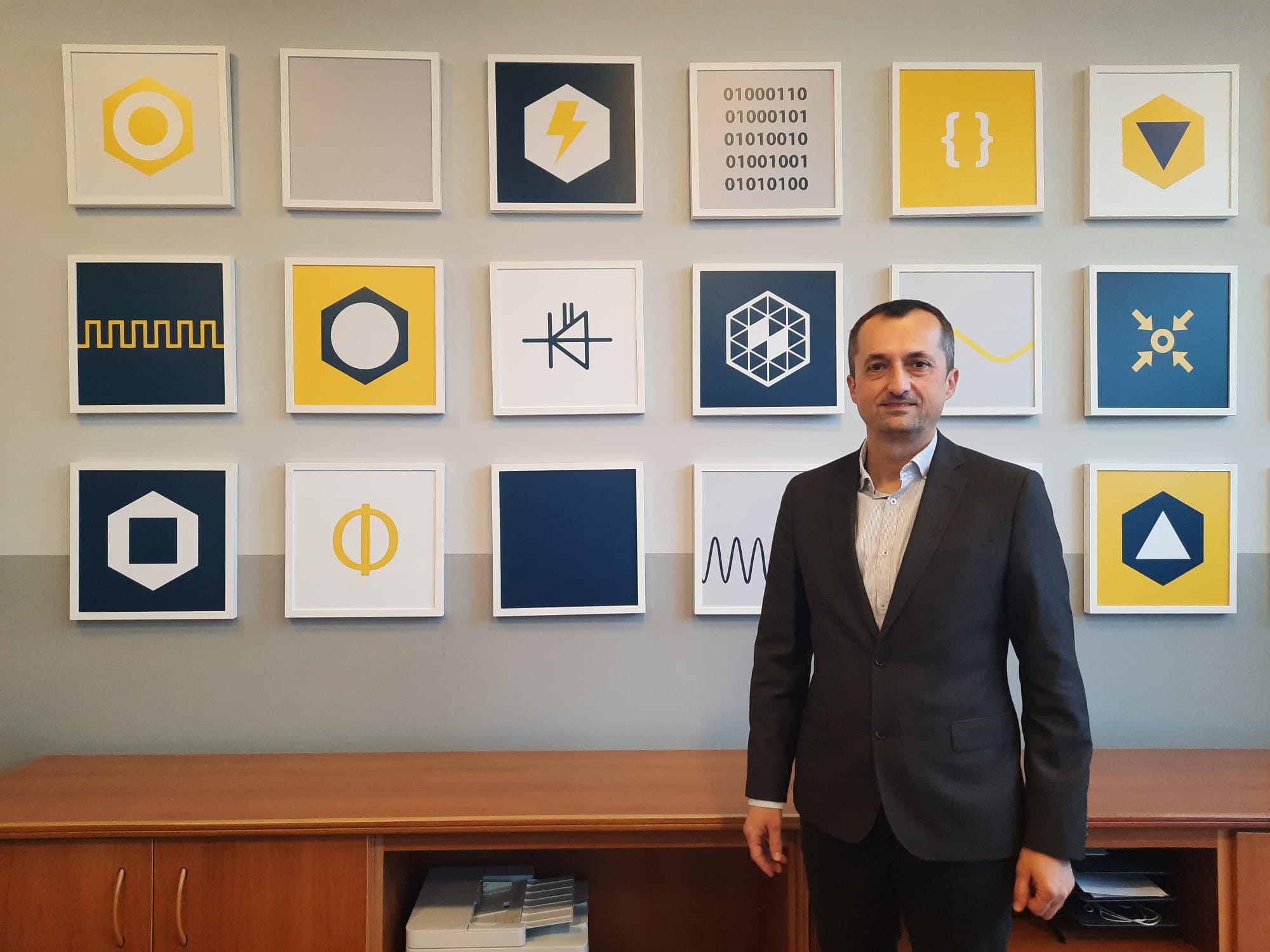
Tomislav Matić, head of FERIT in Osijek
“Until 1991, Osijek was an important industrial city. Everything was produced, from rotary cultivators to steel, from plastics to textiles. The war abruptly halted activities, and after the conflict, few factories reopened. Many had also been physically damaged by the fighting,” says Tomislav Matić, dean of the Faculty of Electrical Engineering, Computer Science, and Information Technologies (FERIT) in Osijek. “Computer science began to gain importance in the early 2000s, when the demand for programmers from local companies grew significantly,” the professor continues.
FERIT launched its first computer science program around that time, following an agreement with Siemens that allowed the institute to finance its first computer lab. “It was a success. Many Siemens employees then went on to open start-ups of their own, helping create the network of businesses in the sector that exists in the city today,” explains the faculty dean. Since 2012, a specific term has existed to describe what’s happening in the Slavonian capital: “Osijek Software City” is the name of the business association that promotes the development of computer science in the region, but it’s also a term that summarizes the broader phenomenon of the city’s industrial resurgence, linked precisely to new technologies.
Go to the photo gallery linked to the article
A Silicon Valley along the Danube
Like Osijek, nearby (and larger) Novi Sad has also experienced a similar transformation as an industrial city. And the two university centers have approached the sector in the same way, observing and participating in the development of computer technology in the city, and ultimately collaborating with each other, despite the border.
FERIT, the Faculty currently headed by Tomislav Matić, has played a key role in the development of the IT sector in Osijek, adapting its curriculum over time to the changing needs of local businesses. “Companies grow because we provide the engineers they need. We adapt to the market, updating what we teach our students,” continues Professor Matić, who adds, “It’s often our former students who tell us which teachings were useful and which are no longer relevant.”
In Novi Sad, the university, and in particular the Faculty of Technical Sciences (FTN), has also played a leading role. “I arrived here as a student about twenty years ago, and even then, the demand for IT engineers was growing,” says Ivan Kaštelan, a computer scientist and professor at the University of Novi Sad. “Today, Novi Sad is called the Silicon Valley of Serbia due to the large number of high-tech companies present,” adds Kaštelan with a smile.
FERIT and FTN have a long-standing partnership, which includes the creation of a company, RT-RK, now TTTechAuto, based in Osijek. Its core business is information technology applied to the automotive industry, a sector in which the two universities have joined forces as part of a recent European project.
Smart cars
In 2017, the faculties of Osijek and Novi Sad jointly won a European call (Interreg – IPA CBC Croatia Serbia) for funding the DRIVE project, which aimed to modernize technology laboratories and develop a new curriculum related to automotive information technology.
“The project allowed us to purchase very expensive hardware, pay foreign instructors, and ultimately establish a new program: the Master’s in Automotive Computing and Communication,” explains FERIT Dean Tomislav Matić. As part of the DRIVE project, the Novi Sad FTN, which was the lead partner, purchased materials worth approximately €400,000, while the Osijek faculty had a budget of €260,000. “Today, those who complete that master’s degree immediately find work in the city,” Mati continues.
Specifically, the course teaches young engineers to program the interface between the driver and the car. This involves managing sensors, cameras, lights, brakes, as well as the in-car infotainment system. For practice, students have access to miniature cars equipped with prototype motherboards similar to those installed in cars. “We purchased the same equipment so we could jointly create teaching materials that are useful for both faculties,” explains Ivan Kaštelan of the Novi Sad FTN.
About a hundred students have so far attended the courses that began in Novi Sad in 2019 and are based on the laboratory equipped by the DRIVE project. An equal number have attended the FERIT laboratories in Osijek.
“With the same logic as the DRIVE project, we have prepared a new one, which should start soon,” explains Professor Mario Vranješ. This is “CySafe SmartMob,” a new collaboration between the universities of Novi Sad and Osijek that focuses on automotive cybersecurity and will involve equipping new laboratories and creating new specialized courses. “The course will be available both to new students and, through an intensive two-week version, to engineers who wish to update their skills,” continues Vranješ.
The unknowns of artificial intelligence
In the center of Osijek, not far from the university campus, Zvonimir Kaprocki is the general manager of TTTechAuto, a company founded by FTN and FERIT and currently in the process of being acquired by the Dutch company NXP. Kaprocki, originally from Novi Sad, has lived and worked in Osijek since 2015. The company he manages currently has 178 employees and is among the most innovative in Croatia, as evidenced by the awards hanging in his office.
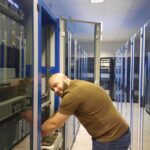
“We are very satisfied with our collaboration with FERIT. Over the years, we have awarded scholarships to more than 900 students, and 170 of them have found employment here at some point in their careers. 110 of them are still here,” explains Zvonimir Kaprocki. The company’s floor houses a so-called “hardware farm,” a large, air-conditioned room housing 150 computers, where employees can remotely test software before installing it in cars.
“Simply put, if Davor here doesn’t give the green light, you’ll never see a certain new software arrive in your Tesla,” jokes Kaprocki, pointing to Davor Kedačić, the manager of the TTTech hardware farm in Osijek.
This year, Kaprocki signed the hiring of eleven recent FERIT graduates. However, the director admits, not all companies share his approach. “A junior programmer is a net cost for the company, at least for a year or two. There are many companies that prefer to rely only on senior programmers and artificial intelligence,” warns the director of TTTechAuto.
“This is a widespread problem, and unfortunately, I don’t see a clear solution. When the Osijek Software City project began, computer science was the dream job for many young people. That’s no longer the case. Artificial intelligence could replace junior programmers, and entering the workforce risks becoming more difficult,” concludes the company director.
Found an error in this article? Please contact our editorial team at redazione@balcanicaucaso.org.
Tag: Coesione UE | EU Cohesion | EuSEE | Ricerca