
The rebel returns? Alexis Tsipras and the unfinished revolution
From the euphoria of his 2015 election victory to the harsh realities of debt, austerity, and political compromise, Alexis Tsipras has always been a figure of contradictions. Now, with parliament behind him and the Greek left unsettled, the question arises: is the rebel preparing to step back into the spotlight?
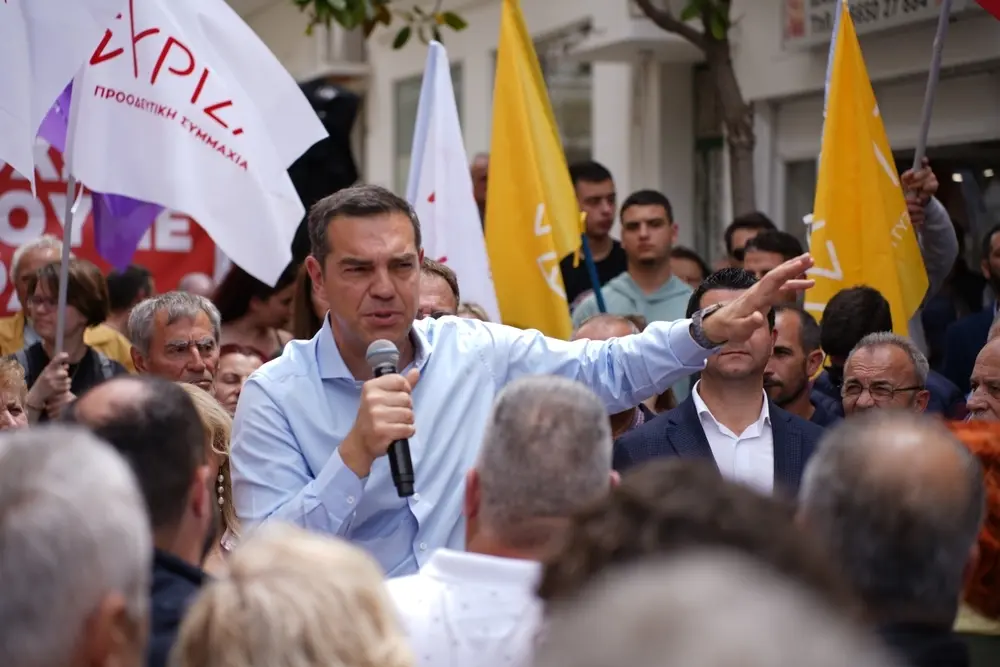
shutterstock_2303489457
Alexis Tsipras © Tassos Stavrou Photograph/Shutterstock
It was late on the night of January 25, 2015, when the crowd in central Athens erupted into cheers. Greek flags waved against the glow of floodlights, and a raw rock anthem, “Rock the Casbah”, blared through the speakers; its title as unexpected as the political moment itself.
A 40-year-old engineer-turned-activist emerged from the tunnel of the auditorium stage: Alexis Tsipras. He raised his fist, the crowd roared. For a country battered by years of crisis and austerity, the scene felt like a collective exhale; a promise that something new might finally begin.
To understand why that night mattered, you have to understand the man at its center. Alexis Tsipras had built his career on the promise of rupture; a clean break from the Greece of bailouts, corruption and political dynasties.
He was young, sharp-tongued and refreshingly informal in a political landscape of grey suits and ritual deference. He refused to wear a tie; a small act that became a kind of manifesto: no more business as usual until the country was free from its debt shackles.
Tsipras’ rebellion was as much about image as it was about ideology. A civil engineer by training and a lifelong activist of the far left, he came of age after Greece’s dictatorship: a child of democracy who learned politics through protest.
His rise through Syriza, a patchwork coalition of radicals and socialists, owed as much to timing as to talent. When the euro crisis hit and Greece’s economy collapsed under the weight of austerity, Tsipras became the voice of outrage: articulate, confident, unafraid to challenge Europe’s power brokers.
Yet, the same man who promised to defy Brussels soon found himself negotiating on its terms. His fiery rhetoric faced the hard arithmetics of debt and dependency. Within months of taking power, Tsipras was forced to sign a new bailout deal; the very thing he had sworn to reject.
To many Greeks, it felt like a betrayal; to others, a sobering confrontation with reality.
The summer of No
The promise of rebellion met its breaking point in the summer of 2015. Greece was running out of money, patience and allies. For weeks, queues formed outside shuttered banks, as capital controls froze savings and fear crept back into daily life. The word Grexit (once a speculative term coined by analysts) now hovered like a real threat over supermarket counters and pension lines.
Tsipras tried to turn desperation into defiance. He called a referendum, asking Greeks whether to accept the harsh bailout terms demanded by creditors. The “No” campaign, led by him, framed it as a question of dignity.
On July 5th, the country voted overwhelmingly to reject the deal. For one electric night, Athens believed it had reclaimed control of its fate.
Then, almost immediately, came the reversal. Within days, Tsipras returned to Brussels and accepted an even tougher agreement. The young firebrand who had vowed to end austerity had, in effect, surrendered to it. The idealist had become the realist or, as his critics said, the technocrat in a rebel’s jacket.
Still, the country stayed in the euro and the banks reopened. Tsipras presented it as a victory of survival: “We kept Greece standing”, he said in a televised address to the nation on July 13, 2015. But the episode left scars.
The man in no tie
In the years that followed, Alexis Tsipras settled into office as a pragmatic reformer; less the revolutionary of Syntagma Square and more the manager of damage.
However, the image of rebellion never quite left him. He remained the prime minister without a tie – a small, but relentless reminder that Greece’s wounds were still open, its independence still unfinished.
The gesture became legend and later, burden. When Greece finally secured a deal in 2018 easing its debt terms, Tsipras appeared before cameras wearing a tie for the first time.
He smiled, declared that the “country is turning a page,” then loosened the knot and took it off. The symbolism was too perfect to ignore: even in victory, nothing fit quite comfortably.
His years in power were marked by contradictions. He stabilised the economy yet lost the trust of many who had once seen him as the voice of defiance. He normalised relations with Europe and opened peace talks with neighbours. He signed the Prespa Agreement with North Macedonia, ending a decades-long name dispute but igniting fury at home; a rare moment when statesmanship cost him politically.
Tsipras even dared to challenge the Greek Orthodox Church by taking a civil oath of office as an atheist in a deeply religious nation. Eventually, over time, he sought a more conciliatory approach, negotiating agreements with the Church on its assets and clergy.
By 2019, the tide had turned. Syriza was voted out and Tsipras retreated into opposition, his idealism dimmed but not extinguished. Just as he appeared to step back, a new figure burst onto the scene: Stefanos Kasselakis, a Greece-born businessman with a background in American finance and a striking public profile, touted initially as Tsipras’s protégé.
The fact that he is the country’s first openly gay major party leader added both fresh energy and fierce controversy to his ascent. His candidacy threatened to upend old party alliances and left-wing identity alike, showing how much of Greek politics was still up for reinvention.
The opening
Kasselakis’ meteoric rise quickly ran into turbulence. Internal disputes, questions about experience, and fierce scrutiny of his unorthodox style led to a rapid loss of momentum. Ironically, his stumble exposed a gap in the Greek left-wing and center-left political space, creating space for Tsipras to re-enter the conversation.
“Kasselakis was a communications firework; an attempt to throw light on a Syriza already in decomposition”, political analyst Georgios Karagiorgos remarked during an interview with OBCT on the margins of the World Forum for Democracy 2025, recently held in Strasbourg. “Famellos, who followed, acted more as a temporary custodian of a fading legacy than as a true party leader, paving the way for Tsipras to gradually re-enter the scene.”
The timing for Tsipras’ comeback is also shaped by broader public sentiment. Years of scandals, from the deadly train disaster at Tempi and the Mati wildfire tragedy to the mismanagement at OPEKEPE (the state agency responsible for distributing EU agricultural funds), have fueled widespread fatigue with established parties and political elites.
While Tsipras’ own tenure was far from scandal-free, his position as a known quantity and someone who previously navigated the deepest economic crisis of modern Greece gives him a platform that a newcomer like Kasselakis could not immediately command.
Rebranding the rebel
With his recent resignation from parliament, Alexis Tsipras has signaled that he is stepping away from formal office but not from political life, fueling speculation that he may soon launch a new party; a move that, if it happens, would leverage his enduring name recognition and political experience against the current fragmentation and fatigue in Greece’s center-left.
The step back, in truth, looks more like a calculated intermission; the quiet before a new version of Tsipras takes shape. The “new Tsipras” is not the defiant agitator of 2015 but a man seeking to redefine himself through reflection.
In Ithaca, his recently published book – part memoir, part political essay and unmistakably a rebranding – he retraces the long voyage from crisis to self-critique. The gestures are deliberate: measured language, literary references and a posture of intellectual authority.
As Karagiorgos observed, this is “the transformation of Tsipras into a public intellectual of progressivism.” Around him, a new ecosystem is forming: his personal foundation, launched in 2024, curates debates and awards the Tsipras Prize, a symbolic nod to ideas of social justice, peace and democracy.
Whatever form it takes, Tsipras return would mark not just a political comeback, but the continuation of a story Greece has never quite finished reading. His journey, like his book, seems to circle back to Ithaca – less an arrival than another departure.
Found an error in this article? Please contact our editorial team at redazione@balcanicaucaso.org.
Tag: In evidenza
Featured articles
 Investigation
 students' protest
 Montenegro Pride 2026