Port of Durrës: plans proceed amid opacity and benefits for the few
The project to rebuild the Port of Durrës is shrouded in controversy, and Albanian citizens could be the ones to pay the price. One of the most controversial proposals is financing part of the project by selling apartments before construction even begins
Port-of-Durres-plans-proceed-amid-opacity-and-benefits-for-the-few
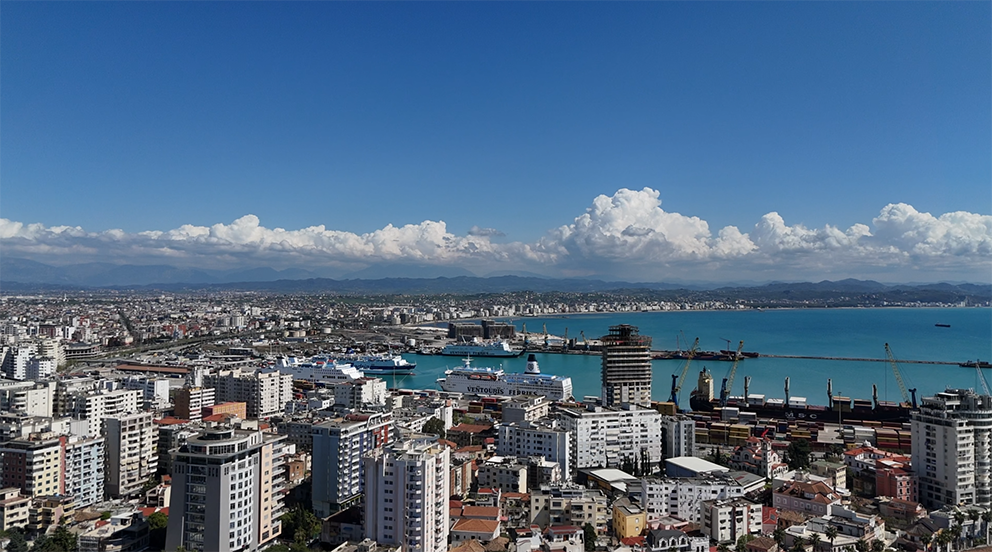
The Port of Durres - © Kudret Plaku
On 9 January, 2021, a video published on Instagram on the official page of the luxury restaurants “Nusret” in Dubai sparked strong reactions in Albania. The footage shows then-Minister of Reconstruction Arben Ahmetaj (who later also served as Deputy Prime Minister), the Minister of Infrastructure and Energy Belinda Balluku, the Prime Minister’s advisor Endri Fuga, the Deputy Mayor of Tirana Arbjan Mazniku and the businessman Samir Mane, in the company of one of the most influential personalities in the Middle East, Mohamed Alabbar.
Alabbar is the founder and former chairman of Emaar Properties, one of the largest and most prestigious real estate development companies in the world, known for iconic projects such as Burj Khalifa in Dubai, the tallest building in the world, and the Downtown Dubai complex.
Amid a storm of comments accusing the government officials of wasting taxpayers’ money, Mazniku responded that they “did not even see the menu, the dinner was ordered and paid for by the company” and was part of the official campaign to present the port’s reconstruction plans, including “the revitalization of the Port of Durrës”.
This was probably the first time the Albanian public heard about the huge project that is set to change the fate of one of the most important and oldest ports in the Balkans.
On 30 January, 2023, the Albanian government and the company “Eagle Hills Real Estate Development”, founded and chaired by Mohamed Alabbar, signed an agreement for a two billion euro investment, aimed at transforming Durrës into a city with two ports, one commercial and the other for tourism and yachts. The current port will be moved to the Porto Romano area, while the project "Durrës Yachts & Marina" will be developed in its place.
“The giant project, which will extend over an area of approximately 450 hectares and is expected to create about 12,000 new jobs” is also mentioned in a post published on the official page of the Albanian Prime Minister dedicated to the “Durrës Yachts & Marina”.
The project includes the construction of approximately 13 thousand apartments, 850 hotel rooms and 280 yacht berths to be built in two main phases. The first one foresees the construction of four thousand apartments, hotels and commercial areas, with a completion period of 5–7 years and an investment of 595 million Euros. The second phase further expands the project with yacht marinas, more apartments and hotels, extending the total duration of the investment up to twenty years.
The implementing company, thanks to the project’s strategic status, will enjoy significant benefits, including exemption from VAT and customs duties and expedited procedures for obtaining the necessary permits within 150 days. There are also guarantees that the terms of the agreement, including tax provisions, remain unchanged for 99 years, thus protecting the investor’s interest.
Eduard Halimi, who served as Minister of Justice from 2011 to 2013, in his media analysis raised concerns that 60% of Eagle Hills LLC was owned by a network of five companies, which, according to data filed with the National Business Center (QKB), are registered in the Cayman Islands.
However, this was not the only criticism that the project’s financiers received from those who opposed it. On 27 July, 2022, the Durrës Port Authority established the public joint-stock company “Albanian Seaports Development Company” (ASDC) to manage and coordinate the strategic investment of the “Durrës Yachts & Marina” project. The initial capital of ASDC at the time of establishment was ten million lek (about 103,000 Euros), while in June 2024 it increased to 21,9 million lek (about 225,000 Euros) to support the work and expand the role of the company as a public stakeholder involved in the project.
In January 2023, ASDC established a subsidiary, called “Durrës Marina”, in which it holds 100% of the capital. The subsidiary is responsible for managing project implementation and cooperation with strategic partners.
The Albanian state, through ASDC, holds a 33% stake in the project, which has a total value of around 2 billion Euros and is expected to generate profits of 3.2 billion. Therefore, the state is expected to earn about 281 million Euros, considering the net profit of the project.
“After three years of saying that Emaar would come and we would create a ‘Dubai in Europe’, a deal between states has been concluded and now it turns out that Emaar is nowhere to be found. So for three years they kept saying that a big company was coming, that was why we kept it, that was why we adopted a special law, and now we learn that the agreement was not signed with Emaar, but with an individual who a year ago created several companies, which are practically empty, without capital, employees and history”, said Agron Shehaj, leader of the Mundësia Party.
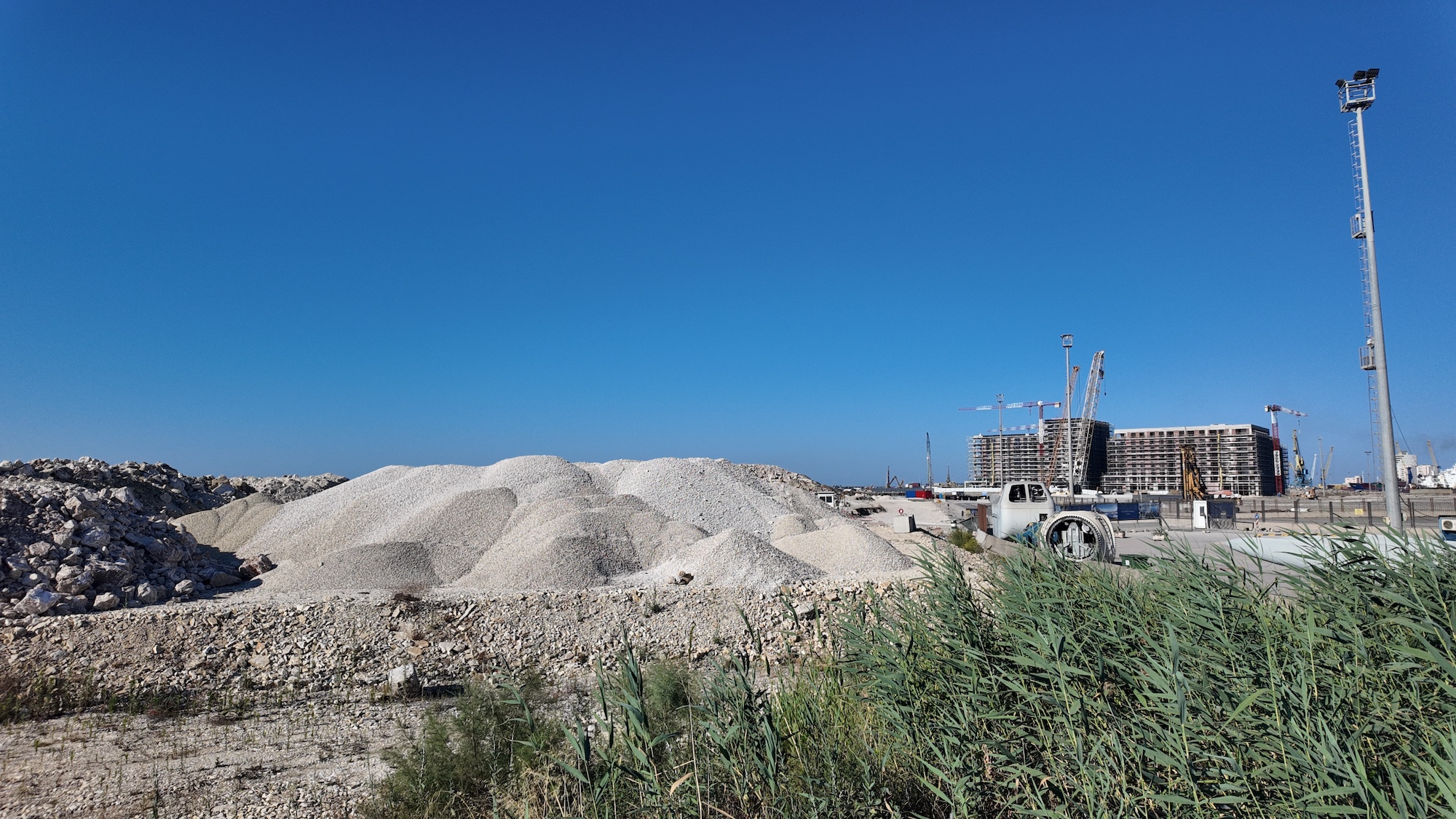
Work in progress at the port of Durrës – © Elira Kadriu
No competition or transparency
In November 2022, 37 opposition MPs challenged the Durrës port deal, calling it a mega-corruption scandal and filing an appeal with the Constitutional Court. The opposition’s claims were rejected twice by the Constitutional Court, which, among other things, stated that the management of public spaces by the strategic investor under article 10.6 of the “Framework Agreement” should be understood as an option, the implementation of which remains at the discretion of the local government.
According to Pano Soko, economist and former co-chairman of the “Thurrje Initiative” Party, despite the court’s decision, this type of investment encourages inequality.
Soko identifies three main critical issues related to the project: lack of equal opportunities, the conditions and terms under which it was negotiated, and the risky scheme of selling apartments before construction even begins.
"It is no coincidence that the Stabilization and Association Agreement clearly defines this point, just as it is no coincidence that the European Union has expressed concern about the lack of an international public competition for the project’s implementation. Where there is democracy and the rule of law, citizens are equal before the law. This is an axiom that should be strictly respected, and in the case of the Durrës Marina it was violated”, said Soko.
Olivér Várhelyi, then European Commissioner for Enlargement, responded to a letter from Enkelejd Alibeaj, leader of the Democratic Party in the Tirana parliament, reiterating the European Union’s concerns about the project.
“All procurements and concessions, including agreements between states or third parties, must be based on the principles of transparency, competition, equal treatment and non-discrimination”, wrote Várhelyi in his letter.
The second problem – pointed out by Pano Soko – is that the Albanian state could face an economic loss. According to Soko, just relocating the Port of Durrës could cost around 2 billion dollars, then the tax exemption provided for by the project, but also the land – about one million square meters – at a price of 100 Euros per square metre, if not more, reaching 150 million Euros.
“So, we will come out of this project damaged and empty-handed!”, commented Soko.
Recently, he also raised concern about the practice of “selling in the pit” (pre-construction apartment sales) which, according to the expert, is still used only in “third world” countries.
“This would be the main financing mechanism. In addition to the share that is expected to be covered by Alabbar and loans, a part of the project would be supported by proceeds from the sale of apartments before construction even begins – basically selling hot air. These sales are expected to generate a profit of two billion dollars needed to carry out the project”, explained Soko.
He pointed out that Alabbar had already launched similar projects in Belgrade and Belarus that did not go well. For this reason, Albania should have moved cautiously instead of being so well disposed.
“Why has Albania been so friendly? Precisely because it was believed that these projects could be financed with dirty money!”, concluded the expert.
399 million Euros from the state budget for the Porto Romano project
Unlike the “Durrës Yachts & Marina” project, for which no competition was opened, two tender procedures were held for the construction of the new port in Porto Romano.
We contacted the Durrës Port Authority (APD), which confirmed that the investment for the new port in Porto Romano will amount to approximately 399 million Euros, to be covered entirely by the state budget.
“During the period of relocation of port operations from the current terminal to the new one, there may be a need to reorganize activities that depend on cargo traffic through the Port of Durrës”, said APD regarding the potential impacts of the project.
APD, which will be responsible of both ports, also claims that additional revenues will be generated, given that the existing port will continue to function as a Tourist Marina.
The tender procedure for the construction of the new commercial port in Porto Romano was long and complicated. Initially announced in July 2024 with a limit fund of around 390 million Euros, it was canceled a few months later due to the lack of suitable offers. Then in December 2024 the tender was reopened with improved documentation and without division into lots, again attracting the interest of international companies.
After two rounds of initial evaluation and appeals, the process has entered the final bid evaluation phase, with two consortia competing to win the contract.
The first consortium is composed of the Dutch company Van Oord and the Belgian giant Besix, while the second one includes the Greek company Archirodon, in partnership with Deme Dredging NV and Società Italiana Dragaggi S.p.A. Both consortia have passed the technical qualification phases and are currently awaiting the evaluation of financial offers, which will determine the winner of the contract for the strategic project.
Aranita Brahaj, head of the Open Data platform (an organisation specialised in data transparency), regarding irregularities in the open tender for this project, told us that there is an issue related to the preparation of the documentation and the tender procedure.
“There has been a noticeable lack of transparency in the selection of the foreign business that carried out the preparations”, said Brahaj.
She added that, initially, it was planned that these activities would be financed with external funds, but then, in the absence of guarantees, it was decided to build the new port with domestic investments.
“This shows a lack of trust from international partners to support the project”, concluded Brahaj.
Weak local resistance
Unlike Montenegro, where locals and activists have openly expressed their opposition to Alabbar’s projects in Ulcinj by organising protests, in Albania the resistance has been very weak, almost non-existent. The widespread propaganda in Albania, portraying Durrës as the “Dubai of the Mediterranean”, where property values and employment would rise exponentially, seems to have worked effectively.
Unlike other contested infrastructure projects in Durrës, such as the Veliera building, in the case of the Port, the voice of experts and local activists is almost absent.
Urban planner Artan Kacani explains to us that the Port of Durrës is a unique engineering work built on floating columns, so the entire dock floor floats on water waves.
Kacani emphasises that Durrës’ terrain is clayey and very difficult to stabilise, which has historically been the problem of the site – it has always been an unstable area for developing a large port infrastructure.
“Converting this port, this brilliant work of engineering, by disposing of various materials, will not only modify the seismic structure of the land but will also cause a strong effect on the sea. This is a high seismic risk area, as the history of Durrës demonstrates”, says the urban planner.
Kacani points out that the same problem occurs at Porto Romano, where the new port will be relocated, since Porto Romano lies at the edge of tectonic plates.
“It is the same challenge as the bridge between Italy and Sicily that many politicians say they will build, but no engineer signs off on it because these tectonic plates can crack and move in the future. There is no guarantees”, underlines Kacani.
Another architect from Durrës, Enea Papa, says it is still unclear whether they want a historic or tourist port, or something else entirely, adding that Durrës does not yet have adequate infrastructure for all the urban load it is expected to receive.
“Durrës has water supply for two hours a day. How do you plan to bring it to all those residents and tourists? It is like trying to hold a wedding in a small two-room house – you cannot do that, because there is not enough room for everyone! It takes a lot of courage to do something like this!”, comments Papa.
The case of the port of Durrës is much more than a simple infrastructure project. It reflects how urban development, economic governance and the government’s relationship with the public are conceived in Albania. The lack of transparency, systematic avoidance of competition, exclusion of citizens and specialists from decision-making, and suspicions around the interests involved in such a large project turn this story into a case study of mismanagement of public space and the challenges of functional democracy.
Beyond political rhetoric and promises of billion-euro investments, the fundamental question remains: Who really benefits from this project? And what do we lose as a city and society when decisions about the country’s urban future are made without consultation, real analysis and accountability?
If this pattern continues with other strategic projects, including airports, we risk building an Albania that serves not its citizens but narrow, invisible and short-term interests.
This publication has been produced within the Collaborative and Investigative Journalism Initiative (CIJI ), a project co-funded by the European Commission. The contents of this publication are the sole responsibility of Osservatorio Balcani Caucaso Transeuropa and do not reflect the views of the European Union. Go to the project page
Found an error in this article? Please contact our editorial team at redazione@balcanicaucaso.org.
Tag: CIJI | Città balcaniche
Featured articles
 the students' voices
 Investigation
 students' protest