Montenegro: strengthening transnational relations through territorial cooperation
EU pre-accession support to the Western Balkans includes a component of transnational and cross-border cooperation, which helps create long-lasting professional networks among EU candidate countries and member states. An interview
Montenegro-rafforzare-le-relazioni-transnazionali-attraverso-la-cooperazione-territoriale-1
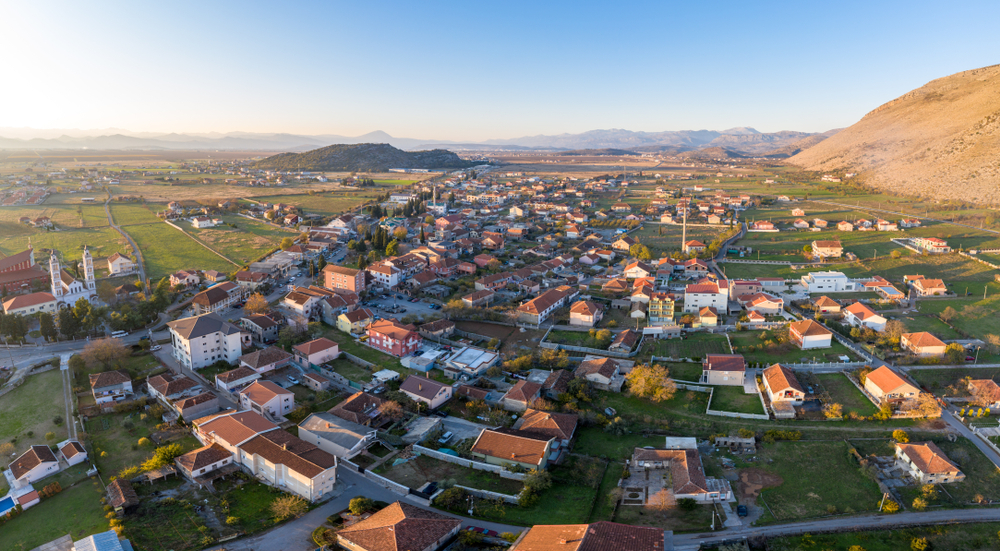
Municipality of Tuzi, Montenegro, © Predrag Jankovic/ Shutterstock
As part of their EU accession process, Western Balkan countries receive financial and technical support through the Instrument for Pre-Accession Assistance (IPA), helping them align with EU standards. IPA also fosters regional cooperation by funding cross-border and transnational projects, building capacity, and promoting the exchange of knowledge among EU candidates and member countries.
While participating in Interreg projects can be financially and administratively challenging for civil society organizations, there is no doubt that these projects help build long-lasting relationships among professionals across the Adriatic-Ionian macro-region, fostering trust and facilitating the exchange of valuable skills.
We interviewed Amra Pepic, a former project manager at the Development Vranj organization in Montenegro, who has extensive experience in implementing territorial cooperation projects.
To start with, what is your experience with Interreg projects?
I have been working with Interreg projects for more than 10 years now. I still remember my first project, which focused on the ecological protection of the Cemi River, one of the largest rivers in Montenegro. From the very beginning, I felt that this would be an interesting field for me to grow professionally and gain new experiences by collaborating with international partners.
The cooperation has been strongest with Albanian and Italian partners. I started with bilateral projects and later moved on to ADRION projects in the South Adriatic. My most recent work was on an EUROMED project, for which I wrote a proposal led by the Municipality of Tuzi.
When it comes to my experience, I can truly say that I have gone through different phases, and it has been a great experience.
What do you think is the main added value of cooperation?
Interreg projects really bring people closer together. Every opportunity organised within the framework of a specific project can become the basis for future initiatives and help build fruitful, lasting cooperation. In our context, everybody knows everybody, so when you know someone who does a good job and is responsible, you know exactly who to call when applying for future projects.
The partnerships I built during my last EUROMED project, for example, are the result of many years of cooperation, especially with Italian partners, most of whom I now consider friends. This shows how important it is to get to know each other, because strong relationships often lead to new opportunities.
Do you think that these collaborations and relationships that connect professionals from different countries can impact the EU integration process?
I can give an example from the activities of the GREEN project , which was funded by the Interreg IPA South Adriatic Programme 2021-2027 and focused on the creation of energy communities.
Until a few years ago, Montenegro did not even have a law on Energy Service Companies (ESCOs), that is, firms that provide a broad range of energy efficiency services.
During one of the project meetings, I invited technicians from FederESCO, one of the most active energy service companies in Italy, so that Montenegrin partners could hear firsthand about their experience and potentially consider replicating it in the country.
Having the legal framework is important, but it is not enough. It is equally important to expose people to good practices and let them see how things work in other countries, because it is impossible to truly understand what an ESCo is and how it operates by simply reading a law.
If you bring people to training and give them the opportunity to discuss directly with directors of such companies, they gain a much clearer idea. They might start thinking, “I would like to have that in my country. Do I have the framework for it?” If not, they can leverage their connections to advocate for the adoption of the necessary legal framework.
I would say that simply having the framework is not enough to integrate a country into EU policies, nor to incorporate EU policies into the Montenegrin context. Direct communication between stakeholders is essential to inspire ideas and show how these practices can be implemented through national policies.
Did you experience any difficulties in the collaboration due to the fact that Montenegro is still in the process of EU accession?
In the field of energy and climate change, for example, there are many interesting EU programs and initiatives, but for people from Montenegro, these opportunities are often limited. I’m referring to the EU climate package and the European Green Deal. In that context, I really felt what it means to be part of the European Union, because for certain activities, especially infrastructural projects, which are of huge importance for us, you simply do not have the means to participate fully if you are not an EU member. This experience gave me a very tangible sense of the difference between being integrated in the EU and being outside of it.
Of course, this is not the only challenge. As a candidate country, Montenegro receives pre-accession (IPA) funds, but we could use them more efficiently. Often, we lack the capacity to manage these funds effectively, because salaries in the public administration are low compared to the complexity and responsibility involved in implementing EU projects. As a result, many skilled professionals leave to start their own businesses.
So, for me, the problem is not only that some opportunities are unavailable to us, but also that we do not fully take advantage of the funds that are already at our disposal.
This article was written as part of the project "Il contributo delle Comunità di Pratica per l’integrazione europea dei Balcani”, funded by the Ministry of Foreign Affairs and International Cooperation. The opinions expressed in this publication are those of the authors and do not necessarily represent the positions of the Ministry of Foreign Affairs and International Cooperation.
Found an error in this article? Please contact our editorial team at redazione@balcanicaucaso.org.
Tag: CoP-CET
Featured articles
 Montenegro Pride 2026
 Political deadlock