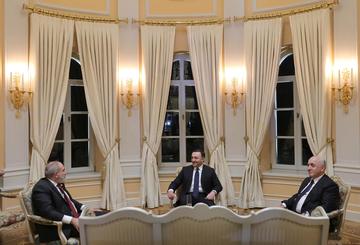
Following a recent live interview, Armenian Prime Minister Nikol Pashinyan has hinted that the long and difficult process of border demarcation with Azerbaijan could potentially be ready to start. There are other signs, however, that the process carries with it substantial risks both regionally and domestically
For a year, the European Union Mission in Armenia (EUMA) has been deployed on the border with Azerbaijan, which it patrols regularly: a measure considered necessary by Yerevan - which fears a new conflict - but viewed with suspicion by Baku
A newly-published book explores the circumstances around the violence that accompanied Transnistria’s de facto secession from Moldova. Three decades later, finding new answers to old conundrums is key to preventing ongoing tensions from escalating
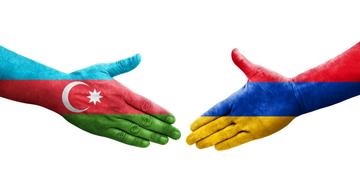
The attempts of Armenia and Azerbaijan to normalize their bilateral relations after the Azerbaijani conquest of Nagorno Karabakh continue in an anemic and controversial manner. A process that could lead Yerevan to change its constitution
A large share of Transnistria’s economy, including most of its budget, depends on a structural subsidy it receives from Russia in the form of free gas. As Ukraine has promised to stop all Russian pipelines going through its territory by the end of 2024, how will Transnistria cope?
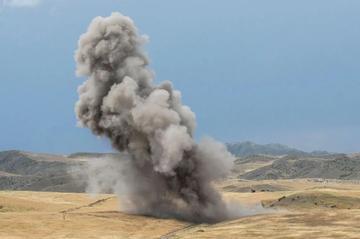
The regions around Nagorno Karabakh are contaminated with thousands of landmines and unexploded ordnance (UXO). An urgent matter, but demining takes a long time
Armenia and Azerbaijan issued a late-night joint statement that surprised even the most seasoned of commentators. Though it remains unclear whether this could be a long-awaited breakthrough in negotiations, the international community was united in welcoming the move
As negotiations between Armenia and Azerbaijan appear to have stalled, border commissions from both sides met on 30 November. However, it remains unclear whether the meeting was nothing more than symbolic
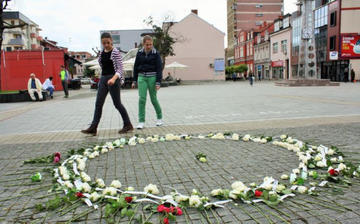
“The failure to fully deal with wartime atrocities and the root causes of conflicts in the 1990s continues to have devastating consequences on respect for human rights, the rule of law and social cohesion in the region”, said Dunja Mijatović, the Council of Europe Commissioner for Human Rights, while releasing a report on the state of play of transitional justice efforts in the countries of the former Yugoslavia
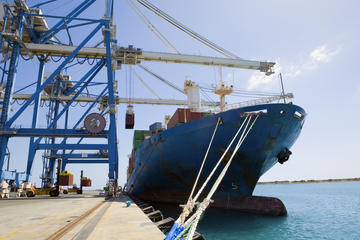
While the international community is facing the challenge of getting humanitarian aid to Gaza amid restrictions in place, Cyprus has proposed the creation of a maritime corridor to reach civilians in need. Despite the technical challenges lying in its implementation, EU leaders seem to be supportive of this plan
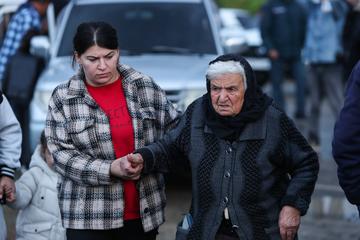
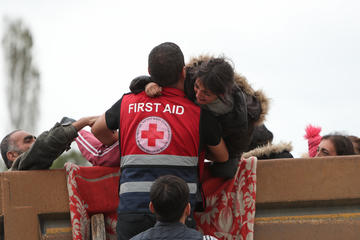
With the blitzkrieg of last September, Armenian Nagorno Karabakh ceased to exist, and tens of thousands of people hastily abandoned it to move to Armenia, where a future full of uncertainty awaits them
In recent days, Georgia once again hosted the Tbilisi Silk Road Forum, an event with an economic focus. What is new this year is that for the first time an Armenian leader spoke at such a high-level event in Tbilisi, and high-level officials from all three South Caucasus countries were also on the same stage
Turkish politics has always been extremely sensitive to the Israeli-Palestinian conflict. The Hamas attack on Israel and the subsequent Israeli military operation in Gaza have reopened debate and conflict in Turkey too
After the meeting between the two Caucasian leaders at the Granada summit on 5 October fell through, there has been no other EU-facilitated meeting. To the surprise of many, however, regional talks began in Georgia and Iran. Brussels does not give up and pushes for a meeting between Aliyev, Pashinyan and Michel
The green transition is one of the greatest challenges of our time. Ukraine, however, not only has to decarbonize, but must do so amidst a war. Despite it, the country is already rebuilding and discussions about greening the economy are vivid
No meeting between the leaders of Armenia and Azerbaijan at the Granada summit on 5 October. After the use of arms by the Azerbaijani side, which decreed the end of Nagorno Karabakh as an autonomous entity, various questions still remain open
Last week, over 100,000 ethnic Armenians from the breakaway region of Nagorno Karabakh flooded into Armenia while the de facto authorities dissolved the entity, effective at the beginning of next year. Meanwhile, the displaced face the challenges of integration into Armenia and, for some, a possible return to Azerbaijan
On September 19, Azerbaijan launched a military attack in Nagorno-Karabakh, changing the fate of thousands of people in just a few hours. Over 80 thousand people have already left the region. From our correspondent in Yerevan, Armine Avetisyan, some shots from one of the registration centre to enter Armenia
Following the 20 September ceasefire agreement between Baku and the de facto authorities of the former Nagorno Karabakh Autonomous Oblast (NKAO), now Armenian Prime Minister Nikol Pashinyan and Azerbaijan President Ilham Aliyev are expected to meet for talks that will also involve France, Germany, and the European Council
Following a landmine incident on its territory, and with multiple negotiating tracks under increasing risk of collapse, Azerbaijan appears to have wrestled back control of its breakaway Karabakh region
The resignation of Arayik Harutyunyan and the change of leadership in Nagorno Karabakh open a new phase of uncertainty in the region and for the future of relations between Karabakh and Azerbaijan
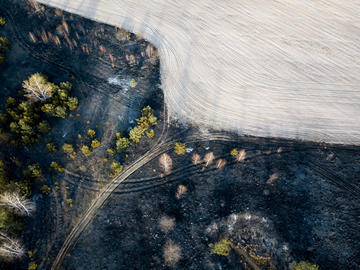
Russia’s full-scale war against Ukraine led to a surge in forest and rural fires across the country. Combating them is all the more difficult amidst the war that binds all resources and unexploded mines that contaminate the territory
Despite recent diplomatic meetings Azerbaijan and Armenia are once again in a stalemate over the Lachin corridor, a 5km highway linking Armenia to Nagorno Karabakh. The blockade of this corridor by Azerbaijan is putting the inhabitants of Nagorno Karabakh in difficulty
It is a violation of human rights, it is unnecessary, it forces unbearable decisions on families, and creates new vulnerabilities. As it renews its martial and mobilization laws in August, Ukraine should reconsider its male travel ban
US Secretary of State Antony Blinken said Armenia and Azerbaijan made further progress towards a peace deal in the three-day US-hosted talks in late June, yet tensions persist in the disputed territory of Nagorno Karabakh
In Serbia, local media play a central role in shaping the narrative of the Russian invasion of Ukraine. We talked about it with Aleksandra Godfroid, journalist of the N1 TV network
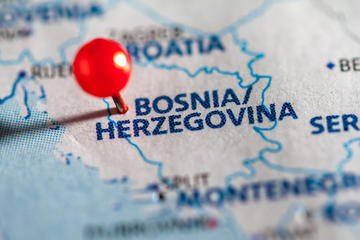
What is the impact over the Western Balkans of the Russian invasion of Ukraine? What are the possibel future scenarios in Serbia and Bosnia and Herzegovina? Analysts, activists and area experts discussed it in a webinar organized by OBCT and CeSPI
When the Russian invasion of Ukraine began, a segment of Serbian society - traditionally pro-Russian - took to the streets to protest against the Kremlin. Among the first demonstrators there were many Russian citizens, including Sasha Seregina. We interviewed her
The start of the Russian invasion of Ukraine, paradoxically, may have avoided a new open confrontation in Bosnia and Herzegovina. This is one of the reflections by Edina Bećirević, a professor at the University of Sarajevo and an expert on Russian influence in the Western Balkans. An interview
A tight series of talks and meetings attended by Nikol Pashinyan, prime minister of Armenia and Ilham Aliyev, president of Azerbaijan, took place in various locations, from Moscow to Chişinău and even in Ankara. The goal was to seek the normalisation of relations between Yerevan and Baku